Showing posts with label Everest. Show all posts

Friday, October 6, 2023

The Best Himalayan Blogs from Feedspot


Feedspot recently published a list of the best Himalayan blogs and the link is available at

https://blog.feedspot.com/himalayan_blogs/?feedid=5614136

The list covers 35 blogs and websites from the thousands of blogs on the web ... many of them also run tours and treks in the Himalaya.

This blog www.sujoyrdas.blogspot.com is no 24 on the list. 

For more information on my treks and photo workshops do visit www.southcol.com.

For photographs on the Himalaya do visit www.sujoydas.com

Best wishes to all for the upcoming festive season and enjoy the holidays!


Saturday, June 10, 2023

Gokyo Ama Dablam Base Camp Trek via Phortse October 2021 -Route and Timings


Namche to Gokyo to Phortse to Pangboche to Namche October 2021

Route details and timings for this route is below
October 21 Namche to Dole 

We left Namche on a sunny clear morning after the rain with all the peaks  visible - the broad trail mostly level with a few ups and downs was a lovely walk with all the peaks from Taboche to Thamserku visible including Everest, Lhotse and Ama Dablam. We reached the beautiful Ama Dablam Lodge at Kyanjuma in about less than two hours with many photography stops on the way. After a tea break at the lodge we started out for Mong la. Within five minutes there was a sign posted trail junction - the upper trail went to Gokyo and the lower trail to Everest Base Camp. A new trail had been constructed in the initial part of the climb with proper hand railings and steps - this steep climb took about half an hour with mesmerizing mountain views all around. On reaching the top there was a small resting spot from where Mongla could be seen as well as the trail leading upwards. We followed the trail climbing uphill contouring the hillside and had great mountain views all the way. We stopped for lunch at the Hilltop lodge in Mongla. After lunch we started out on the rapid descent to Phortse Tenga. The trail dropped fairly sharply for the first 20 minutes before easing out into a gentler descent - in about an hour from Mongla we came to the two lodges of Phortse Tenga and the trail diversion which was marked - the upper trail led to Dole and the lower trail led to Phortse. The Dole trail initially climbed very gently and in about 20 minutes reached the Dole National Park check post where the permits are checked. Soon after the trail crosses a waterfall and then begins to climb steeply fir about 30 minutes before the trail levels off and reaches a resting spot with a stone bench which provides a welcome break. After this the climb continues through the rhododendron forest. Across the valley the village of Phortse is your constant companion in about an hour another waterfall is reached and ahead you can see the trail contouring up the hillside. Finally the trail skirts the hillside takes a turn and the lodges of Dole come suddenly into view. 
Namche 3450m to Kyanjuma 3615m 27 49 22N 86 43 52E 1 hr 45 min to 2 hrs Kyanjuma to Mongla 3980m 27 50 22N 86 44 12E 2 hrs Mongla to Phortse Tenga 1 hour to 1 hour 15 min Phortse Tenga 3650m to Dole 4110m 27 52 4N 86 43 50 E 
2 hrs to 2 hrs 15 min

Monday, May 29, 2023

Everest Seventy Years After the First Ascent May 29th 1953


A condensed version of this article appears in The Hindu May 28th 2023

https://www.thehindu.com/society/everest-70-years-later/article66873075.ece

On 28th May 1953, two men started out from the South Col of Everest at around 26,000 feet to set up Camp Nine at 27,900 feet. Tenzing Norgay, a Sherpa had attempted Everest six times and failed. Edmund Hillary, a bee keeper from New Zealand, was on the mountain for the second time, having accompanied Eric Shipton on the Everest Reconnaissance in 1951. The British had made eight attempts on Everest since 1921 and this could well be their last chance.  In the year of the coronation of Queen Elizabeth II, it was imperative that they succeed. Camp IX at 27,900 feet would be the highest that men had ever slept.  The next morning dawned clear and still as Tenzing pointed out the tiny dot of Tengboche monastery, 16,000 feet below, where the Rimpoche had prayed for the safe return of the team. “God of my father and mother be good to me today” prayed Tenzing. Hillary’s boots were frozen and he had a tough job trying to unfreeze them for the climb. The duo started out at 6.30 am and at 11.30 am on 29th May 1953 history was made as the two men stood on the summit of Everest.

Wednesday, June 8, 2022

Mallory and Irvine | 8th June 1924 | 98 Years After


On 8th June 1924, two men left  Camp VI (26,700 feet)  to make an attempt for the summit of Everest. 


Camp VI  was the highest camp of the British 1924 Everest expedition.

On the same morning, another British climber, Noel Odell, was making his way up from Camp IV to Camp VI. Odell was a geologist and he was collecting fossils from the slopes of Mount Everest. Odell recalls that it was not the perfect morning to climb Everest. " Rolling banks of mist" were sweeping  across the mountain and covering the north face. Neither the face nor the summit ridge could be seen by Odell. There was also a sharp wind which was making climbing very difficult.

Suddenly at 12.50 pm the mist cleared and Odell spotted high above on the ridge, a black dot climbing a rock step, which Odell at that point identified as the Second Step. Soon after Odell saw another black dot following the first black dot. But before Odell could be sure that the second black dot had joined the first,  the mist rolled in and blanketed the mountain and this fantastic vision was lost forever.

The two dots that Odell saw were George Mallory and Andrew Irvine "going strongly for the summit of Everest". 

Mallory and Irvine were never seen again.

Mallory body was found by Conrad Anker in 1999. Irvine has not been found. A few weeks ago some startling news emerged from Mark Synott who was part of a Nat Geo expedition to find Andrew Irvine in 2019. Synott mentioned that he had evidence to prove that Irvine had been found by the Chinese and also his camera. The camera film could not be processed by the Chinese and with it died the secret of the last climb of Mallory and Irvine.  See the link below for the article.

https://www.salon.com/2022/04/08/the-third-pole-mount-everest-mark-synnott-mystery-china/

But the legend of George Mallory and his last climb lives on.


In this post we take a look at some photographs and other memorabilia from the Everest expeditions of 1921, 1922 and 1924.


The 1921 expedition team - Mallory sitting first left


Mallory and Irvine boarding S. S. California on their way to India in 1924 


Irvine working on oxygen cylinders  on the1924 expedition


Members of the 1924 expedition - Standing from left Irvine, Mallory, Norton, Odell, Macdonald. In front: Shebbeare, Bruce, Somervell, Beetham. Members not in the photo : Noel, Hingston, Hazard.
Norton and Somervell with their sherpas before the summit attempt

Route map of Norton and Somervell's attempt
Norton set an altitude record  in 1924 without oxygen reaching 8570 metres which remained unchallenged until Messner and Habeler climbed Everest in 1978 without oxygen


Last photo of Mallory and Irvine leaving for Camp VI 1924


The list of provisions for the summit climb found on Mallory's body  - he planned to be on 2 cylinders of oxygen. Please note the rations on the left!


The 8 pm in the note to Noel should be 8 am


Mallory had no compass on his last climb


Map showing position of Odell and the last sighting of Mallory and Irvine


                                  "..... some day you will hear a different story..." George Mallory

All photographs reproduced above are copyright of Royal Geographical Society, John Noel Photographic Collection and their respective owners. 

Wednesday, January 26, 2022

The Hunt for Mount Everest by Craig Storti | Book Review

 Members of the 1921 Everest Reconnaissance Expedition 

This review was first published in The Hindu on  August 7th 2021

https://www.thehindu.com/books/books-reviews/the-hunt-for-mount-everest-review-the-giant-among-pygmies/article35759391.ece

For most climbers and armchair mountaineers, the history of Everest begins with an Indian surveyor named Radhanath Sikdar rushing into the office of the Surveyor General of India around the 1850s, and announcing “Sir, I have found the highest mountain in the world!” Craig Storti  in his opening chapter “Peak XV” casts his doubts on this story  and attributes the discovery of Everest to the Surveyor General Andrew Waugh jointly with John Hennessey and Sikdar.

 In 1921, around seventy odd years later, the British launched the first expedition to find the route to the mountain.  But, the extraordinary events which took place in between remain largely unknown, other than through some books on Tibet, The Great Game and early Himalayan expeditions.

In his book, Storti  brings this all together and conjures up a racy narrative with larger than life characters that tells this story starting with an audacious mission to Lhasa in 1903 by Sir Francis Younghusband which in fact unlocked the key for the British to claim Everest as their  own mountain. 

Tuesday, November 16, 2021

Ama Dablam Base Camp | Update October 2021

The lodges of Ama Dablam base camp

 October 27th 2021

The information available on Ama Dablam Base Camp on the internet has mostly been sketchy and so I decided to go up with my group to see the base camp and check the route and the new lodges built there. 

We left Pangboche around 7- 15 am walked to the end of the village and passed the last Sonam Lodge. A little ahead of the Sonam Lodge there is a path going down to the river - take this path and in 5-10 minutes you are down to a bridge across the Imja Khola - cross the bridge and then start climbing steadily uphill for 30-45 minutes to reach the ridge line - there are some multiple trails but the general direction is uphill. 

Reach the ridge and swing left on a flattish trail for about 15-20 minutes. This trail then drops into a broad meadow where we found yaks grazing and a view to the west including Pumori on the Khumbu Glacier. From this point Pheriche could also be seen below. 

Tuesday, June 8, 2021

Mallory and Irvine | Everest Tibet side 8th June 1924


‘The question remains – “Has Mt Everest been climbed?”  It must be left unanswered, for there is no direct evidence. But bearing in mind the circumstances ….. and considering their position when last seen, I think myself there is a strong probability that Mallory and Irvine succeeded.’ Noel Odell, The Fight for Everest 1924.

On 8th June 1924, two men left Camp VI (26,700 feet) to attempt to reach the summit of Everest, 29,029 feet. Camp VI was the highest camp of the British 1924 Everest expedition.

On the same morning, another British climber, Noel Odell, was making his way up from Camp IV to Camp VI. Odell was a geologist and he was collecting fossils from the slopes of Mount Everest. Odell recalls that it was not the perfect morning to climb Everest. “Rolling banks of mist" were sweeping across the mountain and covering the north face. There was also a sharp wind which made climbing very difficult. Neither the north face nor the summit ridge could be seen by Odell. 

At 12.50 pm, there was “a sudden clearing in the atmosphere” and “the whole summit ridge and the final peak of Everest unveiled.”  Odell spotted high above on the ridge, a black dot climbing a rock step, which Odell at that point identified as the Second Step. Soon after Odell saw another black dot following the first black dot. But before Odell could be sure that the second black dot had joined the first, the mist rolled in and blanketed the mountain and this fantastic vision was lost forever.

The two dots that Odell saw were George Mallory and Andrew Irvine "going strongly for the summit of Everest".  Mallory and Irvine were never seen again.

But even today, ninety seven years after the disappearance of Mallory and Irvine, the legend of George Mallory is still alive. Books are being written about Mallory, expeditions are being planned to find Andrew Irvine and his camera because Everest researchers believe that the camera will unlock the secret of Mallory's last climb. 

In 1999, Conrad Anker found Mallory at 26,750 feet lying face down on the slopes of Everest - Irvine has not been found.

In 2019, an expedition  was organised to climb Everest from the North side and attempt to find Irvine. The team summitted Everest but Irvine was not found. Mark Synnott one of the expedition members has written a book on the expedition which has been recently released: The Third Pole. The detailed account of the expedition is here https://www.nationalgeographic.com/magazine/article/our-team-climbed-everest-to-try-to-solve-its-greatest-mystery-feature

This year 2021, is the centenary of the first Everest Reconnaissance Expedition 1921. To commemorate the event the Alpine Club has organized an exhibition in London and released a book in two volumes on the Everest Expeditions of 1921, 1922 and 1924. 

The link is here http://www.alpine-club.org.uk/news/club-news/825-everest-by-those-who-were-there

In this post we take a look at some photographs and other memorabilia from the Everest expeditions of 1921, 1922 and 1924. 

Saturday, May 29, 2021

Everest | 29th May 1953 - The First Ascent


Today is sixty eight  years since the first ascent of Everest.

On 29th May 1953 at 11.30 am, a Sherpa and a New Zealander became the first men to stand on top of the highest peak on this planet.  However the intervening years has seen a sea change as far as Everest is concerned. The mountain  has now become a playground for guided expeditions, with clients paying between thirty thousand  to  eighty thousand dollars or more to stand on the highest point on earth. The South Col route climbed in 1953 is now disdainfully referred to as the “yak trail”. The dangerous icefall below the Western Cwm is maintained by a team of sherpas right through the season led by a senior “Icefall Doctor.” and ropes are fixed from Base Camp to the summit to allow "clients" to reach the top of the mountain. 

Due to the covid pandemic there were no attempts on the mountain in 2020. 

A record number of 400 plus climbers and 40 plus expeditions were  issued climbing permits in 2021 despite the covid wave. 

The large number of climbers, sherpas and support staff at base camp around 1500 or so resulted in a covid outbreak at Base Camp  and as per information received around 100 to 150 covid cases were detected – a majority were evacuated to Kathmandu hospitals and the rest which  were milder cases remained isolated in tents at base camp. Lukas Furtenbach, an Austrian operator, decided to cancel his expedition midway due this high covid risk which he deemed unacceptable.

In an interesting development, a team from Mountain Professionals set out from the South Col at 5 am on May 23rd 2021 and reached the summit by afternoon - possibly the first time in many, many years that a team has climbed Everest in the day enjoying sunny weather, gazing at the magnificent views, warmer temperatures and above all no long lines, headlamps and struggling along in the cold dark night.  There were advised by a  meteorologist  that there would be a day window on the 23rd May and they gladly seized the opportunity and had the mountain to themselves.

However the effect of the two cyclones over India and Nepal hampered the progress of the teams. As I write this post Cyclone Yaas is over Nepal and depositing heavy snow on the slopes of Everest. 

For the first time the Icefall Doctors team have agreed to keep the Icefall open until 3rd June 2021, to allow the remaining teams on the mountain a chance to summit if they are able to get another weather window on 30/31st May 2021.

 Kami Rita Sherpa created a new record this year by summiting Everest 25  times as a part of the Sherpa team who fixed the ropes to the summit  -  perhaps next year Kami will break his own record.

However, this post recounts through photographs,  the 1953 climb, the historic ascent of the first two men to summit Everest and the team of climbers and sherpas who supported them through this endeavour.

Saturday, May 22, 2021

Everest West Ridge | The First Ascent May 22nd 1963


Tom Horbein

Evenings were peaceful, smoke settling in the quiet air to soften the dusk, lights twinkling on the ridge we would camp on tomorrow, clouds dimming the outline of our pass for the day after. Growing excitement lured my thoughts again and again to the West Ridge….

There was loneliness, too, as the sun set, but only rarely now did doubts return. Then I felt sinkingly as if my whole life lay behind me. Once on the mountain I knew (or trusted) that this would give way to total absorption with the task at hand. But at times I wondered if I had not come a long way only to find what I really sought was something I had left behind.” ― Thomas F. Hornbein

Today is the 58th anniversary of the first ascent of the West ridge of Everest and the first traverse of the mountain.

On 21st May 1963 at six o’clock in the evening two climbers reached 27,205 feet (8300 metres) to set up Camp 5W on the west ridge of Everest. Tom Horbein a US anesthesiologist then 32 years old and Willi Unsoeld , a mountain guide then 36 years of age were poised for the final push to the summit of Everest by a new route.

It had not been easy for these two men. The 1963 American Everest Expedition led by Norman Dyhrenfurth had squarely set its sights on a first American ascent by the South Col route. On May 1st 1963, Jim Whittaker accompanied by Sherpa Nawang Gombu, Tenzing’s nephew, made the first American ascent to become the fifth and six men to stand of the summit after the British in 1953 and Swiss in 1954.

Thursday, May 20, 2021

Everest Reconnaissance Expedition 1921 | 100 Years Ago


Members of the  1921 expedition Standing: Wollaston, Howard-Bury, Heron, Raeburn.  Sitting: Mallory, Wheeler, Bullock, Morshead. The ninth member Alexander Kellas had passed away en route to Everest on 5th June 1921

2021 is 100 years of the first Everest Reconnaissance Expedition 1921. On January 11th 1921 this is what Sir Francis Younghusband said in The Times London:

From The Times: January 11, 1921

Sir Francis Younghusband, President of the Royal Geographical Society, announced at a meeting of the Society last night that the political obstacles to the proposed attempt to climb Mount Everest have been removed, that a preliminary reconnaissance will be made of the ground this year, and that the actual attempt on the summit will follow in 1922. 

Tuesday, November 24, 2020

Sikkim | Phoktey Dara Trek November 2020 with South Col Expeditions

Kangchenjunga range from Rinchinpong/Kaluk West Sikkim 

 The Chiwabhanjan  Phoktey Dara Trek October 30th to November 8th 2020

October 30th 2020


After more than ten months since our last trek in December 2019, a South Col Expeditions team took a leap of faith and with proper protection and sanitization against covid 19 decided to do a small trek route in West Sikkim. The route popularly known as Phoktey Dara offers a dress circle view of Kangchenjunga and three other 8000 metre peaks Everest, Lhotse and Makalu. The route straddles the border of India and Nepal. After navigating the airports of Calcutta and Bagdogra with double masks, shields and sanitisers, we started around 1.40 pm in the afternoon from Bagdogra airport. The city traffic was heavy and we got to Sevoke and the Coronation bridge in about an hour. 


 Soon the Teesta was next to us but the Teesta dam project had changed the entire complexion of the river. It was now a silent reservoir, eerie and still. Nothing moved nothing stirred. There were no rapids no noise of the river rushing down from the high glaciers making its way to the plains of Bengal. The environmental degradation due to the Teesta project will definitely have a lost lasting impact on this region and unfortunately we could not prevent it. Soon after Rambi Bazar we entered the landslide zone and the road was ravaged after the monsoon. Going was slow and traffic also heavy. Finally around 3.50 pm we entered Teesta Bazar and crossed the bridge and headed to Melli passing the Kalimpong turn off. We crossed the Melli bridge in ten minutes and showed our Sikkim Tourist registration cards at the check post. There was no other covid related checking like temperature or any other self declaration. Sikkim does not require any covid negative certificate at present. The road from Melli to Jorethang which used to be a beautiful drive along the Rangeet has also been badly damaged by landslides- it took us an hour to reach Jorethang around 5.10 pm and we decided to stop by the Legship bridge for a quick meal for of delicious momos and soup.  We left Joretang at 5.30 pm in the dark and headed up to Reshi - on our right higher up we could see the lights of Namchi. Sikkim has a very strong electrification programme and I believe almost all villages big or small have now been given electricity. Around 7 pm we finally entered Rinchinpong and were greeted by an incredible sight - it was full moon night Lakshmi Purnima and the moon was shining bright and clear on the Kangchenjunga range from our lodge room - the Ghonday Resort. In front were the twin towns of Gayzing and Pelling brightly illuminated with flickering lights and the headlamps of the passing jeeps. It was an amazing view and the clarity after the monsoon was also incredible.

Bagdogra to Melli 2 hours 25 min; Melli to Jorethang 1 hour; Jorethang to Rinchinpong/ Kaluk 1 hour 30 min.

Wednesday, October 14, 2020

Nepal Trekking | Open and Closed regions Autumn 2020


Important information for all those who plan to trek in Nepal this autumn - please see below what is open and closed.

Please note that this information is collected from October 5th to 10th 2020 and can change at any time. Nepal rules can also change - there is a proposal as on date to allow tourists only from mid November 2020 and not October 17th 2020 - it is yet to be confirmed by the Government.

Other rules like PCR negative test 24 hours before any other restrictions like rapid antigen test on arrival is to be followed.

1. Tsho Rolpa -> No trekking and outsiders are allowed

contact -> Naa view point hotel 9843813119 / 9840531500

2. Everest Region -> Allowed, required PCR Negative result report required of no longer than 72 hours

3. Manang / Tilicho -> not allowed

Contact -> Hotel Yak and Resturant (Manang)9841461082, Khangsarkang hotel 9843172015

4. Gosaikunda -> Allowed

Contact -> Deurali Hotel 9849434107, Hotel yak n nak In chandanbari : 9741203099

5. Mustang -> Not Allowed

Majestic mustang "hotel north pole" 981-3727397

6. Timbung Pokhari Trek-> Allowed

facebook page "Timbung Pokhari -Trek Divine" for more informatio

7. Sikles Trek-> Trekking and outsiders are not Allowed

Contact -> Namaste Guest House

8. Annapurna Base Camp Trek -> Not Allowed

Contact -> Real Chhomrong: 9846359659

9. Mardi Himal Trek -> Allowed

Contact -> Hotel Fishtail And Restaurant (High Camp) 9856014765, Hotel Green View And Restaurant 98065369

10. Dolpo Phoksundo Trek -> Trekking is Allowed with PCR Negative Report, documents from ward office and permit from NP

Contact -> Tashi Homestay, 9848304204 Tashi Lama, Ringmo

11. Mundhum Trail Trek -> Allowed

12. Panchpokhari Trek -> Allowed

Contact -> Resham Tamang 9741337147 Ngima chhiring Tamang 9843497149

13. Poonhill Trek -> Not Allowed

Contact -> Hotel Old Village Inn 9856047031, Kamala Lodge and Restaurant – 977-9846646349

14. Helambu, Ama Yangri -> Not Allowed from Tarkhegyang side

15. Langtang -> Allowed, required pcr report
Monday, June 8, 2020

Everest | 8th June 1924 - Mallory and Irvine

A historic image of Rongbuk monastery by Capt John Noel  with Everest in the background
On 8th June 1924, two men left  Camp VI (26,700 feet)  to make an attempt on the summit of Everest. 

Camp VI  was the highest camp of the British 1924 Everest expedition.

On the same morning, another British climber, Noel Odell, was making his way up from Camp IV to Camp VI. Odell was a geologist and he was collecting fossils from the slopes of Mount Everest. Odell recalls that it was not the perfect morning to climb Everest. " Rolling banks of mist" were sweeping  across the mountain and covering the north face. Neither the face nor the summit ridge could be seen by Odell. There was also a sharp wind which was making climbing very difficult.

Suddenly at 12.50 pm the mist cleared and Odell spotted high above on the ridge, a black dot climbing a rock step, which Odell at that point identified as the Second Step. Soon after Odell saw another black dot following the first black dot. But before Odell could be sure that the second black dot had joined the first,  the mist rolled in and blanketed the mountain and this fantastic vision was lost forever.

The two dots that Odell saw were George Mallory and Andrew Irvine "going strongly for the summit of Everest". 

Mallory and Irvine were never seen again.


George Mallory's body was found on Everest by the American mountaineer Conrad Anker in 1999 seventy five years after he vanished on the slopes of Everest. Andrew Irvine has not yet been found.

But even today, ninety six years after the disappearance of Mallory and Irvine, the legend of Mallory is still alive. Books are being written about Mallory, expeditions are being planned to find Andrew Irvine and his camera because Everest experts believe that the camera will unlock the secret of Mallory's last climb.

In this post we take a look at some photographs and other memorabilia from the Everest expeditions of 1921, 1922 and 1924.

Friday, May 29, 2020

Everest | 67th Anniversary of the First Ascent May 29th 1953


Hillary and Tenzing about to leave the South Col to establish Camp IX on the south east ridge - May 28th 1953 - Photo By Alf Gregory / Copyright Royal Geographical Society
Today is sixty seven  years since the first ascent of Everest. And due to the cornavirus global pandemic there will be no ascents of the mountain from the Nepal side in 2020. As I write this post news has just come in that a Chinese team have climbed Everest from the Tibet side. 


On 29th May 1953 at 11.30 am, a Sherpa and a New Zealander became the first men to stand on top of the highest peak on this planet.  However the intervening years has seen a sea change as far as Everest is concerned. The mountain   has now become a playground for guided expeditions, with clients paying between thirty thousand  to  eighty thousand dollars or more to stand on the highest point on earth. The South Col route climbed in 1953 is now disdainfully referred to as the “yak trail”. The dangerous icefall below the Western Cwm is maintained by a team of sherpas right through the season led by a senior “Icefall Doctor.” 


In order to make it possible for the clients to summit Everest, the entire mountain has fixed rope from bottom to top and the first to summit each year is a Sherpa team. 


Kami Rita Sherpa created a new record in 2019 by summiting Everest 24  times - week he has summitted Everest twice in the 2019 season -  the most by any climber breaking his own record of 22 summits. I wonder if anyone will break Kami's record - maybe Kami himself  in 2021. 


 However, this post recounts through photographs,  the 1953 climb, the historic ascent of the first two men to summit Everest and the team of climbers and sherpas who supported them through this endeavour.

Friday, May 22, 2020

Everest | The West Ridge May 22nd 1963

Tom Horbein
 “But at times I wondered if I had not come a long way only to find that what I really sought was something I had left behind.”


Willi Unsoeld
Today is the 57th anniversary of one of the most epic and iconic climbs on Mount Everest - the first ascent of the West Ridge and the first traverse of the mountain. 

As the British newspaper The Guardian mentions "The American pair, Unsoeld and Hornbein, achieved a major climb by what was undoubtedly a very difficult route which no previous party had explored at all. In 1953, the British party stood on the shoulders of the Swiss party of 1952, and the Swiss to some extent on Shipton's reconnaissance of the Khumbu Icefall in 1951. The Americans were on virgin ground for more than 9,000 feet. Second, these two made the first traverse of a great Himalayan peak, ascending on one side and descending another. Third, two American parties reached the summit on one day by different routes. 


On 21st May 1963 at six o’clock in the evening two climbers reached 27,205 feet (8300 metres) to set up Camp 5W on the west ridge of Everest. Tom Horbein a US anesthesiologist then 32 years old and Willi Unsoeld , a mountain guide then 36 years of age were poised for the final push to the summit of Everest by a new route. 

Monday, November 4, 2019

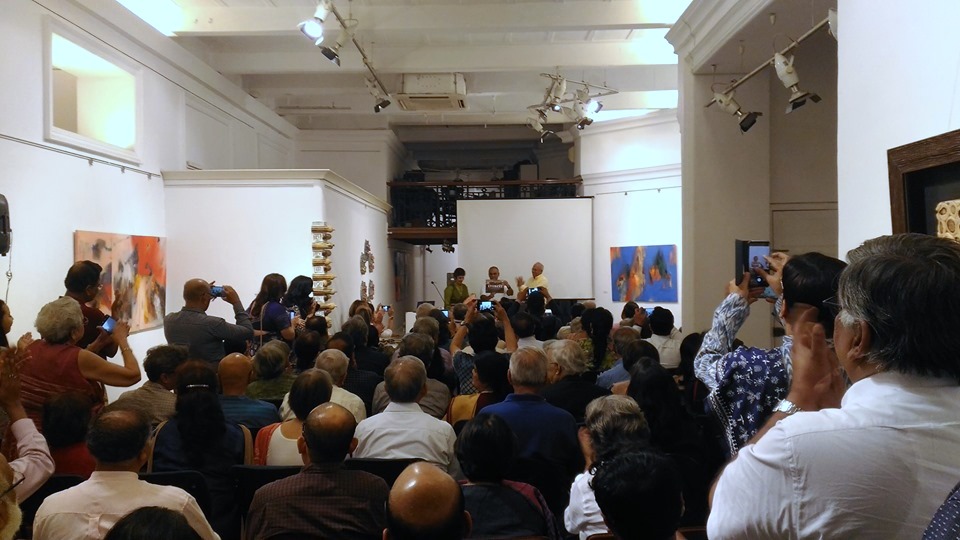
Everest Reflections on the Solukhumbu | Photos Book Launch Kolkata


The book launch of Everest Reflections on the Solukhumbu was held at The Harrington Street Arts Centre on October 31st 2019.

Everest Reflections on the Solukhumbu, launched to celebrate the centenary of the birth of Sir Edmund Hillary and dedicated to the sherpas reveals the historical influences, hidden seasons and current pressures in the land of Everest. Photographer Sujoy Das and writer Lisa Choegyal have collaborated in their second volume, this time capturing the essence of the majestic scenery and reality of daily life in the Solukhumbu in the shadow of Mt. Everest. A foreword by leading mountaineer Sir Chris Bonington, preface by cultural scholar Dr Lhakpa Norbu Sherpa and drawings by artist Paula Sengupta adds depth to this unusual book about a familiar destination.
In the words of Sir Chris Bonington in his Foreword “This is not just one more book about Everest, but a special celebration of the haunting beauty of Solukhumbu and its people. Civilisation depends on the health of our high places, and I wish my Sherpa friends all the best with successfully navigating their future course.”
Sujoy Das, founder of South Col Expeditions which runs treks and photo workshops in the Himalaya www.southcol.com has spent more than two decades in the Everest region and is the co-author and photographer of a number of books including Nepal Himalaya A Journey Through Time, Sikkim A Travellers Guide and Lonely Planet Nepal for the Indian Traveller.
British-born Lisa Choegyal has made Kathmandu her home since 1974, deeply involved with Nepal tourism and conservation. Author and editor of Nepal Himalaya A Journey Through Time, Kathmandu Valley Style, The Nepal Scene Chronicles of Elizabeth Hawley and Offerings from Nepal, she produced the South Asian Insight Guides series, and contributes a fortnightly column to the Nepali Times.
The book is available on line at www.amazon.comwww.vajrabookshop.comwww.amazon.in

Some photos and videos from the launch:


Thursday, October 24, 2019

Everest Reflections on the Solukhumbu | Book Launch Kolkata


The third book launch of Everest Reflections on the Solukhumbu will be held in Kolkata on October 31st 2019 - address in the invite. All are welcome.
Everest Reflections on the Solukhumbu, launched to celebrate the centenary of the birth of Sir Edmund Hillary and dedicated to the sherpas reveals the historical influences, hidden seasons and current pressures in the land of Everest. Photographer Sujoy Das and writer Lisa Choegyal have collaborated in their second volume, this time capturing the essence of the majestic scenery and reality of daily life in the Solukhumbu in the shadow of Mt. Everest. A foreword by leading mountaineer Sir Chris Bonington, preface by cultural scholar Dr Lhakpa Norbu Sherpa and drawings by artist Paula Sengupta adds depth to this unusual book about a familiar destination.

In the words of Sir Chris Bonington in his Foreword “This is not just one more book about Everest, but a special celebration of the haunting beauty of Solukhumbu and its people. Civilisation depends on the health of our high places, and I wish my Sherpa friends all the best with successfully navigating their future course.”

Sujoy Das, founder of South Col Expeditions which runs treks and photo workshops in the Himalaya www.southcol.com has spent more than two decades in the Everest region and is the co-author and photographer of a number of books including Nepal Himalaya A Journey Through Time, Sikkim A Travellers Guide and Lonely Planet Nepal for the Indian Traveller. 

British-born Lisa Choegyal has made Kathmandu her home since 1974, deeply involved with Nepal tourism and conservation. Author and editor of Nepal Himalaya A Journey Through Time, Kathmandu Valley Style, The Nepal Scene Chronicles of Elizabeth Hawley and Offerings from Nepal, she produced the South Asian Insight Guides series, and contributes a fortnightly column to the Nepali Times.

Links to some reviews of the book


The book is available on line at www.amazon.comwww.vajrabookshop.comwww.amazon.in


LinkWithin

Related Posts Plugin for WordPress, Blogger...