Showing posts with label Nikon. Show all posts

Thursday, February 14, 2019

Long Telephoto Lenses on a Budget

Many of us who are wildlife and bird photographers yearn for super fast big glass! Oh, what could we not do if we had a Nikon 600 F4 or a 400 F2.8! Sadly, the cost of these lenses are prohibitively expensive and out of reach for most of us. It is also not so easy to use these big lenses and proper technique and support are essential to get good results.

So what alternatives do we have? How do we capture that Alpine Accentor in the high Himalayas with affordable equipment?


This post discusses some of the so-called "budget" telephoto prime lenses and zoom lenses which are capable of  good photographs with proper technique and reasonable light. The crop factor with DX bodies should also be considered - a  300 f4 Nikon would give 450 F4 with a DX sensor and a 500 would give a reach of 750 which is huge! However, longer the lens the more difficult becomes the photograph and eventually you need a rock steady support for the camera! The zoom lenses would be slower than the primes but would have the advantage of a single lens covering a range of focal lengths.

Sigma 150-500 F5.6-6.3 $899
The Sigma 150-500 f5.6-6.3  is possibly the most popular third party zoom for wildlife. If you visit any of India's national parks a large number of shooters will have this lens.  It is very good value for the price point, if you can manage with a 6.3 aperture at the long end! At the shorter end it becomes a 150mm F5.6 which is about at least a stop slower than the 80-200 or 70-300 range of zooms! For a review visit  http://www.kenrockwell.com/sigma/150-500mm.htm


Tamron 150-600 F5-6.3 $1069
The Tamron 150-600 F5-6.3 is a new lens - it is similar to the Sigma but has an extra 100mm reach on the long end.  It has similar issues as the Sigma regarding speed and possibly greater issues regarding hand holdability due to being 600 mm at the long end! With a good sturdy support this could be a match winner especially for birds!  http://www.drkrishi.com/tamron-150-600-review


Nikon 80-400 F4.5-5.6 VR $1995 street
The Nikon 80-400 f4.5-5.6 VR lens is often used for shooting mammals. A very popular choice in the game parks in Africa for Nikon shooters,  it has a decent zoom range. In good light it can deliver stunning results and a good beanbag  support can allow hand holding at low speeds due to VR! If you are not looking for birds at a distance this might be  a good choice. However it is definitely much more expensive than the third party zooms though is sometimes available refurbished and on sale!
 http://photographylife.com/reviews/nikon-80-400mm-vr


Canon 100-400 f4.5-5.6L $1699
The Canon 100-400 F4.5/5.6 is similar the the Nikon above and used by Canon shooters and has similar features. For a review visit
 http://www.photozone.de/reviews/204-canon-ef-100-400mm-f45-56-usm-l-is-test-report--review


Nikon 300 F4 AFS ED $1369 street
This is a prime Nikon 300 mm f4 lens which is capable of producing excellent quality and sharpness. Mated with a TC 1.4 converter it gives a range of 420 mm and on a DX body that would be more than 600 mm! This would be my first choice if quality was paramount and I could sacrifice the multiple focal lengths of a zoom!
http://www.bythom.com/300AFSlens.htm


Canon 300 F4L $1449
This is an extraordinary good lens from  Canon 300 f4L - it belongs to their L series of glass and produces excellent sharpness and contrast. Highly Recommended by photozone.de who are usually miserly with their praise, it would be the first choice for a Canon shooter on a budget along with a 1.4 converter.
http://www.photozone.de/reviews/172-canon-ef-300mm-f4-usm-l-is-test-report--review

Nikon 200-500 F5.6 E $1397


 The Nikon 200-500 has become the preferred lens for wildlife and bird photography on a budget. If you cant afford the professionsl 200-400 F4  then this is possibly the next best choice. You lose one stop compared to the professional lens but the price performance factor is unbeateable!  For a review of the lens please see  https://photographylife.com/reviews/nikon-200-500mm-f5-6e-vr


 This is the new Nikon 300 F4  ED VR lens $1996 which is superlight lens with amazing performance - you can also mate it to one of the TC teleconverters to good more reach. The lens is on the expensive side but compensated by excellent performance and weight as well. For an excellent review of this lens do visit https://photographylife.com/reviews/nikon-300mm-f4e-pf-ed-vr


  As you can see I personally prefer the primes with a tele converter to the long zooms - this is also because I usually have a lens like 300 F4 Nikon in my bag when shooting wildlife! On the flip side if you have one body only you need to change lenses and dong this you may often miss the shot!

Essentially you need to weight up what your needs are at a  price point which you can afford  and then make the correct decision! Good luck!

Monday, August 27, 2018

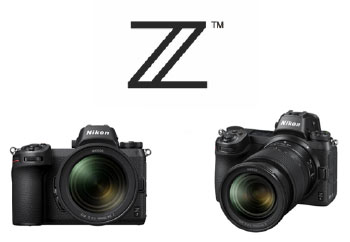
Nikon Z6 and Z7 Mirrorless Cameras


Image result for nikon z6 and 7 nikonusa

Nikon finally takes the plunge and enters the highly competitive mirrorless market with two cameras the Z6 and Z7. These full frame mirrorless cameras will compete directly against Sony's offerings.
To continue using Nikon's F mount lenses, there is a F2Z adapter which allows certain F mount lenses to be used on these mirrorless bodies/

Here is the press release from Nikon USA

Nikon Introduces the New Nikon Z Mount System, and Releases Two Full-Frame Mirrorless Cameras: the Nikon Z 7 and Nikon Z 6

MELVILLE, NY – Nikon Inc. is pleased to announce the release of the full-frame (Nikon FX–format) Nikon Z 7 and Nikon Z 6 mirrorless cameras, as well as NIKKOR Z lenses, featuring a new, larger-diameter mount to enable the next generation of ultimate optical performance.


Mirrorless Reinvented
The new Nikon Z mount system is comprised of mirrorless cameras and compatible NIKKOR Z lenses and accessories. This system has been realized through the pursuit of a new dimension in optical performance. It has inherited Nikon’s tradition of quality, superior imaging technology, intuitive operability and high reliability, all innovated from its digital SLR cameras.

At the heart of the Z mount system is the new, larger-diameter mount, which unlocks further possibilities of lens design. The Z mount system will offer a variety of high-performance lenses, including the fastest lens in Nikon history, with f/0.951. Additionally, the new mount adapter will enable compatibility with NIKKOR F mount lenses, adding to the range of choices for photographers.

The letter “Z” represents the culmination of Nikon’s relentless pursuit of ultimate optical performance, and a bridge to a new chapter. It is about redefining possibilities to provide image makers with tools to pursue greater creativity.

Nikon will expand the value of mirrorless cameras through the pursuit of a new dimension in optical performance, and by upholding Nikon’s tradition of quality while responding to the evolution of imaging technology. By providing image makers with stimulating new products, Nikon will continue to lead imaging culture.

Z 7, Z 6 Product Overview
The Z 7 and Z 6 are equipped with a new backside illumination Nikon FX-format CMOS sensor with built-in focal-plane phase-detection AF pixels, and the latest image-processing engine, EXPEED 6.

The high-resolution Z 7 has 45.7 effective megapixels, and supports a standard sensitivity range of ISO 64–25600. In combination with NIKKOR Z lenses, the camera achieves an outstanding level of sharpness and detail, all the way to the edges of the image.

The versatile Z 6 is an all-purpose FX-format camera with 24.5 effective megapixels, and supports the wide sensitivity range of ISO 100–51200. With superior performance at high ISO sensitivities and full-frame 4K UHD video capture with full pixel readout, the Z 6 responds to a variety of needs, such as shooting in dimly lit environments and high-quality movie recording.

These two models combine legendary Nikon reliability and a familiar interface with the benefits of a mirrorless, including rapid FPS, hybrid AF, silent shooting and advanced multimedia capabilities.

Primary Features of the Z 7 and Z 6
  1. Equipped with a new backside illumination Nikon FX-format CMOS sensor with focal-plane phase-detection AF pixels
The Z 7 and Z 6 are equipped with a new backside illumination, Nikon FX-format CMOS sensor with focal-plane phase-detection AF pixels, and the latest image-processing engine, EXPEED 6. The Z 7 has 45.7 effective megapixels and supports ISO 64–25600 range of standard sensitivities (reduction to the equivalent of ISO 32 and expansion to the equivalent of ISO 102400 is also possible). The Z 6 has an effective pixel count of 24.5 megapixels, and supports a broad range of standard sensitivities, from ISO 100–51200 (additional reduction to the equivalent of ISO 50 and expansion to the equivalent of ISO 204800).

  1. A fast and accurate hybrid AF system with focus points covering approximately 90% of the imaging area
The Z 7 has 493 focus points2 and the Z 6 has 273 focus points2, enabling broad coverage of approximately 90% of the imaging area both horizontally and vertically. This hybrid AF system uses an algorithm optimized for the FX-format sensor, to automatically switches between focal-plane phase-detection AF and contrast-detect AF when focusing to achieve focus. Newly-designed NIKKOR Z lenses take full advantage of this system, providing faster, quieter and with increased AF accuracy than previously possible for both still images and videos.

  1. The new EXPEED 6 image-processing engine for sharp and clear imaging, and new functions that support creativity
The Z 7 and Z 6 are equipped with the new EXPEED 6 image-processing engine. Employing the superior resolving power of NIKKOR Z and NIKKOR F mount lenses, subjects are rendered more sharply than ever before. Noise is also effectively reduced.

Additionally, a mid-range sharpening option has been added to Picture Control sharpness parameters. This option, along with existing sharpening and clarity parameters, allows users to make various textures within the screen sharper or softer, for both still images and video3. The cameras also offer 20 options of Creative Picture Control, supporting creative imaging expression. The effect level is adjustable from 0 to 100.

  1. An electronic viewfinder that utilizes Nikon's superior optical and image-processing technologies to offer a clear and natural view
The electronic viewfinder adopted for the Z 7 and Z 6 is comfortable and easy to use, comparable to optical viewfinders. Both cameras are equipped with an electronic viewfinder for which an approximately 3690k-dot OLED panel has been adopted. The electronic viewfinder has frame coverage and magnification of approximately 100% and 0.8×, respectively, as well as an approximately 37.0° diagonal viewing angle. It draws on Nikon's superior optical technologies and image-processing technologies, ensuring a clear and comfortable view, with reduced aberration and minimum eyestrain, even during extended shoots. Furthermore, a fluorine coat that effectively repels dirt has been applied to the eyepiece protection window. In addition, the <i> menu can be displayed in the electronic viewfinder, allowing users to quickly view and adjust a variety of shooting settings, including ISO sensitivity, AF-area mode, and Picture Control, all while looking through the viewfinder.

  1. An ergonomic design unique to Nikon that enables intuitive and familiar operation
The Z 7 and Z 6 have inherited the superior operability that Nikon has cultivated over the years through its development of cameras. The bodies are compact, while boasting a firm grip that is easy to hold, and the sub-selector and buttons such as AF-ON, ISO, and exposure compensation are all placed so that they can be operated swiftly and easily. Additionally, a display panel has been placed on the top plate of the camera, where information about settings can be displayed, similar to high-end digital SLR camera models.

  1. Video functions such as 10-bit N-Log that enables wide dynamic range, and timecoding that respond to professional needs
The Z 7 and Z 6 support recording of not only full-frame 4K UHD (3840 × 2160)/30p movies using the FX-based video format, but also Full-HD/120p movies. Sharper 4K UHD movies are made possible, using the full-pixel readout4. Additionally, Active D-Lighting, electronic vibration reduction, and focus peaking can be used with 4K UHD and Full-HD movie recording. Nikon’s original N-Log color profile can also be used with 10-bit5 HDMI output. The N-Log setting utilizes extensive color depth and twelve-stop, 1,300% dynamic range to record a wealth of tone information from highlights and shadows for more effective color grading. Timecode support makes synchronizing video and sound from multiple devices easier. Additionally, the control ring built into NIKKOR Z lenses can be used to quietly and smoothly adjust settings such as aperture and exposure compensation.

  1. Nikon's first6 in-camera vibration reduction with approx. 5.0-stop7 effectiveness
The Z 7 and Z 6 are equipped with in-camera vibration reduction (VR). The VR unit provides compensation for movement along five axes. The effects of vibration reduction are equivalent to a shutter speed up to approximately 5.0 stops6. This function can also be used effectively with NIKKOR F lenses, including those not equipped with a VR function, with the Mount Adapter FTZ (sold separately)8.

  1. Other features
  • Same level of strength and durability, as well as dust- and drip- resistance, as the Nikon D850, offered in a compact body
  • A 3.2-in., approximately 2100k-dot touch-sensitive LCD monitor, with a tilting mechanism
  • Silent photography function eliminates shake and noise caused by shutter release,
  • Peaking stack image function9 enables confirmation of the area in focus after shooting using focus shift, which is convenient for focus stacking10
  • High-speed continuous shooting (extended)11 at approximately 9 fps (Z 7) and 12 fps (Z 6) captures fast motion
  • Interval timer photography that makes 8K (Z 7) time-lapse movie creation10 possible
  • An extended low-light metering range12 allows users to easily capture scenes such as the transition from sunset to starry night sky, using aperture-priority auto exposure
  • Built-in Wi-Fi® for direct connection to a smart device using SnapBridge
  • Built-in Wi-Fi® makes the transfer of images and movies to a computer possible
  • Support for existing digital SLR camera accessories such as the EN-EL15/a/b batteries, WT-7/A/B/C Wireless Transmitter (available separately) for transferring images and movies at high speed over a wired or wireless LAN, and radio-controlled/optical controlled Advanced Wireless Lighting, which makes flexible multi-flash photography possible

Development of the MB-N10 Multi-Power Battery Pack
The MB-N10 Multi-Power Battery Pack that is currently in development will hold two EN-EL15b, effectively increasing the number of shots possible and/or movie recording time by approximately 1.8×. It will provide the same level of dust and drip resistance as the Z 7 and Z 6, and will support USB charging using the EH-7P Charging AC Adapter. Information regarding the release of this product will be announced at a later date.

Price and Availability
The Nikon Z 7 will be available September 27 for a suggested retail price (SRP) of $3399.95* for the body-only configuration, or for $3999.95* SRP as a kit with the new NIKKOR Z 24-70 f/4 S lens. The Nikon Z 6 will be available in late November for the $1995.95* SRP for the body only configuration, or for the $2,599.95* SRP with the NIKKOR Z 24-70mm f/4 S lens kit. For more information on these and other Nikon products, please visit www.nikonusa.com.

About Nikon
Nikon Inc. is a world leader in digital imaging, precision optics and photo and video capture technologies; globally recognized for setting new standards in product design and performance for an award-winning array of equipment that enable visual storytelling and content creation. In 2017, Nikon celebrated a legacy of innovation with its 100-year anniversary celebration. Nikon Inc. distributes consumer and professional digital SLR cameras, NIKKOR optics, Speedlights and system accessories, Nikon COOLPIX® compact digital cameras and Nikon software products. Nikon Corporation, the parent company of Nikon Inc., announced the production of 100 million NIKKOR lenses, creating a new milestone in Nikon’s heritage of superior optics. For more information, dial (800) NIKON-US or visit www.nikonusa.com, which links all levels of photographers and visual storytellers to the Web's most comprehensive learning and sharing communities. Connect with Nikon on FacebookGoogle+TwitterYouTubeInstagramVimeoFlickr and Snapchat (@NikonUSASnap).

# # #

  1. Within interchangeable lenses for Nikon SLR cameras and Advanced Cameras with Interchangeable Lens.
  2. With FX (36×24) image area and single-point AF enabled.
  3. Mid-range sharpness adjustment is only possible at “High quality” movie setting.
  4. DX-based movie format with the Z 7.
  5. Simultaneous recording of 4K UHD movies with 10-bit output to the camera's memory card is not possible.
  6. Among interchangeable-lens cameras.
  7. Measured in accordance with CIPA standards (using the NIKKOR Z 24-70mm f/4 S, with zoom set at the maximum telephoto position)
  8. The level of compensation achieved when a NIKKOR F mount lens is used is not as high as that of a NIKKOR Z lens
  9. Can only be confirmed using the camera with which focus shift was performed.
  10. Third-party software is required.
  11. Continuous H (extended) in 12-bit RAW, JPEG, or TIFF format.
  12. With interval timer shooting or time-lapse movie recording with silent photography and exposure smoothing enabled.

*SRP (Suggested Retail Price) listed only as a suggestion. Actual prices are set by dealers and are subject to change at any time.
Specifications, equipment and release dates are subject to change without any notice or obligation on the part of the manufacturer.

Tuesday, January 9, 2018

Nikon 180-400 Super Zoom with TC 1.4 Teleconverter


Nikon introduces a 180-400 F4 superzoom with 1.4 teleconverter built in at $12,399.95!

The press release from the Nikon USA site says it all:
"Pros who spend time behind a super-telephoto lens know a hard truth: when you need a teleconverter, you often need it in a hurry. For these moments, Nikon proudly introduces the AF-S NIKKOR 180-400mm f/4E TC1.4 FL ED VR, a super-telephoto zoom lens with a built-in 1.4X teleconverter. Capture sports, events and wildlife in lifelike brilliance from 180-400mm, then, without breaking shooting posture, engage the integrated teleconverter and increase your reach to 560mm f/5.6 (840mm equivalent on a DX body). Incorporating remarkable advancements in optical design, autofocus performance, Vibration Reduction and durability, this lens is bound to become the new standard for serious field photographers."

Features

  • Professional super-telephoto zoom with Nikon's first built-in selectable 1.4X teleconverter
  • Advanced optical design with 8 ED glass elements, a Fluorite element and Nano Crystal Coat produces unwavering image quality
  • Blazing fast subject acquisition and locked-on tracking, especially when used with Nikon's 153-point AF system
  • Lightweight, durable construction with advanced weather sealing, internal focus and Nikon's nonstick Fluorine coating
  • Next-generation Vibration Reduction (VR) system that starts immediately and includes three shooting modes
The immediate competition for this lens is the old workhorse 200-400 F4 used extensively by both wildlife and sports photographers and this will be the lens against which the new  180-400 will be compared. As prices go the older lens is around $6,996 street so there is a very significant difference between the two offerings.

We should wait for the test reviews of the new lens and it performance in the field.

In the meanwhile for more information do visit the following links:


Thursday, August 24, 2017

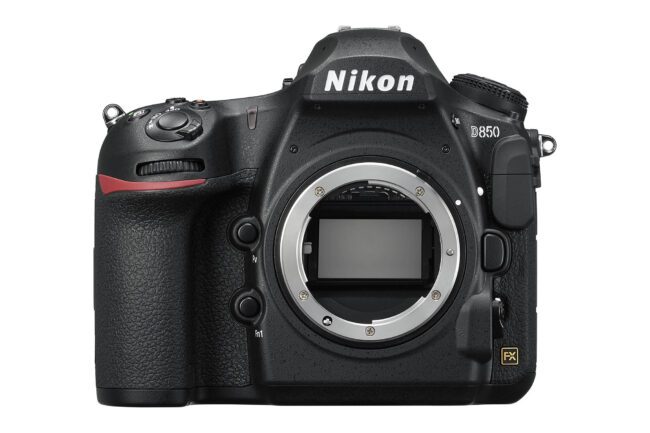
Nikon D850 | A Monster of a Camera

Nikon-D850

Nikon announced the formal launch of it's new full frame SLR - the 45.7 MP D850 which has specs far advanced than the current series of Nikon cameras. The specs of the D850 are given below and they are very impressive.  The options for three sizes of raw files depending on need, ISO going from 64-25,600, full weather sealing, advanced autofocus system, 7 fps which is commendable with a 45.7 mp sensor, 4K video capability.

However on the flip side is the body weight 915 grams and the price a wopping $3300 body only! Professionals would definitely buy this body instead of the D810 or D750 in the full frame space. It remains to be seen how the Nikon flagships like the D5 fare against this new monster of a camera!

Nikon D850 Specifications

  • Sensor: 45.7 MP FX BSI Sensor, 4.35µ pixel size
  • Sensor Size: 35.9 x 23.9mm
  • Resolution: 8256 x 5504
  • Native ISO Sensitivity: 64-25,600
  • Boost Low ISO Sensitivity: 32
  • Boost High ISO Sensitivity: 51,200-102,400
  • RAW Formats: 45.7 MP (Full Size), 25.6 MP (Medium Size / mRAW), 11.4 MP (Small Size / sRAW)
  • mRAW / sRAW File Support: 12-bit lossless compressed
  • Processor: EXPEED 5
  • Metering System: 181,000-pixel RGB Meter
  • Dust Reduction: Yes
  • Weather Sealing/Protection: Yes
  • Body Build: Full Magnesium Alloy
  • Shutter: 1/8000 – 30 seconds
  • Shutter Durability: 200,000 cycles, self-diagnostic shutter
  • Storage: 1x XQD slot and 1x SD slot (UHS-II compatible)
  • Viewfinder Coverage: 100%
  • Viewfinder Magnification: 0.75x
  • Speed: 7 fps, 9 fps with optional MB-D18 battery grip
  • Built-in Flash: No
  • Autofocus System: Multi-CAM 20K AF sensor
  • AF Sensitivity: -4 EV at the center point
  • AF Detection: Up to f/8 with 15 focus points
  • LCD Screen: touch-enabled 3.2 inch diagonal tilting LCD with 2,359K dots
  • Movie Modes: 4K UHS @ 30 fps max
  • Slow Motion HD Video: Yes
  • Movie Exposure Control: Full
  • Movie Output: MOV, MP4
  • Time Lapse: 4K and 8K Timelapse
  • In-Camera HDR Capability: Yes
  • GPS: Not built-in, requires GP-1 GPS unit
  • WiFi: Built-in
  • Illuminated Buttons: Yes
  • Focus Stacking Feature: Yes
  • Focus Peaking for Stills and Video: Yes
  • Wireless Radio Flash Control: Yes
  • Silent Photography Mode in Live View: Yes
  • Bluetooth: Built-in
  • Battery Type: EN-EN15a
  • Battery Life: 1840 shots (CIPA)
  • USB Standard: 3.0
  • Weight: 915g
  • Dimensions: 146 x 124 x 79mm
  • Price: $3,299.95 MSRP

Friday, June 2, 2017

Nikon | Three News Lenses Introduced

Nikon announced the introduction of three new lenses - two for full frame Nikons and one very attractive lens for DX bodies.

Nikon AF-P 10-20mm F4.5 -5.6  ED VR
This lens promises to be a winner for DX users - it is light only 230 g in weight, reasonably priced   $309 and has VR as well.  It would be the ideal wide angle zoom for DX shooters who want to travel light and yet have the convenience of a wide zoom. Its competition would be the Nikon 12-24 F4DX and the 10-24 F3.5-4.5. This lens would be slower than both the other two DX wide angle zooms  and also lose 4mm on the top end. However, you get a lighter lens with a significant reduction in cost. One waits to see what the optical performance  would be like but looking at Nikon's latest offerings this promises to be very good. Neither of the two earlier Nikon DX wide angle zooms had vibration reduction.

Nikon AFS Fisheye 8-15 F3.5-4.5 ED
This a wide angle fisheye zoom for full frame Nikon DSLRs. If you do a  lot of photography in cramped interiors and need a fish eye perspective then this could be a choice. However the obvious deterrent is the price $1250. This is a gold ring lens so expect the same build quality and weather sealing as the other gold ring lenses in the Nikon stable. The lens also focuses to 0.5 inches making it very suitable for close up work.

Nikon AFS 28 F1.4 E ED
This lens complements F1.4 series of wide angle  primes the 24 F1.4 and the 35 f1.4. If you have any of these two lenses then adding the 28 f1.4 would not be a prudent choice. The lens has been built on the  Nikon 28 F1.4 AFD which was one of the legendary lenses in the film days. Priced at $1999 this is also a gold ring lenses and eminently suitable for low light work, interiors etc delivering gorgeous bokeh at the f1.4 aperture. Nikon's prime lenses are built to extremely high quality and one expects the same performance from this lens. The lens is on the heavier side 645 grams for a prime lens.

These lenses can be pre ordered  and should be in the shops by late June 2017

For more information on all these three lenses do visit the Nikon site  http://www.nikonusa.com/en/nikon-products/marketing/updates/camera-lenses/index.page

Wednesday, April 12, 2017

Nikon D7500

Image result for new nikon d7500
Nikon has just announced the introduction of the new DX format D7500 camera using the same sensor as the advanced D500 and losing a few megapixels. If offers high ISO upto 51,200 as well as 8 frames per second shooting and 4K video.

The information about the new camera from the Nikon web site is given below:

"The Nikon D7500 was engineered to be as versatile as the photographer using it, and excels whether shooting fast-action sports, stunning low-light landscapes, distant wildlife, glamorous portraits or multimedia content," said Kosuke Kawaura, Director of Marketing and Planning, Nikon Inc. "This is a camera for the photographers who are serious about their passion, infatuated with the next frame and above all else, want speed, small size and an excellent value."

Balance Image Quality and Low-Light Performance
The new D7500 features Nikon's latest 20.9-megapixel DX-format imaging sensor and EXPEED 5 processing engine, the same high-performance heart of the Nikon D500. Designed to excel in a wide array of shooting conditions, the D7500 eliminates the optical low-pass filter (OLPF) for maximum sharpness and clarity, with the class-leading dynamic range flexibility that is a hallmark of Nikon DSLRs. The compact DX-format form factor also gives photographers extended focal length reach that is an advantage for sports and wildlife photography, especially when coupled with the vast selection of available NIKKOR lenses.
Whether shooting a landscape at dawn or sports under indoor lights, the D7500 affords the latitude of low-light capability to consistently nail the shot, time and time again. Even in the most challenging light, users can capture images with minimal noise, thanks to a native ISO range that spans from 100-51,200, and an expanded ISO range up to an astonishing 1.64 million equivalent. Those same stellar image quality and low noise virtues also apply to those shooting video, whether it's a 4K UHD production or a mesmerizing astro time-lapse of the night sky.    
Focus with Precision, Capture with ConfidenceThe Nikon D7500 DSLR gives photographers many new premium features and advanced Nikon technologies to help create incredible images and video:
  • The D7500 is fast enough to keep pace with the quickest athletes or animals; capable of shooting at up to 8 frames-per-second (fps) with full AF/AE, with an expanded buffer of up to 50 RAW/NEF (14-bit lossless compressed) or 100 JPEG images.
  • Nikon's proven 51-point AF system covers a large portion of the frame. A Group-Area AF function has been added, which is a preferred focus mode for those shooting fast action.
  • The slim, tilting 3.2" 922K-dot touchscreen LCD can be used to easily control, compose and play back, even while mounted to a tripod. The menus can also be easily navigated using the touchscreen function.
  • Like the Nikon D5 and D500, the 180K RGB Metering system is used with the Advanced Scene Recognition System to help ensure balanced exposures and fantastic color rendition in nearly any shooting situation.
  • Lightweight DX form factor allows for an agile, comfortable body with deep grip and comprehensive weather sealing. The monocoque body is durable and approximately 5% lighter than the D7200 and 16% lighter than the D500.
  • Shoot all day and well into the night with up to approximately 950 shots per charge (CIPA standard).
  • Like the D500 and D5, the Auto AF Fine Tune feature when in Live View allows users to automatically calibrate autofocus with specific lenses if needed.
  • Through the Retouch menu, users can access an in-camera Batch Process RAW Converter that can handle multiple images to optimize workflow.
  • The camera's pop-up flash can act as a Commander for remote Speedlights, while the camera is also optimized to function with line-of-sight using SB-500, SB-700 and SB-5000. It can even support the radio frequency control system of the SB-5000 when using the optional WR-R10 accessory.
  • New Auto Picture Control function analyzes the picture scene and automatically generates a tone curve within the camera.
  • Images can automatically be downloaded to a compatible smartphone, and the camera can also be triggered remotely using Built-in Bluetooth1 and Wi-Fi2 technology.
Multimedia Capabilities for CreatorsThe Nikon D7500 adds in a diverse array of advanced features for multimedia content creators, including 4K UHD (3840 × 2160/30p) video capture and the ability to produce awe-inspiring 4K UHD time-lapse movies in-camera. Video files can be stored as either MOV files or as MP4 files, for greater flexibility and easier playback on a wide range of devices. Like the D500, the D7500 offers 3-axis built-in e-VR image stabilization when shooting 1080p Full HD video, and can be easily focused using the rear touchscreen function.
For the advanced videographer, the D7500 offers simultaneous 4K UHD output to card and uncompressed via HDMI, as well as a headphone and microphone jack for pro-level audio recording and monitoring. To allow for smooth exposure adjustments, the camera also supports power aperture for smooth and step-less depth-of-field transitions while users can also keep highlights in-check using visible zebra stripes in live-view mode. 

Saturday, March 4, 2017

Mountain Photography | Tips and Tricks


In the last few  months, I have been receiving a lot of e-mails from photographers asking what equipment I use in the mountains and whether I have any special tips or techniques when shooting in the Himalaya. So this post covers some tips and tricks to get better photographs in the mountains.

Tip 1: Don’t keep your camera in the bag
Many photographers, in order to protect their equipment, keep it in a camera bag when they are out shooting.  This is the wrong thing to do because invariably the moment will be gone by the time the camera is taken out of the bag! So keep the camera and one lens around your neck and keep the rest of the equipment in the bag to be used if needed. You will need to select the lens you want to use before starting out!

Tip 2: Simplify your equipment
I have seen a lot of photographers in the field with a full bag of lenses: wide angle, prime normal, zoom, telephoto etc. The problem of carrying such a lot of equipment is that you are invariably spoiled for choice and by the time you decide what to use the moment may have passed you once again!  I recently did a seventeen day trek and photo assignment in the Everest region of Nepal. I carried a Nikon D610 body and  and a 24-120 f4  VR lens. More than 90% of my photos were taken with this combination. In my  backpack I had a  20 f2.8 lens  which was hardly used! And around my waist in a pouch I had a 70-300 Nikon VR lens which was used for the remaining 10% of the shooting, mainly for wildlife, birds etc.  Having simplified the equipment I was not needed to make any choices and could concentrate on getting the photograph!

Tip 3: Shooting into the light
Mountains present a lot of opportunity for back lit photography. However the biggest enemy of backlit shooting is flare. So you need to protect your lens. How?
  • Use a lens hood – this may not always work!
  • Remove the UV filter if you can as sometimes flare does come from the filter if it is not properly multi-coated.
  • Try to shield the lens from the direct sun by stepping into the shade if possible. And if this is not possible you can try as I do by using my left hand to keep the sun away from the lens. Make sure that your hand does not come in the photo! Better still if you have a friend with you ask him to shield your lens and then you can use both hands to take the photo!
 Tip 4: F8 and be there
Basically this famous photography axiom asks you to be ready to shoot. So rather than adjust white balance, aperture,  shutter speed , metering modes, focus modes etc  before taking a photo, you to need to set all this before hand. On a normal day in the Himalaya, I will usually set the following before I start out: WB auto, ISO auto set to maximum of 800, aperture priority around 6.3 or so, matrix metering, AF-S for single focus. This allows me to shoot in most situations provide the light is reasonable. And, if I have time I would  bracket three to four exposure either by using auto bracketing  or manually -0.3, -0.7, -0.1, +0.3, + 0.7. This usually nails the photograph right in the camera.

Tip 5: Use the light to your advantage
In the mountains,  the early morning light and late evening light is usually very flattering and I have to confess that I am partial to the late evening light before sun down. Sometimes you need to wait for the right light. A lot of mountain landscapes are made due to the patience of the photographer. It also helps to know how the subject will look at a certain time of day. For example, certain monasteries in Ladakh get the western sun and so look best in the evening. Similarly, the Sandakphu view near Darjeeling has an amazing amount of warmth and texture when seen in the evening light.

Tip 6: Don’t put away your camera in bad weather
Mountain weather is unpredictable. There may be bright sunshine in the morning and snow and sleet in the afternoon. Sometimes great photos are taken in inclement weather. If you are shooting in the rain or snow try to protect your camera by covering it with a cloth or a temporary plastic cover. When I am walking and it is raining or snowing I keep my camera over my shoulder inside my jacket so that I can take it out and shoot as needed. When you get back to camp, remove the plastic, wipe the camera and lens clean with a dry cloth and leave in the open in your room or tent for it to breathe and the moisture to dry out.

Tip 7: Batteries
Batteries are a major problem in the Himalaya. Ideally you need to carry two batteries with you as often on long treks you do not have access to electricity to charge batteries. At night it often helps to take the batteries out of the camera and put it into a warm jacket or sleeping bag. And on the subject of batteries and extending battery life, stop looking at the LCD after every shot! In the Himalaya to save batteries my LCD is disabled and comes on only when I press the button. Also avoid scrolling through all the photos at camp every night as this drains the battery as well! 

Tip 8: If you can, take along a small table top light weight tripod
Ideally most photographers would recommend a full heavy weight tripod but I have given this up in the Himalaya a long time ago! It is too heavy to carry and also in some situations difficult to set up. So I have a small Slik table top which can also fit into a jacket pocket which I use when I need support. The Joby Gorilla pod is also an option and has the advantage of flexible legs!

Tip 9: Finally, don’t get mesmerized by the mountain ranges - look for detail near you as well
Often in a mountain environment, we tend to get mesmerized by the sheer beauty of the mountain ranges and shoot them as much as we can: at sunrise, at sunset, during the day. However, very often there is a lot of interesting details in the rocks, flowers, plants etc in the terrain through which we walk. Very often it is possible to combine this in a wide angle view to create a spectacular shot which is out of the ordinary. So don’t put the mountain in the top of the frame every time and shoot. Look at what is near your feet as well! 

For more mountain photographs please do visit www.sujoydas.com

Happy shooting!

Monday, August 1, 2016

Nikon 105 F1.4 AF- S ED

Nikon has just announced the introduction of a super fast full frame telephoto lens the 105 F 1.4 AFS ED  weighing a hefty 985 grams ( just less than a kilo!) and priced at US 2199.95 $ . The Nikon USA web site (www.nikonusa.com) gives the details as below:


Meet the new standard by which all short telephoto lenses will be measured against, the world's first full-frame 105mm with an f/1.4 aperture. A marvel of optical precision, distortion correction and craftsmanship. It's fast maximum aperture make this an ideal optic for available light—recommended for portraiture or indoor sports. This short telephoto lens can defocus backgrounds with painterly finesse and isolate subjects with three-dimensional fidelity. For those seeking the ultimate in image quality in photography or videography, there's no close second.

Electromagnetic Diaphragm Mechanism
An electromagnetic diaphragm mechanism in the lens barrel provides highly accurate electronic diaphragm or aperture blade control when using auto exposure during continuous shooting. With conventional D/G type lenses, the diaphragm blades are operated by mechanical linkage levers.

ED (Extra-Low Dispersion) Glass
An optical glass developed by Nikon that is used with normal optical glass in telephoto lenses to obtain optimum correction of chromatic aberrations.

IF Lens
A NIKKOR lens in which only the internal lens group shifts during focusing. Thus, IF NIKKORS do not change in size during AF operation, allowing for compact, lightweight lenses capable of closer focusing distances. These lenses will be designated with the abbreviation IF on the lens barrel.

M/A
Select NIKKOR lenses have a focusing mode which allows switching from automatic to manual focusing with virtually no lag time by simply turning the focusing ring on the lens. This makes it possible to seamlessly switch to fine manual focusing while looking through the viewfinder.

Nano Crystal Coating
An anti-reflective coating developed by Nikon that virtually eliminates internal lens element reflections across a wide range of wavelengths. Nano Crystal Coat solves ghost effects caused by red light and effectively reduces ghost and flare caused by light entering the lens diagonally.

Silent Wave Motor
AF-S NIKKOR lenses feature Nikon’s Silent Wave Motor (SWM), which represents a significant advance in AF lens technology. SWM uses ultrasonic vibrations—rather than a gear system—to focus the lens, providing incredibly smooth, silent and precise autofocus operation.
LCD, Video and Photo Gallery images are for illustrative purposes only.

What about the earlier Nikon 105s?

We still have the following lenses many of which are available second hand (www.keh.com):

105 F2 DC This is the only autofocus lens for 105 mm prior to the new release.

105 F2.5 AIS manual focus
The was a legendary lens in it's time and is still coveted. Used by photo journalists the world over it was renowed for it' high speed, superb sharpness. It is still available second hand for around $150-300 depending on condition. Prior to this Nikon also had a number of 105  F2.5 lenses - K, AI, non AI etc.


105 F1.8 AIS manual focus 
 This was the fastest 105 before the introduction of this new lens. It is still available for around   $350-400 used but somehow always ran second to the F2.5 above


Nikon 105mm f/1.8

Pros and Cons of the New 105

Pros
  • Super fast 1.4 aperture
  • Excellent bokeh
  • Supern sharpness
Cons
  • Heavy lens almost a kilo in weight!
  • Price - at more than $2000 it would appeal to specialist and professional photographers
Links


Sunday, February 28, 2016

Nikon 200-500 F5.6E VR Zoom


Nikon 200-500 F5.6E VR Weight : 2300 gms 

Last autumn, Nikon introduced the 200 -500 zoom at a very attractive price point. Nikon has a professional model 200-400 F4 lens which sells at around  $7000 so this lens is an attractive proposition for wild life and sports shooters. It gives up one stop as compared to the pro lens but is much lighter and costs a great deal less. The competition in this range comes from Tamron and Sigma both of whom have lenses going upto 600 mm with a 6.3 aperture and are a shade lighter. On a DX body the lens becomes a super tele going upto 750mm without a tele convertor. Photographers considering this lens should also look at the combination of the new 300 F4 E VR with TC 1.4 which would be excellent for mammals but a little short for birds.


 The Sigma has two lenses in the same range - S for Sports and C for Contemporary. 
The Sports  is designed to offer a higher level of optical precision and contains 24 elements in 16 groups, with two FLD and three SLD elements to control aberrations and distortions. It has a minimum aperture of f/22, minimum focusing distance of 8.5', and maximum magnification ratio of 1:5. The lens measures 4.8 x 11.4", and weighs 6.3 lb.


Contemporary version contains 20 elements in 14 groups, with one FLD element and three SLD elements. It has a minimum aperture of f/22, minimum focus distance of 9.2', and maximum magnification ratio of 1:5 and shaves some dimensions off the Sports version to measure 4.1 x 10.2".

The pros and cons of the Nikon  as compared to the Sigma and Tamron zooms of similar range are:

Cons
The Tamron and Sigma have a greater zoom range 150-600 compared to the Nikon 200-500
Both the Tamron and the Sigma C lens are cheaper by around 20% as compared to the Nikon
The Tamron is the shortest in length of the three 258mm compared to 268mm of the other two lenses though the difference is not significant
The Nikon has a 2.5 x zoom 

Pros
The Nikon has a fixed 5.6 aperture as compared to the F5-6.3 of the other two lenses
The Nikon focuses closer 2.2 m against 2.7m and 2.8m of the Tamron and Sigma respectively
The Nikon has weather sealing
The Nikon performs well with full frame cameras even wide open i.e. f 5.6

However, despite the pros and cons if you are a long term Nikon user and looking for wildlife and sports lens without breaking the bank then this may well be the lens for you!

Street Prices
Sigma 150-600 C $989
Sigma 150-600 S $1799
Tamron 150-600 $1069
Nikon 200-500 $1397

Resources

http://froknowsphoto.com/nikon-200-500-vs-sigma-150-600-sport-real-world-review/

http://www.cameralabs.com/reviews/Nikon_Nikkor_AF-S_200-500mm_f5-6E_ED_VR/

http://www.cardinalphoto.com/content/super-telephoto-zoom-shoot-out-nikon-200-500mm-f56-versus-sigma-150-600mm-sports

LinkWithin

Related Posts Plugin for WordPress, Blogger...