Showing posts with label Pop Photo. Show all posts
Saturday, July 11, 2020
Everest | Reflections on the Solukhumbu
We are happy to share some good news at the time of the global pandemic - our book Everest Reflections on the Solukhumbu published by Bidur Dangol of Vajra Books was shortlisted amongst four books at the New Zealand Mountain Film and Book Festival for the Mountain Heritage Award. . We congratulate the winner The Great Unkown by Geoff Spearpoint and are happy that we were able to take part in the festival. The press release is below:
Mountain Books
Seven books have been shortlisted for the 4th annual Mountain Book Competition. Con-tenders for the Mountain Heritage Award include: Leading the Way, a historical account of 100 years of the Tararua Tramping Club, by Shaun Barnett and Chris Maclean, Exploring the Transantarctic Mountains by dog sledge, 1960-62 by Peter Otway, The Great Un-known, a chronicle of select trans-alpine journeys by Geoff Spearpoint, and Everest – Reflections on the Solkhumbu, with photography by Sujoy Das, and text by New Zealand’s Honorary Consul to Nepal, Lisa Choegyal.
For the Mountain Narratives Award Living the best day ever, celebrates the life of Hendri Coetzee, whose African whitewater adventures ended with a fatal encounter with a Salt-water Crocodile. Bewildered explores Laura Waters’ life changing catharsis of leaving toxic relationships and lifestyles for a long walk on Te Araroa. And In Fearless Chloe Phillips-Harris gives us a glimpse into the Mongol Derby; a 1000-kilometre endurance race across the wild steppes, desert and mountains of Mongolia – a competition with no marked course, no support team, that requires riders to switch horses every 40 km.
Competition is fierce for the NZ Mountain Book of the Year. This $1000 award was found-ed and is supported by Dave Bamford and John Nankervis. The award is only for a book of the very highest quality, and the judges say there are several books at that level.
For more details on our book do visit https://www.amazon.in/Everest-Reflections-Solukhumbu-Choegyal-Sujoy/dp/9937928893/ref=sr_1_1?dchild=1&keywords=everest+sujoy+das&qid=1594447493&sr=8-1
Monday, November 4, 2019
Everest Reflections on the Solukhumbu | Photos Book Launch Kolkata
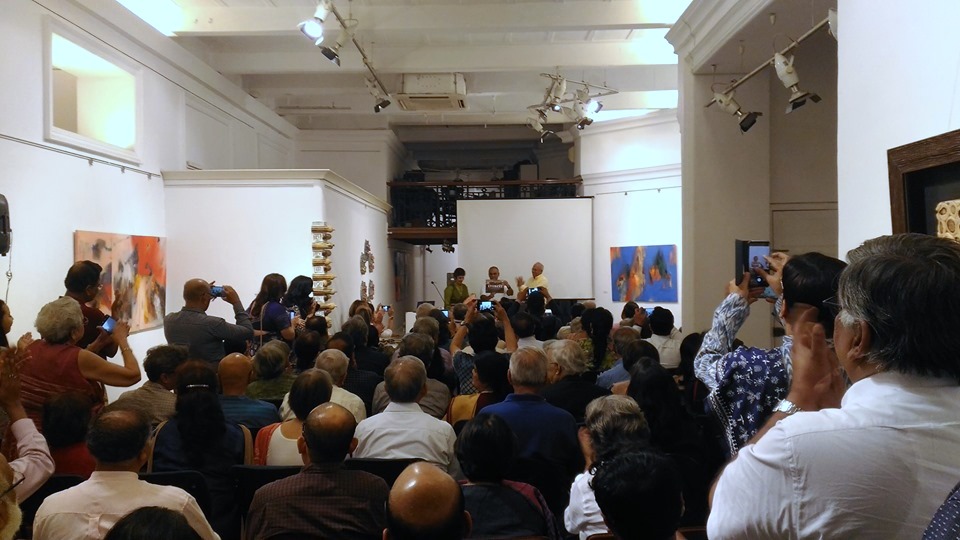
The book launch of Everest Reflections on the Solukhumbu was held at The Harrington Street Arts Centre on October 31st 2019.
Everest Reflections on the Solukhumbu, launched to celebrate the centenary of the birth of Sir Edmund Hillary and dedicated to the sherpas reveals the historical influences, hidden seasons and current pressures in the land of Everest. Photographer Sujoy Das and writer Lisa Choegyal have collaborated in their second volume, this time capturing the essence of the majestic scenery and reality of daily life in the Solukhumbu in the shadow of Mt. Everest. A foreword by leading mountaineer Sir Chris Bonington, preface by cultural scholar Dr Lhakpa Norbu Sherpa and drawings by artist Paula Sengupta adds depth to this unusual book about a familiar destination.
In the words of Sir Chris Bonington in his Foreword “This is not just one more book about Everest, but a special celebration of the haunting beauty of Solukhumbu and its people. Civilisation depends on the health of our high places, and I wish my Sherpa friends all the best with successfully navigating their future course.”
Sujoy Das, founder of South Col Expeditions which runs treks and photo workshops in the Himalaya www.southcol.com has spent more than two decades in the Everest region and is the co-author and photographer of a number of books including Nepal Himalaya A Journey Through Time, Sikkim A Travellers Guide and Lonely Planet Nepal for the Indian Traveller.
British-born Lisa Choegyal has made Kathmandu her home since 1974, deeply involved with Nepal tourism and conservation. Author and editor of Nepal Himalaya A Journey Through Time, Kathmandu Valley Style, The Nepal Scene Chronicles of Elizabeth Hawley and Offerings from Nepal, she produced the South Asian Insight Guides series, and contributes a fortnightly column to the Nepali Times.
Some photos and videos from the launch:
Labels:
books,
Everest,
Himalayas,
mountains,
Photo Workshop,
photography,
Pop Photo,
Publications
Wednesday, March 20, 2019
Tips and Tricks for Better Photography
After my two posts on tips and tricks for mountain photography in this blog, I am giving below some general tips for everyday photography which I am sure would be useful.
Tip 1: Add people to a landscape
Add a subject to the foreground of a landscape shot to give depth to the photograph. An example of this is given below:
Tip 2: Use fill flash in daylight
When shooting people, in strong noon day sun use the pop up flash or even a speedlight to fill dark shadows especially under the eyes and bring out details. This ensures that the background is also exposed correctly and not washed out. An example of this is given below:
Tip 3: Kick the “I’ll fix it in Photoshop habit”!
You need to ensure that the photograph is taken in the camera not fixed in Photoshop – so white balance, exposure, lighting, focus etc all need to be bang-on! If you are not sure of the exposure bracket! Check the histogram on the LCD display to ensure that exposure is correct.
Tip 4: F8 and be there
Basically this famous photography axiom asks you to be ready to shoot. So rather than adjust white balance, aperture, shutter speed , metering modes, focus modes etc before taking a photo, you to need to set all this before hand. On a normal sunny day, I will usually set the following before I start out: WB auto, ISO auto set to maximum of 800, aperture priority around f8 or so, and matrix metering, AF-S for single focus. This allows me to shoot in most situations provide the light is reasonable. And, if I have time I would bracket three to four exposure either by using auto bracketing or manually -0.3, -0.7, -0.1, +0.3, + 0.7. This usually nails the photograph right in the camera.
Tip 5: To reduce noise at high ISO make sure your exposure is bang on target!
Modern day cameras allow you to shoot at very high ISO’s like 1600, 3200 and even 6400 on top end models. However, the major drawback at high ISO is noise. So, one way of reducing or minimizing noise is to make sure your exposure in spot on. If you have underexposed even a little bit there will be ample noise in the shadow areas which is always difficult to get rid off. So try to ensure a correct exposure by shooting, maybe, a number of photos at different settings so that at least one is correctly exposed. This is an example of a photo shot an ISO 1600 but due to correct exposure there is hardly any noise:
Tip 6: On a tripod turn VR or IS off
This is a mistake which I have made a number of times. If you have a camera on a tripod you don’t need to switch on VR or IS as the camera is likely to be rock steady and does not need any vibration reduction. Often in a hurry we forget this and shoot with VR or IS on.
Tip 7: For critical photos use RAW
When you need to use photographs for magazine stories, prints, exhibitions etc raw is the way to go. You can convert raw files using the correct version of Camera Raw with Photoshop and with proprietary converters like Capture NX2, View NX for Nikon.
Tip 8: If you can, take along a small table top light weight tripod
Ideally most photographers would recommend a full heavy weight tripod but is difficult to carry around and also in some situations difficult to set up. So I have a small Slik table top which can also fit into a jacket pocket which I use when I need support. The Joby Gorilla pod is also an option and has the advantage of flexible legs!
Tip 9: Don’t put the camera away at dusk or at night
On the subject of tripods if you have one with you then photography at night and at dusk becomes a distinct possibility. Long exposures makes the world look a lot different and details in the dark night sky can often produce stunning effects.
Tip 10: Less is often more!
The proliferation of social media and the free photo web sites have made it possible for everyone to post their photos on the net even if they don’t have their own web sites or blogs. However, in their enthusiasm to post photographs of a holiday or journey I often find a facebook album of a hundred photos or more. Similarly, picasa web albums sent to me to review have similar number of photos. Usually with so many images the impact is lost and the good images get masked by the mediocre ones. So it often helps to edit tightly, remove duplicates and similars, weed out all photos that are not in focus, overexposed or underexposed, badly composed and leave the best ones for the viewers! Most of my albums rarely have more than twenty photographs and the majority have between ten and twelve!
Monday, March 11, 2019
Mountain Photography Workshop | April 6th 2019 Kolkata
On 6th April 2019 in Kolkata, India I will be conducting a short workshop of mountain photography. It will be a hands on session with my photographs explaining the approach, the technicalities, different subjects and situations and the reason behind the photographs.
I will share with the participants my thirty odd years of experience photographing in the mountains.
The programme is organised by ‘THE HIMALAYAN ’s a Trust, non-profit in nature that was formed in May 2017. It was conceived to attract like-minded people in the promotion of Himalayan lore and preservation, through Travel, Expeditions, Explorations and Adventure, and support of its Nature, Ecology, Culture, as well as the well-being of its people. The primary inspiration has been the vision of Mr. Meher H. Mehta FRGS and a handful of likeminded mountain lovers - a vision that encompasses the incorporation of a balanced, incisive as well as interactive dissemination platform for the reporting of Himalayan Activity–of Climbing, Science, Literature and the yonder, in a manner befit to stimulate the intellectual yearning of the erudite mountain lover, as well as to kindle the fertile mind of the incorrigibly romantic young mountaineer.
Admission is free to register for the workshop do send an email to thehimalayan2017@gmail.com
I hope to see many of my friends, fellow photographers and mountain lovers at the workshop.
Thursday, February 14, 2019
Long Telephoto Lenses on a Budget
Many of us who are wildlife and bird photographers yearn for super fast big glass! Oh, what could we not do if we had a Nikon 600 F4 or a 400 F2.8! Sadly, the cost of these lenses are prohibitively expensive and out of reach for most of us. It is also not so easy to use these big lenses and proper technique and support are essential to get good results.
So what alternatives do we have? How do we capture that Alpine Accentor in the high Himalayas with affordable equipment?
This post discusses some of the so-called "budget" telephoto prime lenses and zoom lenses which are capable of good photographs with proper technique and reasonable light. The crop factor with DX bodies should also be considered - a 300 f4 Nikon would give 450 F4 with a DX sensor and a 500 would give a reach of 750 which is huge! However, longer the lens the more difficult becomes the photograph and eventually you need a rock steady support for the camera! The zoom lenses would be slower than the primes but would have the advantage of a single lens covering a range of focal lengths.
The Sigma 150-500 f5.6-6.3 is possibly the most popular third party zoom for wildlife. If you visit any of India's national parks a large number of shooters will have this lens. It is very good value for the price point, if you can manage with a 6.3 aperture at the long end! At the shorter end it becomes a 150mm F5.6 which is about at least a stop slower than the 80-200 or 70-300 range of zooms! For a review visit http://www.kenrockwell.com/sigma/150-500mm.htm
The Tamron 150-600 F5-6.3 is a new lens - it is similar to the Sigma but has an extra 100mm reach on the long end. It has similar issues as the Sigma regarding speed and possibly greater issues regarding hand holdability due to being 600 mm at the long end! With a good sturdy support this could be a match winner especially for birds! http://www.drkrishi.com/tamron-150-600-review
The Nikon 80-400 f4.5-5.6 VR lens is often used for shooting mammals. A very popular choice in the game parks in Africa for Nikon shooters, it has a decent zoom range. In good light it can deliver stunning results and a good beanbag support can allow hand holding at low speeds due to VR! If you are not looking for birds at a distance this might be a good choice. However it is definitely much more expensive than the third party zooms though is sometimes available refurbished and on sale!
http://photographylife.com/reviews/nikon-80-400mm-vr
The Canon 100-400 F4.5/5.6 is similar the the Nikon above and used by Canon shooters and has similar features. For a review visit
http://www.photozone.de/reviews/204-canon-ef-100-400mm-f45-56-usm-l-is-test-report--review
This is a prime Nikon 300 mm f4 lens which is capable of producing excellent quality and sharpness. Mated with a TC 1.4 converter it gives a range of 420 mm and on a DX body that would be more than 600 mm! This would be my first choice if quality was paramount and I could sacrifice the multiple focal lengths of a zoom!
http://www.bythom.com/300AFSlens.htm
This is an extraordinary good lens from Canon 300 f4L - it belongs to their L series of glass and produces excellent sharpness and contrast. Highly Recommended by photozone.de who are usually miserly with their praise, it would be the first choice for a Canon shooter on a budget along with a 1.4 converter.
http://www.photozone.de/reviews/172-canon-ef-300mm-f4-usm-l-is-test-report--review
The Nikon 200-500 has become the preferred lens for wildlife and bird photography on a budget. If you cant afford the professionsl 200-400 F4 then this is possibly the next best choice. You lose one stop compared to the professional lens but the price performance factor is unbeateable! For a review of the lens please see https://photographylife.com/reviews/nikon-200-500mm-f5-6e-vr
This is the new Nikon 300 F4 ED VR lens $1996 which is superlight lens with amazing performance - you can also mate it to one of the TC teleconverters to good more reach. The lens is on the expensive side but compensated by excellent performance and weight as well. For an excellent review of this lens do visit https://photographylife.com/reviews/nikon-300mm-f4e-pf-ed-vr
As you can see I personally prefer the primes with a tele converter to the long zooms - this is also because I usually have a lens like 300 F4 Nikon in my bag when shooting wildlife! On the flip side if you have one body only you need to change lenses and dong this you may often miss the shot!
Essentially you need to weight up what your needs are at a price point which you can afford and then make the correct decision! Good luck!
So what alternatives do we have? How do we capture that Alpine Accentor in the high Himalayas with affordable equipment?
![]() |
| Sigma 150-500 F5.6-6.3 $899 |
![]() |
| Tamron 150-600 F5-6.3 $1069 |
![]() |
| Nikon 80-400 F4.5-5.6 VR $1995 street |
http://photographylife.com/reviews/nikon-80-400mm-vr
![]() |
| Canon 100-400 f4.5-5.6L $1699 |
http://www.photozone.de/reviews/204-canon-ef-100-400mm-f45-56-usm-l-is-test-report--review
![]() |
| Nikon 300 F4 AFS ED $1369 street |
http://www.bythom.com/300AFSlens.htm
![]() |
| Canon 300 F4L $1449 |
http://www.photozone.de/reviews/172-canon-ef-300mm-f4-usm-l-is-test-report--review
![]() |
| Nikon 200-500 F5.6 E $1397 |
The Nikon 200-500 has become the preferred lens for wildlife and bird photography on a budget. If you cant afford the professionsl 200-400 F4 then this is possibly the next best choice. You lose one stop compared to the professional lens but the price performance factor is unbeateable! For a review of the lens please see https://photographylife.com/reviews/nikon-200-500mm-f5-6e-vr
![]() |
This is the new Nikon 300 F4 ED VR lens $1996 which is superlight lens with amazing performance - you can also mate it to one of the TC teleconverters to good more reach. The lens is on the expensive side but compensated by excellent performance and weight as well. For an excellent review of this lens do visit https://photographylife.com/reviews/nikon-300mm-f4e-pf-ed-vr
As you can see I personally prefer the primes with a tele converter to the long zooms - this is also because I usually have a lens like 300 F4 Nikon in my bag when shooting wildlife! On the flip side if you have one body only you need to change lenses and dong this you may often miss the shot!
Essentially you need to weight up what your needs are at a price point which you can afford and then make the correct decision! Good luck!
Friday, September 14, 2018
Banff Mountain Book Festival Longlist 2018
![]() |
| Photo Courtesy : Banff Mountain Book Festival www.banffcentre.ca |
The Banff Mountain Book Festival Long list 2018 has been announced. As usual there is an outstanding collection of books which will make it very difficult for the jury to select the winners. The list of books in the long list is below:
Adventure Travel
$2000 - Sponsored by Fjällräven
Atlas of a Lost World
Craig Childs, Pantheon Books (USA, 2018)
Lands of Lost Borders
Kate Harris, Penguin Random House Canada (Canada, 2018)
The Last Wild Men of Borneo
Carl Hoffman, HarperCollins (USA, 2018)
Mountain Fiction & Poetry
$2000
As Above, So Below
Chris Kalman, Mascot Books (USA, 2018)
Deer at Twilight: Poems from the North Cascades
Paul Willis, Stephen F. Austin State University Press (USA, 2018)
The Eight Mountains
Paolo Cognetti, Penguin Random House - Vintage (UK, 2018)
Mysterium
Susan Froderberg, Farrar, Straus and Giroux (USA, 2018)
Mountain Literature – Non-Fiction
$2000 - Sponsored by the Whyte Museum of the Canadian Rockies
A Mountaineer's Life
Allen Steck, Patagonia Books (USA, 2017)
Edmund Hillary: A Biography
Michael Gill, Potton and Burton (NZ, 2017)
End of the Rope: Mountains, Marriage and Motherhood
Jan Redford, Penguin Random House Canada (Canada, 2018)
Honouring High Places: The Mountain Life of Junko Tabei
Junko Tabei and Helen Rolfe, Rocky Mountain Books (Canada, 2017)
Tides: a climber's voyage
Nick Bullock, Vertebrate Publishing (UK, 2018)
Mountain Environment and Natural History
$2000 – Sponsored by Town of Banff
Bert Riggall's Greater Waterton: A Conservation Legacy
Beth Russell-Towe, Fifth House Publishers (Canada, 2018)
Big Lonely Doug: The Story of One of Canada's Last Great Trees
Harley Rustad, House of Anansi Press (Canada, 2018)
The Wolf: A True Story of Survival and Obsession in the West
Nate Blakeslee, Penguin Random House Canada (Canada, 2017)
Mountain Image
$2000 – Sponsored by Lake O'Hara Lodge
Bergtagen
Claes Grundsten, Bokförlaget Max Ström (Sweden, 2017)
The Canadian Rockies: Rediscovered
Paul Zizka, Rocky Mountain Books (Canada, 2017)
Searching for Tao Canyon
Pat Morrow, Jeremy Schmidt and Art Twomey, Rocky Mountain Books (Canada, 2018)
Guidebooks
$2000 – Sponsored by the Association of Canadian Mountain Guides
Higher Education
Andy Kirkpatrick (Ireland, 2018)
Hiking the Pacific Crest Trail: Northern California
Philip Kramer, Mountaineers Books (USA, 2018)
The Index Town Walls: A Guide to Washington's Finest Crag
Chris Kalman and Matthew Van Biene, Sharp End Publishing (USA, 2017)
Scotland's Winter Mountains with one axe
Garry Smith, Northern Edge Books (UK, 2018)
Squamish Rockclimbs
Kevin McLane and Andrew Boyd, High Col Press (Canada, 2018)
Mountaineering Article
$2000 – Sponsored by the University of Alberta and the Alpine Club of Canada
Contraindications
Alison Criscitiello, Alpinist Magazine (USA, August 2017)
The Force of the Soul
James Edward Mills, Alpinist Magazine (USA, November 2017)
Suicides and Pirates
Andrew Allport, The Climbing Zine (USA, March 2018)
The Other Annapurna
Ed Douglas, Rock and Ice Magazine (USA, July 2018)
Mountaineering History
$2000
All titles that are shortlisted in the categories above that have a theme of mountaineering history are eligible for this award.
Grand Prize – The Phyllis and Don Munday Award
$4000 – Sponsored by the Alpine Club of Canada
The shortlist of category award winners eligible for the Grand Prize will be announced in mid-October.
The Grand Prize will be announced Thursday, November 1, 2018 at Banff Centre Mountain Film and Book Festival and category awards will be presented to winning authors.
For more information do visit:
https://www.banffcentre.ca/banff-mountain-book-competition
Monday, August 27, 2018
Nikon Z6 and Z7 Mirrorless Cameras
Nikon finally takes the plunge and enters the highly competitive mirrorless market with two cameras the Z6 and Z7. These full frame mirrorless cameras will compete directly against Sony's offerings.
To continue using Nikon's F mount lenses, there is a F2Z adapter which allows certain F mount lenses to be used on these mirrorless bodies/
Here is the press release from Nikon USA
Nikon Introduces the New Nikon Z Mount System, and Releases Two Full-Frame Mirrorless Cameras: the Nikon Z 7 and Nikon Z 6
MELVILLE, NY – Nikon Inc. is pleased to announce the release of the full-frame (Nikon FX–format) Nikon Z 7 and Nikon Z 6 mirrorless cameras, as well as NIKKOR Z lenses, featuring a new, larger-diameter mount to enable the next generation of ultimate optical performance.

Mirrorless Reinvented
The new Nikon Z mount system is comprised of mirrorless cameras and compatible NIKKOR Z lenses and accessories. This system has been realized through the pursuit of a new dimension in optical performance. It has inherited Nikon’s tradition of quality, superior imaging technology, intuitive operability and high reliability, all innovated from its digital SLR cameras.
At the heart of the Z mount system is the new, larger-diameter mount, which unlocks further possibilities of lens design. The Z mount system will offer a variety of high-performance lenses, including the fastest lens in Nikon history, with f/0.951. Additionally, the new mount adapter will enable compatibility with NIKKOR F mount lenses, adding to the range of choices for photographers.
The letter “Z” represents the culmination of Nikon’s relentless pursuit of ultimate optical performance, and a bridge to a new chapter. It is about redefining possibilities to provide image makers with tools to pursue greater creativity.
Nikon will expand the value of mirrorless cameras through the pursuit of a new dimension in optical performance, and by upholding Nikon’s tradition of quality while responding to the evolution of imaging technology. By providing image makers with stimulating new products, Nikon will continue to lead imaging culture.
Z 7, Z 6 Product Overview
The Z 7 and Z 6 are equipped with a new backside illumination Nikon FX-format CMOS sensor with built-in focal-plane phase-detection AF pixels, and the latest image-processing engine, EXPEED 6.
The high-resolution Z 7 has 45.7 effective megapixels, and supports a standard sensitivity range of ISO 64–25600. In combination with NIKKOR Z lenses, the camera achieves an outstanding level of sharpness and detail, all the way to the edges of the image.
The versatile Z 6 is an all-purpose FX-format camera with 24.5 effective megapixels, and supports the wide sensitivity range of ISO 100–51200. With superior performance at high ISO sensitivities and full-frame 4K UHD video capture with full pixel readout, the Z 6 responds to a variety of needs, such as shooting in dimly lit environments and high-quality movie recording.
These two models combine legendary Nikon reliability and a familiar interface with the benefits of a mirrorless, including rapid FPS, hybrid AF, silent shooting and advanced multimedia capabilities.
Primary Features of the Z 7 and Z 6
- Equipped with a new backside illumination Nikon FX-format CMOS sensor with focal-plane phase-detection AF pixels
The Z 7 and Z 6 are equipped with a new backside illumination, Nikon FX-format CMOS sensor with focal-plane phase-detection AF pixels, and the latest image-processing engine, EXPEED 6. The Z 7 has 45.7 effective megapixels and supports ISO 64–25600 range of standard sensitivities (reduction to the equivalent of ISO 32 and expansion to the equivalent of ISO 102400 is also possible). The Z 6 has an effective pixel count of 24.5 megapixels, and supports a broad range of standard sensitivities, from ISO 100–51200 (additional reduction to the equivalent of ISO 50 and expansion to the equivalent of ISO 204800).
- A fast and accurate hybrid AF system with focus points covering approximately 90% of the imaging area
The Z 7 has 493 focus points2 and the Z 6 has 273 focus points2, enabling broad coverage of approximately 90% of the imaging area both horizontally and vertically. This hybrid AF system uses an algorithm optimized for the FX-format sensor, to automatically switches between focal-plane phase-detection AF and contrast-detect AF when focusing to achieve focus. Newly-designed NIKKOR Z lenses take full advantage of this system, providing faster, quieter and with increased AF accuracy than previously possible for both still images and videos.
- The new EXPEED 6 image-processing engine for sharp and clear imaging, and new functions that support creativity
The Z 7 and Z 6 are equipped with the new EXPEED 6 image-processing engine. Employing the superior resolving power of NIKKOR Z and NIKKOR F mount lenses, subjects are rendered more sharply than ever before. Noise is also effectively reduced.
Additionally, a mid-range sharpening option has been added to Picture Control sharpness parameters. This option, along with existing sharpening and clarity parameters, allows users to make various textures within the screen sharper or softer, for both still images and video3. The cameras also offer 20 options of Creative Picture Control, supporting creative imaging expression. The effect level is adjustable from 0 to 100.
- An electronic viewfinder that utilizes Nikon's superior optical and image-processing technologies to offer a clear and natural view
The electronic viewfinder adopted for the Z 7 and Z 6 is comfortable and easy to use, comparable to optical viewfinders. Both cameras are equipped with an electronic viewfinder for which an approximately 3690k-dot OLED panel has been adopted. The electronic viewfinder has frame coverage and magnification of approximately 100% and 0.8×, respectively, as well as an approximately 37.0° diagonal viewing angle. It draws on Nikon's superior optical technologies and image-processing technologies, ensuring a clear and comfortable view, with reduced aberration and minimum eyestrain, even during extended shoots. Furthermore, a fluorine coat that effectively repels dirt has been applied to the eyepiece protection window. In addition, the <i> menu can be displayed in the electronic viewfinder, allowing users to quickly view and adjust a variety of shooting settings, including ISO sensitivity, AF-area mode, and Picture Control, all while looking through the viewfinder.
- An ergonomic design unique to Nikon that enables intuitive and familiar operation
The Z 7 and Z 6 have inherited the superior operability that Nikon has cultivated over the years through its development of cameras. The bodies are compact, while boasting a firm grip that is easy to hold, and the sub-selector and buttons such as AF-ON, ISO, and exposure compensation are all placed so that they can be operated swiftly and easily. Additionally, a display panel has been placed on the top plate of the camera, where information about settings can be displayed, similar to high-end digital SLR camera models.
- Video functions such as 10-bit N-Log that enables wide dynamic range, and timecoding that respond to professional needs
The Z 7 and Z 6 support recording of not only full-frame 4K UHD (3840 × 2160)/30p movies using the FX-based video format, but also Full-HD/120p movies. Sharper 4K UHD movies are made possible, using the full-pixel readout4. Additionally, Active D-Lighting, electronic vibration reduction, and focus peaking can be used with 4K UHD and Full-HD movie recording. Nikon’s original N-Log color profile can also be used with 10-bit5 HDMI output. The N-Log setting utilizes extensive color depth and twelve-stop, 1,300% dynamic range to record a wealth of tone information from highlights and shadows for more effective color grading. Timecode support makes synchronizing video and sound from multiple devices easier. Additionally, the control ring built into NIKKOR Z lenses can be used to quietly and smoothly adjust settings such as aperture and exposure compensation.
- Nikon's first6 in-camera vibration reduction with approx. 5.0-stop7 effectiveness
The Z 7 and Z 6 are equipped with in-camera vibration reduction (VR). The VR unit provides compensation for movement along five axes. The effects of vibration reduction are equivalent to a shutter speed up to approximately 5.0 stops6. This function can also be used effectively with NIKKOR F lenses, including those not equipped with a VR function, with the Mount Adapter FTZ (sold separately)8.
- Other features
- Same level of strength and durability, as well as dust- and drip- resistance, as the Nikon D850, offered in a compact body
- A 3.2-in., approximately 2100k-dot touch-sensitive LCD monitor, with a tilting mechanism
- Silent photography function eliminates shake and noise caused by shutter release,
- Peaking stack image function9 enables confirmation of the area in focus after shooting using focus shift, which is convenient for focus stacking10
- High-speed continuous shooting (extended)11 at approximately 9 fps (Z 7) and 12 fps (Z 6) captures fast motion
- Interval timer photography that makes 8K (Z 7) time-lapse movie creation10 possible
- An extended low-light metering range12 allows users to easily capture scenes such as the transition from sunset to starry night sky, using aperture-priority auto exposure
- Built-in Wi-Fi® for direct connection to a smart device using SnapBridge
- Built-in Wi-Fi® makes the transfer of images and movies to a computer possible
- Support for existing digital SLR camera accessories such as the EN-EL15/a/b batteries, WT-7/A/B/C Wireless Transmitter (available separately) for transferring images and movies at high speed over a wired or wireless LAN, and radio-controlled/optical controlled Advanced Wireless Lighting, which makes flexible multi-flash photography possible
Development of the MB-N10 Multi-Power Battery Pack
The MB-N10 Multi-Power Battery Pack that is currently in development will hold two EN-EL15b, effectively increasing the number of shots possible and/or movie recording time by approximately 1.8×. It will provide the same level of dust and drip resistance as the Z 7 and Z 6, and will support USB charging using the EH-7P Charging AC Adapter. Information regarding the release of this product will be announced at a later date.
Price and Availability
The Nikon Z 7 will be available September 27 for a suggested retail price (SRP) of $3399.95* for the body-only configuration, or for $3999.95* SRP as a kit with the new NIKKOR Z 24-70 f/4 S lens. The Nikon Z 6 will be available in late November for the $1995.95* SRP for the body only configuration, or for the $2,599.95* SRP with the NIKKOR Z 24-70mm f/4 S lens kit. For more information on these and other Nikon products, please visit www.nikonusa.com.
About Nikon
Nikon Inc. is a world leader in digital imaging, precision optics and photo and video capture technologies; globally recognized for setting new standards in product design and performance for an award-winning array of equipment that enable visual storytelling and content creation. In 2017, Nikon celebrated a legacy of innovation with its 100-year anniversary celebration. Nikon Inc. distributes consumer and professional digital SLR cameras, NIKKOR optics, Speedlights and system accessories, Nikon COOLPIX® compact digital cameras and Nikon software products. Nikon Corporation, the parent company of Nikon Inc., announced the production of 100 million NIKKOR lenses, creating a new milestone in Nikon’s heritage of superior optics. For more information, dial (800) NIKON-US or visit www.nikonusa.com, which links all levels of photographers and visual storytellers to the Web's most comprehensive learning and sharing communities. Connect with Nikon on Facebook, Google+, Twitter, YouTube, Instagram, Vimeo, Flickr and Snapchat (@NikonUSASnap).
# # #
- Within interchangeable lenses for Nikon SLR cameras and Advanced Cameras with Interchangeable Lens.
- With FX (36×24) image area and single-point AF enabled.
- Mid-range sharpness adjustment is only possible at “High quality” movie setting.
- DX-based movie format with the Z 7.
- Simultaneous recording of 4K UHD movies with 10-bit output to the camera's memory card is not possible.
- Among interchangeable-lens cameras.
- Measured in accordance with CIPA standards (using the NIKKOR Z 24-70mm f/4 S, with zoom set at the maximum telephoto position)
- The level of compensation achieved when a NIKKOR F mount lens is used is not as high as that of a NIKKOR Z lens
- Can only be confirmed using the camera with which focus shift was performed.
- Third-party software is required.
- Continuous H (extended) in 12-bit RAW, JPEG, or TIFF format.
- With interval timer shooting or time-lapse movie recording with silent photography and exposure smoothing enabled.
*SRP (Suggested Retail Price) listed only as a suggestion. Actual prices are set by dealers and are subject to change at any time.
Specifications, equipment and release dates are subject to change without any notice or obligation on the part of the manufacturer.
Tuesday, July 3, 2018
Manaslu Circuit Trek | Guest Post Anirban Mahapatra
Anirban Mahapatra is a travel writer, photographer & filmmaker. He has authored multiple editions of Lonely Planet's bestselling India guidebook, as well as regional handbooks. He has written and curated Lonely Planet guidebooks on Bangladesh, Sri Lanka & Bhutan. He has designed content models and held author workshops for Lonely Planet's India operations and made documentaries for ministries under the Govt of India. He lives in Kolkata & Bangkok. You can follow him on https://www.instagram.com/i_mahapatra/
For further information on our Manslu treks do visit the following links:
http://sujoyrdas.blogspot.com/2017/07/manaslu-circuit-part-i-route-and-timings.html
http://sujoyrdas.blogspot.com/2018/05/manaslutsum-valley-updates-may-5-2018.html
For more photographs from the Manaslu region do visit
https://www.sujoydas.com/Nepal-Himalaya/The-Manaslu-Circuit-Trek
Labels:
Himalayas,
manaslu,
mountains,
Nepal,
photo awards,
Photo Workshop,
photography,
Pop Photo
Tuesday, January 9, 2018
Nikon 180-400 Super Zoom with TC 1.4 Teleconverter
Nikon introduces a 180-400 F4 superzoom with 1.4 teleconverter built in at $12,399.95!
The press release from the Nikon USA site says it all:
"Pros who spend time behind a super-telephoto lens know a hard truth: when you need a teleconverter, you often need it in a hurry. For these moments, Nikon proudly introduces the AF-S NIKKOR 180-400mm f/4E TC1.4 FL ED VR, a super-telephoto zoom lens with a built-in 1.4X teleconverter. Capture sports, events and wildlife in lifelike brilliance from 180-400mm, then, without breaking shooting posture, engage the integrated teleconverter and increase your reach to 560mm f/5.6 (840mm equivalent on a DX body). Incorporating remarkable advancements in optical design, autofocus performance, Vibration Reduction and durability, this lens is bound to become the new standard for serious field photographers."
Features
- Professional super-telephoto zoom with Nikon's first built-in selectable 1.4X teleconverter
- Advanced optical design with 8 ED glass elements, a Fluorite element and Nano Crystal Coat produces unwavering image quality
- Blazing fast subject acquisition and locked-on tracking, especially when used with Nikon's 153-point AF system
- Lightweight, durable construction with advanced weather sealing, internal focus and Nikon's nonstick Fluorine coating
- Next-generation Vibration Reduction (VR) system that starts immediately and includes three shooting modes
The immediate competition for this lens is the old workhorse 200-400 F4 used extensively by both wildlife and sports photographers and this will be the lens against which the new 180-400 will be compared. As prices go the older lens is around $6,996 street so there is a very significant difference between the two offerings.
We should wait for the test reviews of the new lens and it performance in the field.
In the meanwhile for more information do visit the following links:
Wednesday, November 8, 2017
Raghubir Singh - A Retrospective The Met Breur New York October 11 2017-Jan 2 2018
Raghubir Singh was undoubtedly one of the greatest colour photographers of his generation. He produced around fourteen books - all of them on India - the country where he spent the major part of his life. He was only 56 when he passed away in a massive heart attack in New York in 1999 - at the peak of his career. The Metropolitan Museum of Art New York is showing a collection of 85 photographs from his collection titled Modernism on the Ganges.
The exhibition shows Raghubir's work right from the sixties to the early nineties including some unpublished photographs from his collection.
Some of the great photographs which are on display are reproduced below. All photographs in this post are copyright © Succession Raghubir Singh .
Useful Links
https://www.metmuseum.org/exhibitions/listings/2017/raghubir-singh-photographs
https://www.telegraphindia.com/1100523/jsp/calcutta/story_12475805.jsp
http://www.sujoydas.com/SujoyDas/Raghubir-Singh-1
https://en.wikipedia.org/wiki/Raghubir_Singh_(photographer)
https://qz.com/510911/the-pioneering-photographer-who-influences-almost-every-indian-instagram-user/
http://edition.cnn.com/style/article/raghubir-singh-met-breuer/index.html
Subscribe to:
Posts (Atom)