Showing posts with label Photoshop. Show all posts
Saturday, July 11, 2020
Everest | Reflections on the Solukhumbu
We are happy to share some good news at the time of the global pandemic - our book Everest Reflections on the Solukhumbu published by Bidur Dangol of Vajra Books was shortlisted amongst four books at the New Zealand Mountain Film and Book Festival for the Mountain Heritage Award. . We congratulate the winner The Great Unkown by Geoff Spearpoint and are happy that we were able to take part in the festival. The press release is below:
Mountain Books
Seven books have been shortlisted for the 4th annual Mountain Book Competition. Con-tenders for the Mountain Heritage Award include: Leading the Way, a historical account of 100 years of the Tararua Tramping Club, by Shaun Barnett and Chris Maclean, Exploring the Transantarctic Mountains by dog sledge, 1960-62 by Peter Otway, The Great Un-known, a chronicle of select trans-alpine journeys by Geoff Spearpoint, and Everest – Reflections on the Solkhumbu, with photography by Sujoy Das, and text by New Zealand’s Honorary Consul to Nepal, Lisa Choegyal.
For the Mountain Narratives Award Living the best day ever, celebrates the life of Hendri Coetzee, whose African whitewater adventures ended with a fatal encounter with a Salt-water Crocodile. Bewildered explores Laura Waters’ life changing catharsis of leaving toxic relationships and lifestyles for a long walk on Te Araroa. And In Fearless Chloe Phillips-Harris gives us a glimpse into the Mongol Derby; a 1000-kilometre endurance race across the wild steppes, desert and mountains of Mongolia – a competition with no marked course, no support team, that requires riders to switch horses every 40 km.
Competition is fierce for the NZ Mountain Book of the Year. This $1000 award was found-ed and is supported by Dave Bamford and John Nankervis. The award is only for a book of the very highest quality, and the judges say there are several books at that level.
For more details on our book do visit https://www.amazon.in/Everest-Reflections-Solukhumbu-Choegyal-Sujoy/dp/9937928893/ref=sr_1_1?dchild=1&keywords=everest+sujoy+das&qid=1594447493&sr=8-1
Wednesday, August 28, 2019
Vittorio Sella Remembered

Today 28th August 2019 is the 160th birth anniversary of the great mountain photographer Vittorio Sella.
Vittorio Sella was an Italian photographer and mountaineer, who took photographs of mountains which are regarded as some of the finest ever made.
Sella was born in Biella in the foothills of the Alps and acquired his interest in Alpinism from his uncle, Quintino Sella. He made a number of significant climbs in the Alps, including the first winter ascents of the Matterhorn and Monte Rosa, and the first winter traverse of Mont Blanc. He took part in several expeditions further afield, including three to the Caucasus (where a peak now bears his name), to Mount Saint Elias in Alaska, to the Rwenzori in Africa, and the 1909 expedition to K2 and the Karakoram. The latter three expeditions were in the company of Luigi Amedeo, Duke of the Abruzzi. Sella continued to climb into his old age, and made his last attempt on the Matterhorn at seventy six. The attempt failed when one of his guides was injured in an accident.
The high quality of Sella's photography was in part due to his use of 30×40 cm photographic plates, in spite of the difficulty of carrying bulky and fragile equipment into remote places. He had to invent equipment, including modified pack saddles and rucksacks, to allow these particularly large glass plates to be transported safely. His photographs were widely published and exhibited, and highly praised; Ansel Adams, who saw thirty-one that Sella had presented to the US Sierra Club, said they inspired "a definitely religious awe". Many of the photographs he took were of mountains which had not been previously recorded and so have historical as well as artistic significance; for example by recording the retreat of glaciers in the Rwenzori mountains in Central Africa.
Sella died in Biella in 1943. His collection of photographs is now managed by the Sella Foundation (Fondazione Sella) in Biella. Some pictures of Sella are exhibited in the Museo Nazionale della Montagna "Duca degli Abruzzi"in Turin. [ From Wikipedia }
Some of Sella's photographs are below:


In the words of Ansel Adams “Knowing the physical pressures of time and energy attendant on ambitious mountain expeditions, we are amazed by the mood of calmness and perfection pervading all of Sella’s photographs. In Sella’s photographs there is no faked grandeur; rather there is understatement, caution, and truthful purpose… Sella has brought to us not only the facts and forms of far-off splendours of the world, but the essence of experience which finds a spiritual response in the inner recesses of our mind and heart.”
Useful Links:
Wednesday, March 20, 2019
Tips and Tricks for Better Photography
After my two posts on tips and tricks for mountain photography in this blog, I am giving below some general tips for everyday photography which I am sure would be useful.
Tip 1: Add people to a landscape
Add a subject to the foreground of a landscape shot to give depth to the photograph. An example of this is given below:
Tip 2: Use fill flash in daylight
When shooting people, in strong noon day sun use the pop up flash or even a speedlight to fill dark shadows especially under the eyes and bring out details. This ensures that the background is also exposed correctly and not washed out. An example of this is given below:
Tip 3: Kick the “I’ll fix it in Photoshop habit”!
You need to ensure that the photograph is taken in the camera not fixed in Photoshop – so white balance, exposure, lighting, focus etc all need to be bang-on! If you are not sure of the exposure bracket! Check the histogram on the LCD display to ensure that exposure is correct.
Tip 4: F8 and be there
Basically this famous photography axiom asks you to be ready to shoot. So rather than adjust white balance, aperture, shutter speed , metering modes, focus modes etc before taking a photo, you to need to set all this before hand. On a normal sunny day, I will usually set the following before I start out: WB auto, ISO auto set to maximum of 800, aperture priority around f8 or so, and matrix metering, AF-S for single focus. This allows me to shoot in most situations provide the light is reasonable. And, if I have time I would bracket three to four exposure either by using auto bracketing or manually -0.3, -0.7, -0.1, +0.3, + 0.7. This usually nails the photograph right in the camera.
Tip 5: To reduce noise at high ISO make sure your exposure is bang on target!
Modern day cameras allow you to shoot at very high ISO’s like 1600, 3200 and even 6400 on top end models. However, the major drawback at high ISO is noise. So, one way of reducing or minimizing noise is to make sure your exposure in spot on. If you have underexposed even a little bit there will be ample noise in the shadow areas which is always difficult to get rid off. So try to ensure a correct exposure by shooting, maybe, a number of photos at different settings so that at least one is correctly exposed. This is an example of a photo shot an ISO 1600 but due to correct exposure there is hardly any noise:
Tip 6: On a tripod turn VR or IS off
This is a mistake which I have made a number of times. If you have a camera on a tripod you don’t need to switch on VR or IS as the camera is likely to be rock steady and does not need any vibration reduction. Often in a hurry we forget this and shoot with VR or IS on.
Tip 7: For critical photos use RAW
When you need to use photographs for magazine stories, prints, exhibitions etc raw is the way to go. You can convert raw files using the correct version of Camera Raw with Photoshop and with proprietary converters like Capture NX2, View NX for Nikon.
Tip 8: If you can, take along a small table top light weight tripod
Ideally most photographers would recommend a full heavy weight tripod but is difficult to carry around and also in some situations difficult to set up. So I have a small Slik table top which can also fit into a jacket pocket which I use when I need support. The Joby Gorilla pod is also an option and has the advantage of flexible legs!
Tip 9: Don’t put the camera away at dusk or at night
On the subject of tripods if you have one with you then photography at night and at dusk becomes a distinct possibility. Long exposures makes the world look a lot different and details in the dark night sky can often produce stunning effects.
Tip 10: Less is often more!
The proliferation of social media and the free photo web sites have made it possible for everyone to post their photos on the net even if they don’t have their own web sites or blogs. However, in their enthusiasm to post photographs of a holiday or journey I often find a facebook album of a hundred photos or more. Similarly, picasa web albums sent to me to review have similar number of photos. Usually with so many images the impact is lost and the good images get masked by the mediocre ones. So it often helps to edit tightly, remove duplicates and similars, weed out all photos that are not in focus, overexposed or underexposed, badly composed and leave the best ones for the viewers! Most of my albums rarely have more than twenty photographs and the majority have between ten and twelve!
Tuesday, January 9, 2018
Nikon 180-400 Super Zoom with TC 1.4 Teleconverter
Nikon introduces a 180-400 F4 superzoom with 1.4 teleconverter built in at $12,399.95!
The press release from the Nikon USA site says it all:
"Pros who spend time behind a super-telephoto lens know a hard truth: when you need a teleconverter, you often need it in a hurry. For these moments, Nikon proudly introduces the AF-S NIKKOR 180-400mm f/4E TC1.4 FL ED VR, a super-telephoto zoom lens with a built-in 1.4X teleconverter. Capture sports, events and wildlife in lifelike brilliance from 180-400mm, then, without breaking shooting posture, engage the integrated teleconverter and increase your reach to 560mm f/5.6 (840mm equivalent on a DX body). Incorporating remarkable advancements in optical design, autofocus performance, Vibration Reduction and durability, this lens is bound to become the new standard for serious field photographers."
Features
- Professional super-telephoto zoom with Nikon's first built-in selectable 1.4X teleconverter
- Advanced optical design with 8 ED glass elements, a Fluorite element and Nano Crystal Coat produces unwavering image quality
- Blazing fast subject acquisition and locked-on tracking, especially when used with Nikon's 153-point AF system
- Lightweight, durable construction with advanced weather sealing, internal focus and Nikon's nonstick Fluorine coating
- Next-generation Vibration Reduction (VR) system that starts immediately and includes three shooting modes
The immediate competition for this lens is the old workhorse 200-400 F4 used extensively by both wildlife and sports photographers and this will be the lens against which the new 180-400 will be compared. As prices go the older lens is around $6,996 street so there is a very significant difference between the two offerings.
We should wait for the test reviews of the new lens and it performance in the field.
In the meanwhile for more information do visit the following links:
Wednesday, November 8, 2017
Raghubir Singh - A Retrospective The Met Breur New York October 11 2017-Jan 2 2018
Raghubir Singh was undoubtedly one of the greatest colour photographers of his generation. He produced around fourteen books - all of them on India - the country where he spent the major part of his life. He was only 56 when he passed away in a massive heart attack in New York in 1999 - at the peak of his career. The Metropolitan Museum of Art New York is showing a collection of 85 photographs from his collection titled Modernism on the Ganges.
The exhibition shows Raghubir's work right from the sixties to the early nineties including some unpublished photographs from his collection.
Some of the great photographs which are on display are reproduced below. All photographs in this post are copyright © Succession Raghubir Singh .
Useful Links
https://www.metmuseum.org/exhibitions/listings/2017/raghubir-singh-photographs
https://www.telegraphindia.com/1100523/jsp/calcutta/story_12475805.jsp
http://www.sujoydas.com/SujoyDas/Raghubir-Singh-1
https://en.wikipedia.org/wiki/Raghubir_Singh_(photographer)
https://qz.com/510911/the-pioneering-photographer-who-influences-almost-every-indian-instagram-user/
http://edition.cnn.com/style/article/raghubir-singh-met-breuer/index.html
Thursday, August 24, 2017
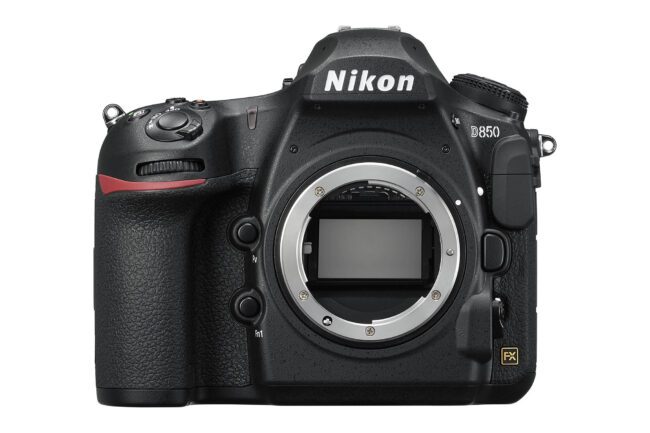
Nikon D850 | A Monster of a Camera

Nikon announced the formal launch of it's new full frame SLR - the 45.7 MP D850 which has specs far advanced than the current series of Nikon cameras. The specs of the D850 are given below and they are very impressive. The options for three sizes of raw files depending on need, ISO going from 64-25,600, full weather sealing, advanced autofocus system, 7 fps which is commendable with a 45.7 mp sensor, 4K video capability.
However on the flip side is the body weight 915 grams and the price a wopping $3300 body only! Professionals would definitely buy this body instead of the D810 or D750 in the full frame space. It remains to be seen how the Nikon flagships like the D5 fare against this new monster of a camera!
Nikon D850 Specifications
- Sensor: 45.7 MP FX BSI Sensor, 4.35µ pixel size
- Sensor Size: 35.9 x 23.9mm
- Resolution: 8256 x 5504
- Native ISO Sensitivity: 64-25,600
- Boost Low ISO Sensitivity: 32
- Boost High ISO Sensitivity: 51,200-102,400
- RAW Formats: 45.7 MP (Full Size), 25.6 MP (Medium Size / mRAW), 11.4 MP (Small Size / sRAW)
- mRAW / sRAW File Support: 12-bit lossless compressed
- Processor: EXPEED 5
- Metering System: 181,000-pixel RGB Meter
- Dust Reduction: Yes
- Weather Sealing/Protection: Yes
- Body Build: Full Magnesium Alloy
- Shutter: 1/8000 – 30 seconds
- Shutter Durability: 200,000 cycles, self-diagnostic shutter
- Storage: 1x XQD slot and 1x SD slot (UHS-II compatible)
- Viewfinder Coverage: 100%
- Viewfinder Magnification: 0.75x
- Speed: 7 fps, 9 fps with optional MB-D18 battery grip
- Built-in Flash: No
- Autofocus System: Multi-CAM 20K AF sensor
- AF Sensitivity: -4 EV at the center point
- AF Detection: Up to f/8 with 15 focus points
- LCD Screen: touch-enabled 3.2 inch diagonal tilting LCD with 2,359K dots
- Movie Modes: 4K UHS @ 30 fps max
- Slow Motion HD Video: Yes
- Movie Exposure Control: Full
- Movie Output: MOV, MP4
- Time Lapse: 4K and 8K Timelapse
- In-Camera HDR Capability: Yes
- GPS: Not built-in, requires GP-1 GPS unit
- WiFi: Built-in
- Illuminated Buttons: Yes
- Focus Stacking Feature: Yes
- Focus Peaking for Stills and Video: Yes
- Wireless Radio Flash Control: Yes
- Silent Photography Mode in Live View: Yes
- Bluetooth: Built-in
- Battery Type: EN-EN15a
- Battery Life: 1840 shots (CIPA)
- USB Standard: 3.0
- Weight: 915g
- Dimensions: 146 x 124 x 79mm
- Price: $3,299.95 MSRP
For more information on the D850 do visit http://www.nikonusa.com/en/nikon-products/product/dslr-cameras/d850.html
Friday, June 2, 2017
Nikon | Three News Lenses Introduced
Nikon announced the introduction of three new lenses - two for full frame Nikons and one very attractive lens for DX bodies.
Nikon AF-P 10-20mm F4.5 -5.6 ED VR
This lens promises to be a winner for DX users - it is light only 230 g in weight, reasonably priced $309 and has VR as well. It would be the ideal wide angle zoom for DX shooters who want to travel light and yet have the convenience of a wide zoom. Its competition would be the Nikon 12-24 F4DX and the 10-24 F3.5-4.5. This lens would be slower than both the other two DX wide angle zooms and also lose 4mm on the top end. However, you get a lighter lens with a significant reduction in cost. One waits to see what the optical performance would be like but looking at Nikon's latest offerings this promises to be very good. Neither of the two earlier Nikon DX wide angle zooms had vibration reduction.
Nikon AFS Fisheye 8-15 F3.5-4.5 ED
This a wide angle fisheye zoom for full frame Nikon DSLRs. If you do a lot of photography in cramped interiors and need a fish eye perspective then this could be a choice. However the obvious deterrent is the price $1250. This is a gold ring lens so expect the same build quality and weather sealing as the other gold ring lenses in the Nikon stable. The lens also focuses to 0.5 inches making it very suitable for close up work.
Nikon AFS 28 F1.4 E ED
This lens complements F1.4 series of wide angle primes the 24 F1.4 and the 35 f1.4. If you have any of these two lenses then adding the 28 f1.4 would not be a prudent choice. The lens has been built on the Nikon 28 F1.4 AFD which was one of the legendary lenses in the film days. Priced at $1999 this is also a gold ring lenses and eminently suitable for low light work, interiors etc delivering gorgeous bokeh at the f1.4 aperture. Nikon's prime lenses are built to extremely high quality and one expects the same performance from this lens. The lens is on the heavier side 645 grams for a prime lens.
These lenses can be pre ordered and should be in the shops by late June 2017
For more information on all these three lenses do visit the Nikon site http://www.nikonusa.com/en/nikon-products/marketing/updates/camera-lenses/index.page
Nikon AF-P 10-20mm F4.5 -5.6 ED VR
This lens promises to be a winner for DX users - it is light only 230 g in weight, reasonably priced $309 and has VR as well. It would be the ideal wide angle zoom for DX shooters who want to travel light and yet have the convenience of a wide zoom. Its competition would be the Nikon 12-24 F4DX and the 10-24 F3.5-4.5. This lens would be slower than both the other two DX wide angle zooms and also lose 4mm on the top end. However, you get a lighter lens with a significant reduction in cost. One waits to see what the optical performance would be like but looking at Nikon's latest offerings this promises to be very good. Neither of the two earlier Nikon DX wide angle zooms had vibration reduction.
Nikon AFS Fisheye 8-15 F3.5-4.5 ED
This a wide angle fisheye zoom for full frame Nikon DSLRs. If you do a lot of photography in cramped interiors and need a fish eye perspective then this could be a choice. However the obvious deterrent is the price $1250. This is a gold ring lens so expect the same build quality and weather sealing as the other gold ring lenses in the Nikon stable. The lens also focuses to 0.5 inches making it very suitable for close up work.
Nikon AFS 28 F1.4 E ED
This lens complements F1.4 series of wide angle primes the 24 F1.4 and the 35 f1.4. If you have any of these two lenses then adding the 28 f1.4 would not be a prudent choice. The lens has been built on the Nikon 28 F1.4 AFD which was one of the legendary lenses in the film days. Priced at $1999 this is also a gold ring lenses and eminently suitable for low light work, interiors etc delivering gorgeous bokeh at the f1.4 aperture. Nikon's prime lenses are built to extremely high quality and one expects the same performance from this lens. The lens is on the heavier side 645 grams for a prime lens.
These lenses can be pre ordered and should be in the shops by late June 2017
For more information on all these three lenses do visit the Nikon site http://www.nikonusa.com/en/nikon-products/marketing/updates/camera-lenses/index.page
Saturday, February 11, 2017
New Bergger Pancro 400 ISO Film
Just when all of us thought that film was dead, Kodak came up with the news that Ektachrome was going to be re-introduced and now we have a new 400 ISO film from Bergger. Bergger is better know for its baryta papers and chemicals but this new film can offer some competition to the king of ISO 400 emulsions Kodak Tri X.
The Bergger web site describes the film as under:
BERGGER Pancro 400 is a two emulsion film, composed with silver bromide and silver iodide. They differ by the size of their grain. These properties allow a wide exposure latitude. Crystals are precipitated by double-jet process, under the control of a computer. The two emulsions are panchromatic, and are stabilized by high tech systems.
BERGGER Pancro 400 in 135 is coated on a 135 microns acetate base and includes DX Coding. It is designed with an undercoated anti-halation layer which clarifies during processing, and a anti-curling layer.
Processed in every developer, BERGGER Pancro 400 exhibits outstanding results, in term of grain size, detail rendition, and greyscale.
The web site also provides these images which gives us an idea of how the film will perform in different conditions:
But recently Kodak was selling is leading 400 ISO Tri X on amazon at a price of $8.88 per roll while Ilford HP 5 another competitor was similarly priced. The web site does not give the price of the new Bergger film and its availability.
Sunday, August 9, 2015
Nikon | New Lenses for Full Frame D-SLRs
Nikon has introduced another three new lenses for full frame D-SLRs. These lenses can also be used on DX bodies taking into account the 1.5 crop factor. I am particularly excited about the fast prime 24 f1.8 mm and the extremely competitively priced 200-500 tele zoom suitable for wildlife and sports without breaking the bank!
Nikon 24 F1.8G Weight 335 gms; List Price $749
The 24 F1/8G lens is a typically fast wide angle prime which is useful in a host of situations. This is the sixth 1.8 prime which Nikon has added - the others were the 20mm, 28mm, 35mm, 50mm and 85mm. Hence, Nikon shooters now looking for prime lenses to supplement their zooms are spoiled for choice. The lens is both fast and light weight and competes favourably with the professional 1.4 lens which costs twice as much and is also heavy. Photographers needing a fast wide angle to shoot in low light conditions and in cramped interiors need look no further!
Nikon 200-500 F5.6E VR Weight : 2300 gms List Price $1399
Nikon has a professional model 200-400 F4 lens which sells at around $7000 so this lens is an attractive proposition for wild life and sports shooters. It gives up one stop as compared to the pro lens but is much lighter and costs a great deal less. The competition in this range comes from Tamron and Sigma both of whom have lenses going upto 600 mm with a 6.3 aperture and are a shade lighter. We need to see the test results from this lens, but I suspect that the image quality will be good at this price point. On a DX body the lens becomes a super tele going upto 750mm without a tele convertor. Photographers considering this lens should also look at the combination of the new 300 F4 E VR with TC 1.4 which would be excellent for mammals but a little short for birds.
Nikon 24-70 ED VR AF-S f2.8 Weight: 1070 gms; List Price: $2399
The 24-70 is a professional grade zoom lens from Nikon which gets the added advantage of VR which was missing in the earlier model. The lens also gains in weight as well as in cost. The old lens without VR was excellent optically and those of you who have the earlier lens may not be inclined to upgrade to this new model. First time buyers looking for a professional grade normal zoom should consider this newer model along with the 24-120 F4 VR which is also an excellent lens but gives up one stop!
For more information on these new offerings from Nikon do visit:
http://www.popphoto.com/three-new-nikon-lenses-24-70mm-f-28-vr-200-500mm-f-56-fx-and-24mm-f-18
http://www.kenrockwell.com/nikon/24mm-f18.htm#rex
http://www.digitaltrends.com/photography/nikon-new-pro-lenses/
Wednesday, July 8, 2015
Nikon | Three New Lenses Announced July 2015
Nikon announced the introduction of three new lenses to be available from July 2015:
AF-S DX Nikkor 16-80 2.8-4 ED VR
The AF-S DX NIKKOR 16-80mm f/2.8-4E ED VR is constructed of 17 elements in 13 groups, and features a seven-blade diaphragm to create a circular, natural bokeh. It weighs in at 16.1 oz. / 480 grams. For fast, accurate and quiet AF performance, the 16-80mm also features Nikon’s Silent Wave Motor (SWM) technology. This lens will replace the ever popular 16-85 VR which was one of the much loved standard zooms for DX bodies. It will be available in July for a suggested retail price of $1,069.95 (USD). Recommended for DX shooters looking for a light and fast standard zoom.
AF-S Nikkor 500mm F4E ED VR
The AF-S NIKKOR 500mm f/4E FL ED VR super telephoto weighs 6.8 lbs./3090 grams and combines two fluorite elements and three Extra Low Dispersion (ED) glass elements. It will also be available in mid-July for a suggested retail price (SRP) of $10,299.95 (USD). It measures 15.2 in. length (387.0 mm). The lens replaces the earlier 500 mm Nikkor. Both the 500mm and 600 mm below have a F4 aperture and VR so the decision between the two is the 100 mm extra on the 600, the weight and length of the lens and the price of the 600 vs the 500.
AF-S Nikkor 600mm F4 ED VR
The AF-S NIKKOR 600mm f/4E FL ED VR super telephoto weighs 8.3 lbs. /3810 grams and features two fluorite lens elements and four ED elements. It will be available in mid-July with a suggested retail price of $12,299.95 (USD). It measures 17 in. length (432.0 mm). This lens replaces the earlier 600 mm lens and it targeted at wild life and sports shooters.
For more information on these new lenses do visit
https://photographylife.com/nikon-500mm-f4e-vr-and-600mm-f4e-vr-announcements
http://www.kenrockwell.com/nikon/16-80mm.htm
http://www.imaging-resource.com/news/2015/07/02/nikon-announces-faster-focusing-lighter-500mm-600mm-f-4-lenses
AF-S DX Nikkor 16-80 2.8-4 ED VR
The AF-S DX NIKKOR 16-80mm f/2.8-4E ED VR is constructed of 17 elements in 13 groups, and features a seven-blade diaphragm to create a circular, natural bokeh. It weighs in at 16.1 oz. / 480 grams. For fast, accurate and quiet AF performance, the 16-80mm also features Nikon’s Silent Wave Motor (SWM) technology. This lens will replace the ever popular 16-85 VR which was one of the much loved standard zooms for DX bodies. It will be available in July for a suggested retail price of $1,069.95 (USD). Recommended for DX shooters looking for a light and fast standard zoom.
AF-S Nikkor 500mm F4E ED VR
The AF-S NIKKOR 500mm f/4E FL ED VR super telephoto weighs 6.8 lbs./3090 grams and combines two fluorite elements and three Extra Low Dispersion (ED) glass elements. It will also be available in mid-July for a suggested retail price (SRP) of $10,299.95 (USD). It measures 15.2 in. length (387.0 mm). The lens replaces the earlier 500 mm Nikkor. Both the 500mm and 600 mm below have a F4 aperture and VR so the decision between the two is the 100 mm extra on the 600, the weight and length of the lens and the price of the 600 vs the 500.
AF-S Nikkor 600mm F4 ED VR
The AF-S NIKKOR 600mm f/4E FL ED VR super telephoto weighs 8.3 lbs. /3810 grams and features two fluorite lens elements and four ED elements. It will be available in mid-July with a suggested retail price of $12,299.95 (USD). It measures 17 in. length (432.0 mm). This lens replaces the earlier 600 mm lens and it targeted at wild life and sports shooters.
For more information on these new lenses do visit
https://photographylife.com/nikon-500mm-f4e-vr-and-600mm-f4e-vr-announcements
http://www.kenrockwell.com/nikon/16-80mm.htm
http://www.imaging-resource.com/news/2015/07/02/nikon-announces-faster-focusing-lighter-500mm-600mm-f-4-lenses
Friday, August 30, 2013
Nikon D610
According to www.nikonrumors.com , Nikon is all set to introduce a successor to the full frame D600 - the D610. It is expected that this camera will be launched in September 2013.
It has not been even a year since the launch of the D600, but sadly this camera has been plagued by oil/sensor dust issues from the start. Many photographers have returned their new cameras under warranty due to this.
Nikon sales of the D600 has also taken a beating and perhaps this has prompted the company to introduce a new model after hopefully taking care of the sensor dust/oil problem.
For those using the D600, it is rather cruel to see an upgrade so soon and also see the value of second hand D600s plummet!
But for those still sitting on the fence, there is a choice between a new D610 which would be at full price perhaps $2200 or so and used/refurbished D600s which could plummet to as low as $1300-1400!
Which would you choose?
It has not been even a year since the launch of the D600, but sadly this camera has been plagued by oil/sensor dust issues from the start. Many photographers have returned their new cameras under warranty due to this.
Nikon sales of the D600 has also taken a beating and perhaps this has prompted the company to introduce a new model after hopefully taking care of the sensor dust/oil problem.
For those using the D600, it is rather cruel to see an upgrade so soon and also see the value of second hand D600s plummet!
But for those still sitting on the fence, there is a choice between a new D610 which would be at full price perhaps $2200 or so and used/refurbished D600s which could plummet to as low as $1300-1400!
Which would you choose?
Monday, April 15, 2013
Nikon D600: Hands on Review

As mentioned in my earlier post Santa Cruz Downtown , I rented a Nikon D600 body in the USA and used it for a few days. I wanted to get a hands on experience with the camera before deciding whether to buy it. I was especially interested in the D600 as it was a compact full frame FX DSLR of moderate weight and size. I had a gut feeling that this could be the camera I could use for all my treks and photo expeditions and best of all it would work with all the full frame lenses I had from my film days. I tested it with my Nikon 50 F1.8AFD and the 24 F2.8AF.
Here is the one of the images in full frame:
![]() |
| Nikon D600, ISO 640, 1/125 sec f 2.5, 50mm F1.8D, matrix maetering |
Pros
- Large big full frame viewfinder - a joy to use
- Good weight for a full frame body - the lightest in the Nikon stable so far!
- Spot on exposure - no need to adjust the EV to -0.3 or + 0.3 using matrix metering for most situations
- At 24 mp you would expect excellent resolution at 100% crop and the camera did not disappoint!
- High ISO performance was great - I would say that ISO upto 1600 is good and 3200 is also usable given the correct exposure. I regularly used 800 or so indoors without any noise issues.
- No problems with Nikon's earlier lenses - I used the 50 F1.8 AFD and an old 24 F2.8 AF ( not D) and got great results from them. Neither of these lenses is VR but a low shutter speeds (1/30 sec etc) it was possible to get perfectly sharp images! I would imagine that the new VR lenses would also give some amazing results at low shutter speeds hand held provided the subject was not moving!
- The built in flash is quite good especially in daylight to remove harsh shadows caused by the sun especially when shooting people! In most situations outdoors I did not have to compensate the flash and shot it on program mode with good results.
- The camera accepts two SD cards in Slot 1 and Slot 2 so the second card can be used as a back up; or a combination like NEF(Raw) in Slot 1 and JPEG in Slot 2.
- I sometimes had difficulty in using auto focus in very low light conditions - the camera was hunting for focus and then switching over to manual focus made things much easier. I am not sure if this is due to the 39 focus points bunched around the centre of the screen as opposed to the 51 points in the D800 and the new D7100! This issue has also been mentioned by other photographers
- I would have liked to have an instant 100% zoom button to review the image as in the D300 series but Nikon has not given us this feature!
- Sloppy technique wont work with this camera - if there is camera shake due to low shutter speeds etc this shows up very easily and you dont have to go for a big print either! None of the lenses I used for the test was VR with VR you should get a couple of stops advantage - I have been able to hand hold down to 1/10 sec with a Nikon 16-85 VR lens on a DX body!
- One of the major "cons" is the dust issue on the sensor. On internet forums this has been hotly debated and many have stayed away from buying the camera until this issue is resolved by Nikon. The body I received fro m the rental company was clean and in the three days that I used it there was no dust problems. Some photographers report that cleaning the sensor after 2000-3000 shots helps in reducing further dust and spots. The issue also varies from body to body - some have not reported the problem at all!
If you are a DX body owner and are looking to migrate to a full frame sensor this could well be the camera for you. If you are already using the full frame D700 or D3 or D4 series then perhaps this could be a second back up body for you. Many pros are contemplating the D600 as a light full frame back up body. If like me you have a full array of FX lenses and are looking for a light weight full frame body then this is the choice. When you have to carry your own equipment up and down the mountainside every day of a trek then every ounce of weight becomes important - that's was what kept me away from the D700 all these years a fine camera that it is!
Monday, April 1, 2013
Nikon D7100, D7000 & D600 : DXO Mark Scores
Most photographers would take a quick look at the Dxo mark scores before making decision to buy a camera. So as I was also deciding on a new body and was favouring the full frame D600, I decided to compare the Dxo mark ratings of the D600 against the new DX champion the D7100 and it's predecessor the highly rates D7000. Here are the results:
Though the comparison with the D600 is not fair as it compares a full frame sensor to a DX sensor, the performance of the D600 against the DX bodies is revealing. Comparing the DX bodies, there is some improvement in the D7100 over its predecessor the D7000 but I wonder if it is enough to make the upgrade to the new body!
For DX shooters using the D80, D90, D5100, D3000, D200 etc, the D7100 seems a worthy upgrade but for someone using the D7000 it just appears marginal.
However, the bottom line is that the Dxo mark scores are not everything and is only one of the possible parameters on which a camera could be selected.
For myself I think the D600 is the way forward! Stay tuned to my hands on quick review of the D600 next week!
For more information on Dxo mark scores and ratings for other cameras do visit www.dxomark.com
Though the comparison with the D600 is not fair as it compares a full frame sensor to a DX sensor, the performance of the D600 against the DX bodies is revealing. Comparing the DX bodies, there is some improvement in the D7100 over its predecessor the D7000 but I wonder if it is enough to make the upgrade to the new body!
For DX shooters using the D80, D90, D5100, D3000, D200 etc, the D7100 seems a worthy upgrade but for someone using the D7000 it just appears marginal.
However, the bottom line is that the Dxo mark scores are not everything and is only one of the possible parameters on which a camera could be selected.
For myself I think the D600 is the way forward! Stay tuned to my hands on quick review of the D600 next week!
For more information on Dxo mark scores and ratings for other cameras do visit www.dxomark.com
Wednesday, December 7, 2011
Photography Tips and Tricks
After my two posts
on tips and tricks for mountain photography in this blog, I am giving below
some general tips for everyday photography which I am sure would be
useful.
Tip 1: Add
people to a landscape
Add a subject to
the foreground of a landscape shot to give depth to the photograph. An example of this is given below
Tip 2: Use
fill flash in daylight
When shooting people, in strong noon day sun use the pop up flash or even a speedlight to fill dark shadows especially under the eyes and bring out details. This ensures that the background is also exposed correctly and not washed out. An example of this is given below:
Tip 3: Kick
the “I’ll fix it in Photoshop habit”!
You need to ensure
that the photograph is taken in the camera not fixed in Photoshop – so white
balance, exposure, lighting, focus etc all need to be bang-on! If you are not
sure of the exposure bracket! Check the histogram on the LCD display to ensure
that exposure is correct.
Tip 4:
F8 and be there
Basically this famous
photography axiom asks you to be ready to shoot. So rather than adjust white
balance, aperture, shutter speed ,
metering modes, focus modes etc before
taking a photo, you to need to set all this before hand. On a normal sunny day,
I will usually set the following before I start out: WB auto, ISO auto set to
maximum of 800, aperture priority around f8 or so, and matrix metering, AF-S
for single focus. This allows me to shoot in most situations provide the light
is reasonable. And, if I have time I would
bracket three to four exposure either by using auto bracketing or manually -0.3, -0.7, -0.1, +0.3, + 0.7. This
usually nails the photograph right in the camera.
Tip 5: To
reduce noise at high ISO make sure your exposure is bang on target!
Modern day cameras allow you to shoot at very high ISO’s like 1600, 3200 and even 6400 on top end models. However, the major drawback at high ISO is noise. So, one way of reducing or minimizing noise is to make sure your exposure in spot on. If you have underexposed even a little bit there will be ample noise in the shadow areas which is always difficult to get rid off. So try to ensure a correct exposure by shooting, maybe, a number of photos at different settings so that at least one is correctly exposed. This is an example of a photo shot an ISO 1600 but due to correct exposure there is hardly any noise:
Tip 6: On a tripod turn VR or IS off
This is a mistake
which I have made a number of times. If you have a camera on a tripod you don’t
need to switch on VR or IS as the camera is likely to be rock steady and does
not need any vibration reduction. Often
in a hurry we forget this and shoot with VR or IS on.
Tip 7: For
critical photos use RAW
When you need to
use photographs for magazine stories, prints, exhibitions etc raw is the way to
go. You can convert raw files using the correct version of Camera Raw with Photoshop
and with proprietary converters like Capture NX2, View NX for Nikon.
Ideally most
photographers would recommend a full heavy weight tripod but is difficult to
carry around and also in some situations difficult to set up. So I have a small
Slik table top which can also fit into a jacket pocket which I use when I need
support. The Joby Gorilla pod is also an option and has the advantage of
flexible legs!
Tip 9: Don’t
put the camera away at dusk or at night
On the subject of
tripods if you have one with you then photography at night and at dusk becomes
a distinct possibility. Long exposures makes the world look a lot different and
details in the dark night sky can often produce stunning effects.
Tip 10:
Less is often more!
The proliferation
of social media and the free photo web sites have made it possible for everyone
to post their photos on the net even if they don’t have their own web sites or
blogs. However, in their enthusiasm to post photographs of a holiday or journey
I often find a facebook album of a hundred photos or more. Similarly, picasa
web albums sent to me to review have similar number of photos. Usually with so
many images the impact is lost and the good images get masked by the mediocre
ones. So it often helps to edit tightly, remove duplicates and similars, weed
out all photos that are not in focus, overexposed or underexposed, badly
composed and leave the best ones for the viewers! Most of my albums rarely have
more than twenty photographs and the majority have between ten and twelve!
Happy shooting!
Friday, November 4, 2011
Photography Workshop Kolkata
ILEAD
ESSENTIALS OF PHOTOGRAPHY WORKSHOP
WITH SUJOY
DAS
November 20th 2011 Sunday
TIMINGS
This is a one day
intensive crash course photo workshop which will begin at 10.30 am and end at 6
pm.
LOCATION
iLEAD: Institute of Leadership ,
Entrepreneurship & Development
113/c/1,Matheshwartala Road ,
Topsia, ( near Tangra Crossing)
Kolkata (Calcutta ), India ,
700046
113/c/1,
Kolkata (
The location map of
ILEAD is given in this link
REGISTRATION FEES
The registration
fees are Rs 1500/- payable in advance. Please do contact ILEAD ph nos 40182000/ 98300 15201/ 98300 15202 or e mail
sujoyrdas@gmail.com to complete the registration process.
WHO SHOULD ATTEND
Amateur Photographers interested in taking photography seriously. No Age limit/ No Qualifications / No Pre-requisite except an interest in photography and a desire to shoot better photographs every time! If you have a camera please bring it with you!
SCOPE OF THE WORKSHOP
Equipment & Lenses
• Know what to buy and what not to buy and learn how to use your gear effectively.
• Learn from choosing the right body with right features to connect to the right set of lenses.
• Also tips about photography accessories like tripod, SD/CF cards, flash, filters, bags, etc., will be discussed.
• Understand the tools of trade for Close-up, portrait and Landscape photography.
• This session will also teach you how to manage and take care of your camera gear.
Master Exposure
• Learn how to make a great exposure and forget all the guesswork.
• Learn about auto modes, shutter priority, aperture priority, iso etc.
• Understanding histograms and using them effectively.
• Understanding exposure is one of the KEYS to successful shooting, and you will master exposure during this course!
• Also learn about depth of field, different lenses and their uses.
Composition
Learn the fine points of effective composition through twenty live examples
• Finding effective composition
• using lenses effectively
• seeking the best perspective; texture, color, point of view
• knowing zones of sharpness; selective focus; and the rule of thirds
• This will also make you think like an artist. From trying to take pictures, learn to make photographs. Learn some of the fine points from painters and others, who use visual elements to compose beautiful imagery.
Processing your
photographs
• Raw, JPEG and TIFF
• Free photo editing software and its use e.g. Picasa
• Introduction to Photoshop Elements software
• Learn color management, post-processing methods to improve the brightness, contrast, and white balance of your image.
• Resizing images for the web and for printing
Question and Answer Session
• You can put forth all your questions which have not been covered earlier in the workshop!
For information on Sujoy Das please do visit
www.sujoydas.com
www.sujoyrdas.blogspot.com
For photographs from past workshops please do visit
http://sujoyrdas.blogspot.com/2011/03/photography-workshops-kriya-studio_23.html
http://sujoyrdas.blogspot.com/2010/11/photography-workshops-creative-arts_15.html
ABOUT SUJOY DAS
Sujoy Das has been photographing, climbing and trekking in the Himalaya for the last thirty years. His photographs have been published in leading newspapers, magazines and books worldwide like The Washington Post, APA Publications,Frontline ,
India Magazine,
The Telegraph, Outlook Traveler etc. He is the co- author and photographer of
the book SIKKIM
– A Travelers Guide with Arundhati Ray which was a finalist in the Banff Book
Competition in the Adventure Travel category. He has held solo exhibitions of
his work in New Delhi
and Kolkata. He runs treks and photo workshops under the banner of South Col
Expeditions (http://www.southcol.com/).
He has run past workshops with Creative Arts and Kriya Studio in Kolkata. He
was recently appointed Contributing Photographer to Light and Composition
magazine http://www.lightandcomposition.com/ in
September 2011.
• Raw, JPEG and TIFF
• Free photo editing software and its use e.g. Picasa
• Introduction to Photoshop Elements software
• Learn color management, post-processing methods to improve the brightness, contrast, and white balance of your image.
• Resizing images for the web and for printing
Question and Answer Session
• You can put forth all your questions which have not been covered earlier in the workshop!
For information on Sujoy Das please do visit
www.sujoydas.com
www.sujoyrdas.blogspot.com
For photographs from past workshops please do visit
http://sujoyrdas.blogspot.com/2011/03/photography-workshops-kriya-studio_23.html
http://sujoyrdas.blogspot.com/2010/11/photography-workshops-creative-arts_15.html
ABOUT SUJOY DAS
Sujoy Das has been photographing, climbing and trekking in the Himalaya for the last thirty years. His photographs have been published in leading newspapers, magazines and books worldwide like The Washington Post, APA Publications,
Saturday, December 11, 2010
Pop Photo: Processing of Digital Raw files
A very fine tutorial on the processing of raw files in Photoshop. Please do see the attached link
http://www.popphoto.com/content/how-process-and-save-your-raw-files?pnid=70824
Subscribe to:
Comments (Atom)