Showing posts with label mountains. Show all posts

Sunday, November 24, 2019

Ladakh Summer 2019


South Col Expeditions did two treks in Ladakh this summer in the Shang Sumdo to Rumbak region.
For detailed itineraies and route planning please do visit
http://sujoyrdas.blogspot.com/2019/09/ladakh-shang-sumdo-to-rumbak-trek.html

http://sujoyrdas.blogspot.com/2019/08/ladakh-shang-sumdo-to-stok-across-shang.html

 Here are some photos from our treks.


For more details on our treks and photo workshops do visit www.southcol.com

For more photos do visit www.sujoydas.com

Monday, November 4, 2019

Everest Reflections on the Solukhumbu | Photos Book Launch Kolkata


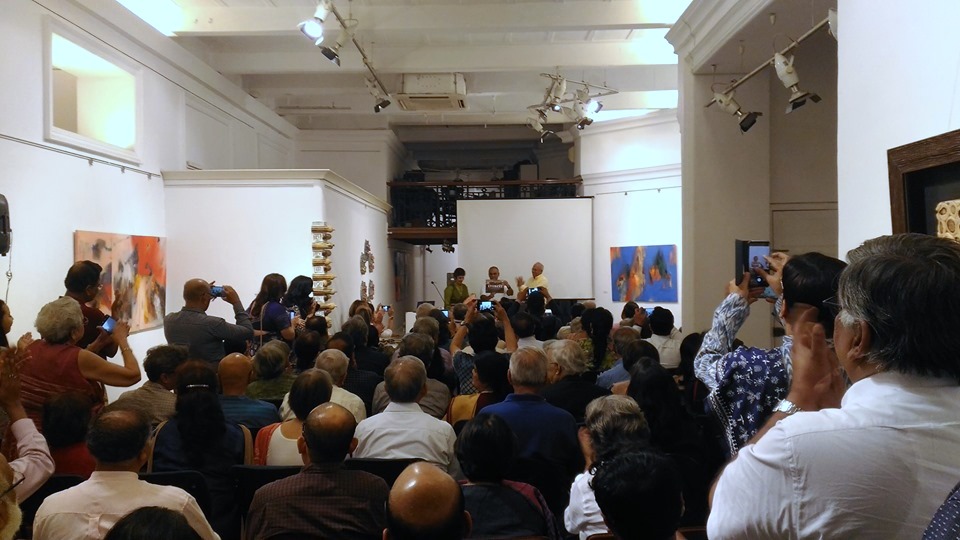
The book launch of Everest Reflections on the Solukhumbu was held at The Harrington Street Arts Centre on October 31st 2019.

Everest Reflections on the Solukhumbu, launched to celebrate the centenary of the birth of Sir Edmund Hillary and dedicated to the sherpas reveals the historical influences, hidden seasons and current pressures in the land of Everest. Photographer Sujoy Das and writer Lisa Choegyal have collaborated in their second volume, this time capturing the essence of the majestic scenery and reality of daily life in the Solukhumbu in the shadow of Mt. Everest. A foreword by leading mountaineer Sir Chris Bonington, preface by cultural scholar Dr Lhakpa Norbu Sherpa and drawings by artist Paula Sengupta adds depth to this unusual book about a familiar destination.
In the words of Sir Chris Bonington in his Foreword “This is not just one more book about Everest, but a special celebration of the haunting beauty of Solukhumbu and its people. Civilisation depends on the health of our high places, and I wish my Sherpa friends all the best with successfully navigating their future course.”
Sujoy Das, founder of South Col Expeditions which runs treks and photo workshops in the Himalaya www.southcol.com has spent more than two decades in the Everest region and is the co-author and photographer of a number of books including Nepal Himalaya A Journey Through Time, Sikkim A Travellers Guide and Lonely Planet Nepal for the Indian Traveller.
British-born Lisa Choegyal has made Kathmandu her home since 1974, deeply involved with Nepal tourism and conservation. Author and editor of Nepal Himalaya A Journey Through Time, Kathmandu Valley Style, The Nepal Scene Chronicles of Elizabeth Hawley and Offerings from Nepal, she produced the South Asian Insight Guides series, and contributes a fortnightly column to the Nepali Times.
The book is available on line at www.amazon.comwww.vajrabookshop.comwww.amazon.in

Some photos and videos from the launch:


Saturday, October 12, 2019

Bhutan | Mountain Echoes Literary Festival Aug 22-25 2019


The 10th edition of the Mountain Echoes Literary Festival was held in Thimpu Bhutan from August 22-25th 2019.  Our book Everest Reflections on the Solukhumbu was showcased at the festival and an interesting group discussion was held between Lisa Cheogyal, Tenzing Choegyal Sherpa and myself on our book and the current pressures and problems facing Mount Everest.

Some photographs from the three day event:


Wednesday, August 28, 2019

Vittorio Sella Remembered


Today 28th August 2019 is the 160th birth anniversary of the great mountain photographer Vittorio Sella. 

Vittorio Sella  was an Italian photographer and mountaineer, who took photographs of mountains which are regarded as some of the finest ever made. 
Sella was born in Biella in the foothills of the Alps and acquired his interest in Alpinism from his uncle, Quintino Sella. He made a number of significant climbs in the Alps, including the first winter ascents of the Matterhorn and Monte Rosa, and the first winter traverse of Mont Blanc. He took part in several expeditions further afield, including three to the Caucasus (where a peak now bears his name), to Mount Saint Elias in Alaska, to the Rwenzori in Africa, and the 1909 expedition to K2 and the Karakoram. The latter three expeditions were in the company of Luigi Amedeo, Duke of the Abruzzi. Sella continued to climb into his old age, and made his last attempt on the Matterhorn at seventy six. The attempt failed when one of his guides was injured in an accident.
The high quality of Sella's photography was in part due to his use of 30×40 cm photographic plates, in spite of the difficulty of carrying bulky and fragile equipment into remote places. He had to invent equipment, including modified pack saddles and rucksacks, to allow these particularly large glass plates to be transported safely. His photographs were widely published and exhibited, and highly praised; Ansel Adams, who saw thirty-one that Sella had presented to the US Sierra Club, said they inspired "a definitely religious awe". Many of the photographs he took were of mountains which had not been previously recorded and so have historical as well as artistic significance; for example by recording the retreat of glaciers in the Rwenzori mountains in Central Africa.
Sella died in Biella in 1943. His collection of photographs is now managed by the Sella Foundation (Fondazione Sella) in Biella. Some pictures of Sella are exhibited in the Museo Nazionale della Montagna "Duca degli Abruzzi"in Turin[ From Wikipedia }

Some of Sella's photographs are below: 


In the words of Ansel Adams “Knowing the physical pressures of time and energy attendant on ambitious mountain expeditions, we are amazed by the mood of calmness and perfection pervading all of Sella’s photographs. In Sella’s photographs there is no faked grandeur; rather there is understatement, caution, and truthful purpose… Sella has brought to us not only the facts and forms of far-off splendours of the world, but the essence of experience which finds a spiritual response in the inner recesses of our mind and heart.”

Useful Links:

Thursday, June 20, 2019

Alpinist Magazine | Everest Reflections on the Solukhumbu

Image may contain: one or more people, mountain, text, outdoor and nature

The Alpinist magazine is presently running a series of seven posts comprising of photos and text from our book Everest Reflections on the Solukhumbu.


This week as part of the #alpinistcommunityproject, we're sharing work from Sujoy Das, a photographer, Alpinist contributor and founder of South Col Expeditions, which runs treks and photo workshops in the Himalaya. He has spent more than two decades in the Chomolungma/Everest region and is the co-author and photographer of a number of books. His latest book, “Everest: Reflections on the Solukhumbu,” is a collaboration with writer Lisa Choegyal, who has made Kathmandu her home since 1974 and has been deeply involved with Nepal tourism and conservation. Their book is focused on the majestic scenery and reality of daily life in the Solukhumbu region that lies in the shadow of Chomolungma. A foreword by leading mountaineer Chris Bonington, preface by cultural scholar Dr. Lhakpa Norbu Sherpa and drawings by artist Paula Sengupta add depth to this unusual book about a familiar destination. Bonington writes in his foreword, “This is not just one more book about Everest, but a special celebration of the haunting beauty of Solukhumbu and its people.” The book is available online at Amazon and Vajrabookshop.com. More information about Das can be found at www.southcol.com.
This is his first post.
Book cover of "Everest: Reflections on the Solukhumbu." [Photo] Sujoy Das.

Image may contain: one or more people, cloud, sky and outdoor
“On a monsoon morning in June 2018, I was in the village of Khumjung to photograph the Dumji Festival. As I walked to the monastery, thick clouds swirled around the mountains and the village was ensconced in fine mist. Suddenly, as I neared a chorten (memorial), the sun appeared through the clouds and this amazing backlit view of Ama Dablam, possibly the most beautiful mountain in the Khumbu region, presented itself. I got about 20 seconds to take some photos before the clouds had blanketed the mountain once again. This photograph is part of an essay titled, ‘The Himal—No Bird Can Fly Over it,’ about the high mountains of the Chomolungma region.” [Photo] Sujoy Das @south_col @lisachoegyal @vajra_books #sujoydas#everest #chomolungma #southcolexpeditions
This is his second post.

This week as part of the #alpinistcommunityproject, we're sharing work from Sujoy Das, a photographer, Alpinist contributor and founder of South Col Expeditions, which runs treks and photo workshops in the Himalaya. He has spent more than two decades in the Chomolungma/Everest region and is the co-author and photographer of a number of books. His latest book, “Everest: Reflections on the Solukhumbu,” is a collaboration with writer Lisa Choegyal, who has made Kathmandu her home since 1974 and has been deeply involved with Nepal tourism and conservation. Their book is focused on the majestic scenery and reality of daily life in the Solukhumbu region that lies in the shadow of Chomolungma. A foreword by leading mountaineer Chris Bonington, preface by cultural scholar Dr. Lhakpa Norbu Sherpa and drawings by artist Paula Sengupta add depth to this unusual book about a familiar destination. Bonington writes in his foreword, “This is not just one more book about Everest, but a special celebration of the haunting beauty of Solukhumbu and its people.” The book is available online at Amazon and Vajrabookshop.com. More information about Das can be found at www.southcol.com.

For a look at the rest of the posts do visit https://www.facebook.com/Alpinist/


Wednesday, March 20, 2019

Tips and Tricks for Better Photography


After my two posts on tips and tricks for mountain photography in this blog, I am giving below some general tips for everyday photography which I am sure would be useful. 

Tip 1: Add people to a landscape
Add a subject to the foreground of a landscape shot to give depth to the photograph.  An example of this is given below:


Tip 2: Use fill flash in daylight
When shooting people, in strong noon day sun use the pop up flash or even a speedlight to fill dark shadows especially under the eyes and bring out details. This ensures that the background is also exposed correctly and not washed out. An example of this is given below:


Tip 3: Kick the “I’ll fix it in Photoshop habit”!
You need to ensure that the photograph is taken in the camera not fixed in Photoshop – so white balance, exposure, lighting, focus etc all need to be bang-on! If you are not sure of the exposure bracket! Check the histogram on the LCD display to ensure that exposure is correct.

Tip 4: F8 and be there
Basically this famous photography axiom asks you to be ready to shoot. So rather than adjust white balance, aperture,  shutter speed , metering modes, focus modes etc  before taking a photo, you to need to set all this before hand. On a normal sunny day, I will usually set the following before I start out: WB auto, ISO auto set to maximum of 800, aperture priority around f8 or so, and matrix metering, AF-S for single focus. This allows me to shoot in most situations provide the light is reasonable. And, if I have time I would  bracket three to four exposure either by using auto bracketing  or manually -0.3, -0.7, -0.1, +0.3, + 0.7. This usually nails the photograph right in the camera.

Tip 5: To reduce noise at high ISO make sure your exposure is bang on target!  
Modern day cameras allow you to shoot at very high ISO’s like 1600, 3200 and even 6400 on top end models. However, the major drawback at high ISO is noise. So, one way of reducing or minimizing noise is to make sure your exposure in spot on. If you have underexposed even a little bit there will be ample noise in the shadow areas which is always difficult to get rid off. So try to ensure a correct exposure by shooting, maybe, a number of photos at different settings so that at least one is correctly exposed. This is an example of a photo shot an ISO 1600 but due to correct exposure there is hardly any noise:


Tip 6: On a tripod turn VR or IS off
This is a mistake which I have made a number of times. If you have a camera on a tripod you don’t need to switch on VR or IS as the camera is likely to be rock steady and does not need any vibration reduction.  Often in a hurry we forget this and shoot with VR or IS on.

Tip 7: For critical photos use RAW
When you need to use photographs for magazine stories, prints, exhibitions etc raw is the way to go. You can convert raw files using the correct version of Camera Raw with Photoshop and with proprietary converters like Capture NX2, View NX for Nikon.

 Tip 8: If you can, take along a small table top light weight tripod
Ideally most photographers would recommend a full heavy weight tripod but is difficult to carry around and also in some situations difficult to set up. So I have a small Slik table top which can also fit into a jacket pocket which I use when I need support. The Joby Gorilla pod is also an option and has the advantage of flexible legs!

Tip 9: Don’t put the camera away at dusk or at night
On the subject of tripods if you have one with you then photography at night and at dusk becomes a distinct possibility. Long exposures makes the world look a lot different and details in the dark night sky can often produce stunning effects.


Tip 10: Less is often more!
The proliferation of social media and the free photo web sites have made it possible for everyone to post their photos on the net even if they don’t have their own web sites or blogs. However, in their enthusiasm to post photographs of a holiday or journey I often find a facebook album of a hundred photos or more. Similarly, picasa web albums sent to me to review have similar number of photos. Usually with so many images the impact is lost and the good images get masked by the mediocre ones. So it often helps to edit tightly, remove duplicates and similars, weed out all photos that are not in focus, overexposed or underexposed, badly composed and leave the best ones for the viewers! Most of my albums rarely have more than twenty photographs and the majority have between ten and twelve!
Happy shooting!  

For more of my photographs do visit www.sujoydas.com

Monday, March 11, 2019

Mountain Photography Workshop | April 6th 2019 Kolkata


On 6th April 2019 in Kolkata, India I will be conducting a short workshop of mountain photography. It will be a hands on session with my photographs explaining the  approach, the technicalities, different subjects and situations and the reason behind the photographs.

I will share with the participants my thirty odd years of experience photographing in the mountains.

The programme is organised by  ‘THE HIMALAYAN ’s a Trust, non-profit in nature that was formed in May 2017. It was conceived to attract like-minded people in the promotion of Himalayan lore and preservation, through Travel, Expeditions, Explorations and Adventure, and support of its Nature, Ecology, Culture, as well as the well-being of its people. The primary inspiration has been the vision of Mr. Meher H. Mehta FRGS and a handful of likeminded mountain lovers - a vision that encompasses the incorporation of a balanced, incisive as well as interactive dissemination platform for the reporting of Himalayan Activity–of Climbing, Science, Literature and the yonder, in a manner befit to stimulate the intellectual yearning of the erudite mountain lover, as well as to kindle the fertile mind of the incorrigibly romantic young mountaineer.

Admission is free to register for the workshop do send an email to thehimalayan2017@gmail.com

I hope to see many of my friends, fellow photographers and mountain lovers at the workshop.


Saturday, March 2, 2019

Mountain Photography at Night

92 sec f 6.3 ISO  800
On  our  South Col treks , I often try to do some night photography when the weather is clear and the stars are out. Recently in Nepal  I was able to  experiment with a lot of mountain photography at dusk and at night.  I am sharing some tips and useful suggestions in this post:

TRIPOD
It goes without saying that the first requirement for night photography of mountains is a strong rock steady tripod. Monopods and table top tripods are not real substitute to a good tripod. I know this means lugging up and down the mountain another 1 to 2 kgs of weight but if you need to shoot long exposures then you need the tripod. This will really help you to get rock steady photos at long exposures. I use an Oban tripod one of the entry level lightweight model weighing around 1.5 kg.

VR/IS
If your camera is on a tripod set VR or IS off - you don't need any vibration reduction as the tripod is supposed to be rock steady!

AUTOFOCUS
Please do set autofocus off and focus your lens manually - my experience is that with autofocus on the camera hunts for a correct focus point at night!

ISO
The newer generation of DSLRs have pushed high ISO performance to 3200 and 6400 with some amazingly good results but I am conservative in this regard – if I can put my camera on a tripod I still prefer the lower ISO settings 200-1000 with longer exposures.

APERTURE
I would usually select a middle of the range aperture like f5.6 , f6.3 or f8 unless I need depth of field from foreground right up to infinity. In that case I may even stop down to f16!

SHUTTER SPEED and METERING
After setting the ISO and aperture the balancing factor would be the shutter speed. It is hard to select the shutter speed in low light and make a perfect exposure. There is a lot of black and deep shadows in the photograph and usually the metering is fooled by this resulting in some over exposure. As a rule of thumb setting the exposure compensation to -0.7 and bracketing two stops around the meter reading usually gives one good shot! Speeds can be as low as 15 sec, 30 sec and sometimes even one minute using this bracketing technique.  Most DSLRs wont go below 30 sec so you would have to switch to bulb mode  fire the shutter with a remote release and then close it again. 
30 sec, f7.1 ISO 200 
WHITE BALANCE
I usually set the white balance to Auto and keep it that way - in case there is any extraordinary colour shift I would correct it in processing. but this is not usual.

RAW
Oh and finally do shoot raw - makes a huge difference to the final image!

For more night photos please do visit  www.sujoydas.com   

Saturday, January 12, 2019

Kangtega and Thamserku | The Lesser Peaks of the Everest region

Thamserku from Namche Bazar at dsuk
The Everest region has a galaxy of star studded so called "lesser peaks" in the range of 6000-7000 metres. Most of these are extremely beautiful and in most cases over shadow Everest itself. Other than Ama Dablam which is really the "jewel in the crown", Kangtega and Thamserku are visible along both the Everest Base Camp and Gokyo trails.

"Kangtega, known also as The Snow Saddle, is a major mountain peak of the Himalayas in Nepal. Its summit rises 6,782 metres (22,251 ft). It was first ascended in 1963 1963 David Dornan, Tom Frost, Michael Gill, Jim Wilson  in an expedition led by Edmund Hillary.
Thamserku is a mountain in the Himalayas of eastern Nepal. The mountain is connected by a ridge leading eastward to Kangtega. Thamserku is a prominent mountain to the east of Namche Bazaar and lies just north of Kusum Kangguru.
The first ascent was made in 1964 from the south by members of Edmund Hillary's Schoolhouse Expedition: Lynn Crawford, Pete Farrell, John McKinnon, Richard Stewart and Phu Dorje Sherpa. Below the basin on the southwest face, they reached the south ridge after climbing a difficult couloir. The team described the climb as difficult and the route has not been repeated in its entirety by anyone else." From Wikipedia

Some photographs of these two magnificent peaks are below

Reflections in the first lake of Gokyo

Walking from Lobuche towards Dzongla on the Cho La route

On the trail near Dole, Gokyo trek

Early morning view from Luza, Gokyo trek

Evening at Kyanjuma

From the pass above Dingboche on the trail to Dugla
South Col Expeditions treks in the Everest region every year.  For details of our 2019 treks do visit www.southcol.com and for photographs from the Himalaya do visit www.sujoydas.com

LinkWithin

Related Posts Plugin for WordPress, Blogger...