Showing posts with label seven summits. Show all posts

Saturday, March 9, 2024

Kilimanjaro Climb | Dr Ajmal Sobhan


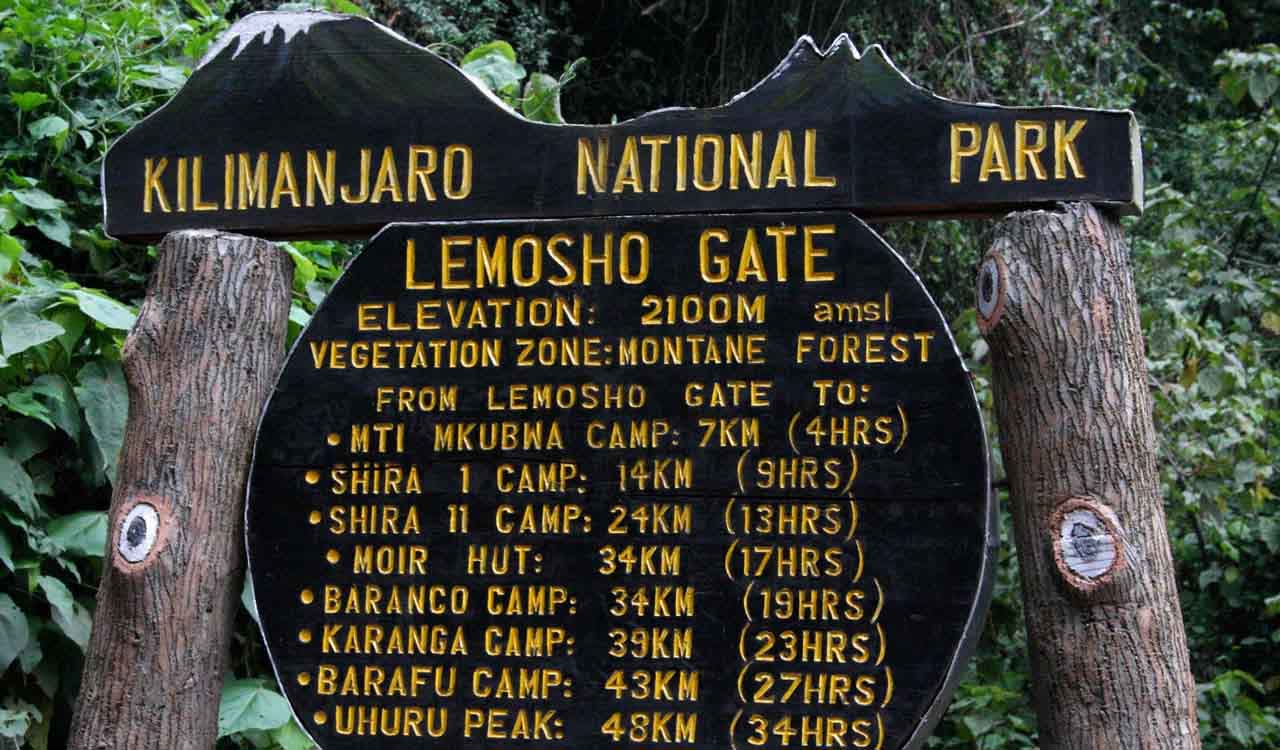
At the start of the climb the Lemosho Gate

Ajmal Sobhan from Newport News, Virginia, is a retired surgeon, former marathon runner with many treks under his belt. In this guest post Ajmal describes his climb of Kilimanjaro the tallest free standing mountain in the world and one of the seven summits. 

-Kilimanjaro: The agony and the ecstasy

Before going to Tanzania, I must have watched a dozen or more YouTube videos on Kilimanjaro. Most of them gave a good packing list, shots optional or mandatory,  different routes  some tougher and some easier. Not many described the level of difficulty related to age and experience, and none described the sad state of the trails  when the rain practically destroys any safe pathways other than using common sense or relying on the experience of the guides.

 Practically none of those videos prepared me for what was to come. I had never been to Africa nor had I summitted any mountains. All the experience I had involved trekking not climbing. Most of the treks were in Nepal, Colorado, the AT (Appalachian Trail), and one in India (Green Lakes, Kangchenjunga, Sikkim).

Tuesday, June 8, 2021

Mallory and Irvine | Everest Tibet side 8th June 1924


‘The question remains – “Has Mt Everest been climbed?”  It must be left unanswered, for there is no direct evidence. But bearing in mind the circumstances ….. and considering their position when last seen, I think myself there is a strong probability that Mallory and Irvine succeeded.’ Noel Odell, The Fight for Everest 1924.

On 8th June 1924, two men left Camp VI (26,700 feet) to attempt to reach the summit of Everest, 29,029 feet. Camp VI was the highest camp of the British 1924 Everest expedition.

On the same morning, another British climber, Noel Odell, was making his way up from Camp IV to Camp VI. Odell was a geologist and he was collecting fossils from the slopes of Mount Everest. Odell recalls that it was not the perfect morning to climb Everest. “Rolling banks of mist" were sweeping across the mountain and covering the north face. There was also a sharp wind which made climbing very difficult. Neither the north face nor the summit ridge could be seen by Odell. 

At 12.50 pm, there was “a sudden clearing in the atmosphere” and “the whole summit ridge and the final peak of Everest unveiled.”  Odell spotted high above on the ridge, a black dot climbing a rock step, which Odell at that point identified as the Second Step. Soon after Odell saw another black dot following the first black dot. But before Odell could be sure that the second black dot had joined the first, the mist rolled in and blanketed the mountain and this fantastic vision was lost forever.

The two dots that Odell saw were George Mallory and Andrew Irvine "going strongly for the summit of Everest".  Mallory and Irvine were never seen again.

But even today, ninety seven years after the disappearance of Mallory and Irvine, the legend of George Mallory is still alive. Books are being written about Mallory, expeditions are being planned to find Andrew Irvine and his camera because Everest researchers believe that the camera will unlock the secret of Mallory's last climb. 

In 1999, Conrad Anker found Mallory at 26,750 feet lying face down on the slopes of Everest - Irvine has not been found.

In 2019, an expedition  was organised to climb Everest from the North side and attempt to find Irvine. The team summitted Everest but Irvine was not found. Mark Synnott one of the expedition members has written a book on the expedition which has been recently released: The Third Pole. The detailed account of the expedition is here https://www.nationalgeographic.com/magazine/article/our-team-climbed-everest-to-try-to-solve-its-greatest-mystery-feature

This year 2021, is the centenary of the first Everest Reconnaissance Expedition 1921. To commemorate the event the Alpine Club has organized an exhibition in London and released a book in two volumes on the Everest Expeditions of 1921, 1922 and 1924. 

The link is here http://www.alpine-club.org.uk/news/club-news/825-everest-by-those-who-were-there

In this post we take a look at some photographs and other memorabilia from the Everest expeditions of 1921, 1922 and 1924. 

Saturday, May 29, 2021

Everest | 29th May 1953 - The First Ascent


Today is sixty eight  years since the first ascent of Everest.

On 29th May 1953 at 11.30 am, a Sherpa and a New Zealander became the first men to stand on top of the highest peak on this planet.  However the intervening years has seen a sea change as far as Everest is concerned. The mountain  has now become a playground for guided expeditions, with clients paying between thirty thousand  to  eighty thousand dollars or more to stand on the highest point on earth. The South Col route climbed in 1953 is now disdainfully referred to as the “yak trail”. The dangerous icefall below the Western Cwm is maintained by a team of sherpas right through the season led by a senior “Icefall Doctor.” and ropes are fixed from Base Camp to the summit to allow "clients" to reach the top of the mountain. 

Due to the covid pandemic there were no attempts on the mountain in 2020. 

A record number of 400 plus climbers and 40 plus expeditions were  issued climbing permits in 2021 despite the covid wave. 

The large number of climbers, sherpas and support staff at base camp around 1500 or so resulted in a covid outbreak at Base Camp  and as per information received around 100 to 150 covid cases were detected – a majority were evacuated to Kathmandu hospitals and the rest which  were milder cases remained isolated in tents at base camp. Lukas Furtenbach, an Austrian operator, decided to cancel his expedition midway due this high covid risk which he deemed unacceptable.

In an interesting development, a team from Mountain Professionals set out from the South Col at 5 am on May 23rd 2021 and reached the summit by afternoon - possibly the first time in many, many years that a team has climbed Everest in the day enjoying sunny weather, gazing at the magnificent views, warmer temperatures and above all no long lines, headlamps and struggling along in the cold dark night.  There were advised by a  meteorologist  that there would be a day window on the 23rd May and they gladly seized the opportunity and had the mountain to themselves.

However the effect of the two cyclones over India and Nepal hampered the progress of the teams. As I write this post Cyclone Yaas is over Nepal and depositing heavy snow on the slopes of Everest. 

For the first time the Icefall Doctors team have agreed to keep the Icefall open until 3rd June 2021, to allow the remaining teams on the mountain a chance to summit if they are able to get another weather window on 30/31st May 2021.

 Kami Rita Sherpa created a new record this year by summiting Everest 25  times as a part of the Sherpa team who fixed the ropes to the summit  -  perhaps next year Kami will break his own record.

However, this post recounts through photographs,  the 1953 climb, the historic ascent of the first two men to summit Everest and the team of climbers and sherpas who supported them through this endeavour.

Thursday, May 20, 2021

Everest Reconnaissance Expedition 1921 | 100 Years Ago


Members of the  1921 expedition Standing: Wollaston, Howard-Bury, Heron, Raeburn.  Sitting: Mallory, Wheeler, Bullock, Morshead. The ninth member Alexander Kellas had passed away en route to Everest on 5th June 1921

2021 is 100 years of the first Everest Reconnaissance Expedition 1921. On January 11th 1921 this is what Sir Francis Younghusband said in The Times London:

From The Times: January 11, 1921

Sir Francis Younghusband, President of the Royal Geographical Society, announced at a meeting of the Society last night that the political obstacles to the proposed attempt to climb Mount Everest have been removed, that a preliminary reconnaissance will be made of the ground this year, and that the actual attempt on the summit will follow in 1922. 

Monday, June 8, 2020

Everest | 8th June 1924 - Mallory and Irvine

A historic image of Rongbuk monastery by Capt John Noel  with Everest in the background
On 8th June 1924, two men left  Camp VI (26,700 feet)  to make an attempt on the summit of Everest. 

Camp VI  was the highest camp of the British 1924 Everest expedition.

On the same morning, another British climber, Noel Odell, was making his way up from Camp IV to Camp VI. Odell was a geologist and he was collecting fossils from the slopes of Mount Everest. Odell recalls that it was not the perfect morning to climb Everest. " Rolling banks of mist" were sweeping  across the mountain and covering the north face. Neither the face nor the summit ridge could be seen by Odell. There was also a sharp wind which was making climbing very difficult.

Suddenly at 12.50 pm the mist cleared and Odell spotted high above on the ridge, a black dot climbing a rock step, which Odell at that point identified as the Second Step. Soon after Odell saw another black dot following the first black dot. But before Odell could be sure that the second black dot had joined the first,  the mist rolled in and blanketed the mountain and this fantastic vision was lost forever.

The two dots that Odell saw were George Mallory and Andrew Irvine "going strongly for the summit of Everest". 

Mallory and Irvine were never seen again.


George Mallory's body was found on Everest by the American mountaineer Conrad Anker in 1999 seventy five years after he vanished on the slopes of Everest. Andrew Irvine has not yet been found.

But even today, ninety six years after the disappearance of Mallory and Irvine, the legend of Mallory is still alive. Books are being written about Mallory, expeditions are being planned to find Andrew Irvine and his camera because Everest experts believe that the camera will unlock the secret of Mallory's last climb.

In this post we take a look at some photographs and other memorabilia from the Everest expeditions of 1921, 1922 and 1924.

Friday, May 29, 2020

Everest | 67th Anniversary of the First Ascent May 29th 1953


Hillary and Tenzing about to leave the South Col to establish Camp IX on the south east ridge - May 28th 1953 - Photo By Alf Gregory / Copyright Royal Geographical Society
Today is sixty seven  years since the first ascent of Everest. And due to the cornavirus global pandemic there will be no ascents of the mountain from the Nepal side in 2020. As I write this post news has just come in that a Chinese team have climbed Everest from the Tibet side. 


On 29th May 1953 at 11.30 am, a Sherpa and a New Zealander became the first men to stand on top of the highest peak on this planet.  However the intervening years has seen a sea change as far as Everest is concerned. The mountain   has now become a playground for guided expeditions, with clients paying between thirty thousand  to  eighty thousand dollars or more to stand on the highest point on earth. The South Col route climbed in 1953 is now disdainfully referred to as the “yak trail”. The dangerous icefall below the Western Cwm is maintained by a team of sherpas right through the season led by a senior “Icefall Doctor.” 


In order to make it possible for the clients to summit Everest, the entire mountain has fixed rope from bottom to top and the first to summit each year is a Sherpa team. 


Kami Rita Sherpa created a new record in 2019 by summiting Everest 24  times - week he has summitted Everest twice in the 2019 season -  the most by any climber breaking his own record of 22 summits. I wonder if anyone will break Kami's record - maybe Kami himself  in 2021. 


 However, this post recounts through photographs,  the 1953 climb, the historic ascent of the first two men to summit Everest and the team of climbers and sherpas who supported them through this endeavour.

Saturday, February 22, 2020

Kilimanjaro | The Lemosho Route with South Col

Image result for lemosho gate

A South Col team will be attempting to climb Kilimanjaro, the highest peak in Africa and one of the seven summits in the fall of 2021.

There are seven routes to the summit and the climb be done in as little as five days (with major altitude issues) upto 9 days.  We are planning to do a conservative eight day climb, most probably by the Lemosho route.

This is a longer, more remote route on Kilimanjaro and allows  for optimum acclimatisation time for the summit itself.As the highest mountain in Africa, Mount Kilimanjaro makes up one of the Seven Summits (i.e. highest mountains on each of the seven continents). The additional time on the mountain means that success rates for  the Lemosho route trekkers are relatively high.

Approx. 35,000 people attempt to climb Kilimanjaro every year. The chances of reaching the summit of Kilimanjaro is highly dependent on the number of days taken to trek the mountain.The more days, the higher the probability of success as your body has more time to adapt and acclimatize.Here are the success rate figures as published by the Kilimanjaro National Park. These numbers are admittedly quite old and success rates are most likely higher as route configurations have improved and the number of people taking 5 day treks has almost ended.

  • All climbers, all routes 45% (we estimate this figure is closer to 65% today)
  • All climbers, all 5 day routes 27%
  • All climbers, all 6 day routes 44%
  • All climbers, all 7 days routes 64%
  • All climbers, all 8 day routes 85%

The details of the Lemosho Route are given below:

Wednesday, May 29, 2019

Everest | The First Ascent May 29th 1953

Hillary and Tenzing aftter the successful ascent May 29th 1953
Today is sixty six years since the first ascent of Everest.

On 29th May 1953 at 11.30 am, a Sherpa and a New Zealander became the first men to stand on top of the highest peak on this planet.  However the intervening years has seen a sea change as far as Everest is concerned. The mountain   has now become a playground for guided expeditions, with clients paying between thirty thousand  to  eighty thousand dollars or more to stand on the highest point on earth. The South Col route climbed in 1953 is now disdainfully referred to as the “yak trail”. The dangerous icefall below the Western Cwm is maintained by a team of sherpas right through the season led by a senior “Icefall Doctor.” 


In order to make it possible for the clients to summit Everest, the entire mountain has fixed rope from bottom to top and the first to summit each year is a Sherpa team.


Kami Rita Sherpa created a new record this year by summiting Everest 24  times - in the last week he has summitted Everest twice in the 2019 season -  the most by any climber breaking his own record of 22 summits. I wonder if anyone will break Kami's record - maybe Kami himself next year!

 This year 2019 has not been a very good one on 8000 metre peaks. At the time of writing,  there have been 20 deaths on 8000 metre peaks this season - Everest, Makalu  Kangchenjunga  and Cho Oyu. There were also reports in social media and newspapers that more than 200 climbers were in human traffic jam on the south east ridge of Everest near the balcony area and as a result of this some climbers lost their lives due to exhausion  and many others had injuries due to frostbite from waiting in the "deathzone" for so many hours. There have been ten deaths on Everest so far. 

However, this post recounts through photographs,  the 1953 climb, the historic ascent of the first two men to summit Everest and the team of climbers and sherpas who supported them through this endeavour.

Bourdillon and Evans on their return from the South Summit on May 26th 1953 - Bourdillon had wanted to make a push for the summit

Nawang Gombu crossing the icefall ladders - Gombu later became the first man to climb Everest twice in 1963 and 1965
The five men who helped  Hillary and Tenzing to carry to Camp 9  27,800 feet - John Hunt, Da Namgyal, Alf Gregory, Any Nyima and George Lowe - Photo George Lowe Collection

The map of the Khumbu icefall and the route followed by the 1953 expedition


From left: John Hunt, Ed Hillary, Tenzing, Ang Nyima,  Alfred Gregory and George Lowe after the ascent

The code which was later used in the telegram to send the news before the Queen's coronation

The telegram sent by John Hunt after the ascent

Hunt, Hillary and Tenzing in London

The full expedition team with the sherpas
Tenzing and his mother at Tengboche monastery after the climb
Tenzing and Hillary at Tengboche monastery after the successful climb
Sketch map drawn by Tenzing for his biographer James Ramsay Ullman 

The signed colour supplement of The Times


All photographs in this post are copyright the ROYAL GEOGRAPHICAL SOCIETY and the respective owners. This post is non-commercial. 

Wednesday, May 22, 2019

Everest | The West Ridge & the First Traverse May 22nd 1963


Today is the 56th anniversary of the first ascent of the West ridge of Everest and the first traverse of the mountain.

On 21st May 1963 at six o’clock in the evening two climbers reached 27,205 feet (8300 metres) to set up Camp 5W on the west ridge of Everest. Tom Horbein a US anesthesiologist then 32 years old and Willi Unsoeld , a mountain guide then 36 years of age were poised for the final push to the summit of Everest by a new route.

It had not been easy for these two men. The 1963 American Everest Expedition led by Norman Dyhrenfurth had squarely set its sights on a first American ascent by the South Col route. On May 1st 1963, Jim Whittaker accompanied by Sherpa Nawang Gombu, Tenzing’s nephew, made the first American ascent to become the fifth and six men to stand of the summit after the British in 1953 and Swiss in 1954.

Photo Courtesy - outsideonline.com
But Horbein and Unsoeld had other ideas. Working doggedly with the meager resources including limited oxygen the duo set up camps on the virgin west ridge route.

On the day of their summit climb, Barry Bishop, a National Geographic photographer, and Lute Jerstad were also attempting the summit by the South Col route. Bishop and Jerstad reached the summit around 4 pm but did not find any evidence of the west ridge team who were still two hours below the top.

Horbein on the West Ridge- Photo Courtesy Willi Unsoeld
The West ridge pair  reached the summit at 6.15 pm on 22nd May 1963 and became the 11th and 12th men to climb Everest and the fifth and sixth of their expedition. But in the context of the history of Everest it was an enormous “first”:  a climb by the West Ridge for the first time and more was to follow.  They had been climbing for more than eleven hours since dawn.  They saw the boot prints of Whittaker and Gombu and fresh prints which they knew must be of Bishop and Jerstad.

Maynard Miller and Jimmy Roberts at Advance Base (around 23,500 feet) below had scanned the heights throughout the day and kept the radio open. Around 7 pm when it was almost dark and anxiety had risen, Willi Unsoeld’s voice came through the radio. They had just summitted Everest he said and were descending by the south east ridge in the dark on a route known to neither.


“Roger, Roger” Maynad called back through the crackle and wind.
  And then he heard Willi’s voice again faint and indistinct reciting:
“…. I have promises to keep,
And miles to go before we sleep,
And miles to go before we sleep….”

The “promises” were to Willi’s wife Joelene that Everest would be his last big mountain.

The west ridgers left the summit around two hours behind the south col team. With a flickering flashlight whose batteries were fast waning, the two climbers descended, following the boot prints and ice axe marks of Jerstad and Bishop. But soon the last light faded from the sky and night descended on the slopes of Everest. The climbers reduced the 150 feet rope into half so that they could remain closer to each other.

Jerstad and Bishop’s descent of the south east ridge earlier was also not without drama. The seventy mile gusts were dragging the climbers  towards the edge of the ridge and in Bishop’s words “ A section of the cornice at my chest gave way and I had a sudden hair raising view of the Kangshung glacier  10,000 feet below”.  Bishop unroped himself and managed to return to the trail.

Suddenly they began to hear voices in the wilderness “Helloo, Helloo” and thought it was a rescue party from Camp VI coming up in searching for them.  Then they realized that the voices were from above. The West ridge climbers had descended in record time and caught up with the South Col team!

The four climbers then descended together down the south east ridge. The torch which Unsoeld had finally gave way and in the glimmer of starlight the climbers stumbled down. Finally at 12.30 midnight it was not possible to continue any further and the four Everesters sat down for what would be the highest bivouac at that time.

In 1953 Herman Buhl on his descent from Nanga Parbat and in 1955 Walter Bonatti and his porter had also spent the night at around 26,000 feet on K2 and survived though not without loss.

But the bivouac of the Americans was around 28,000 feet. However, luck was on their side. It was one night in fifty that the jet stream winds were silent on Everest!

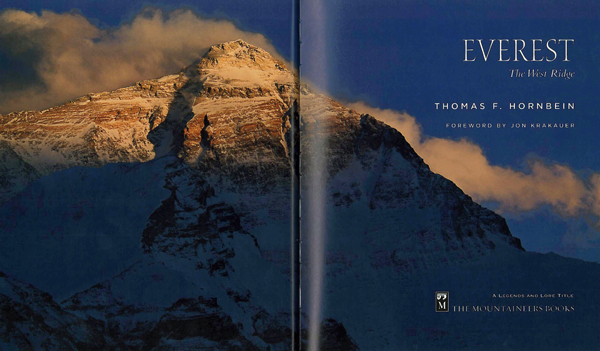
 In Everest- The West Ridge, Horbein wrote:
 "The night was overpoweringly empty. Stars shed cold, unshimmering light. The heat lightning dancing along the plains spoke of a world of warmth and flatness. The black silhouette of Lhotse lurked half-sensed, half-seen, still below. Only the ridge we were on rose higher, disappearing into the night, a last lonely outpost of the world."

Climbers on the West Ridge of Everest Photo:
Barry Bishop from Everest The West Ridge
Amazingly, despite all odds the climbers survived to greet the icy dawn.  National Geographic photographer Barry Bishop writes that it was one of finest mornings he had ever seen  but he  and his camera was too frozen to take a single photograph.

But the bivouac took a heavy toll. Unsoeld lost nine toes to frostbite and Bishop six. Jerstad and Horbein were extremely lucky to get away unscathed.

Since the first West Ridge climb in 1963, there have been about sixty attempts on the route with about half a dozen successful climbs including the West Ridge direct. The number of deaths and the number of summiteers on this route have been about the same making it one of the hardest routes on Everest.

In 2012  two teams from the USA  including crack climbers like Conrad Anker, Cory Richards, Jake Norton and David Morton  attempted the west ridge to commemorate the 1963 expedition. Unfavourable conditions forced both teams to give up the west ridge route.

In 1979 Unsoeld died on an avalanche on Mount Rainier - one of the peaks he used to guide. Horbein recollects that Unsoeld and he spoke each year on May 22nd, the anniversary of their west ridge climb. After Unsoeld’s death Horbein speaks to his widow Jolene on that day.

In the end, expedition leader Norman Dyhrenfurth, though pushing for the South Col ascent gave the west ridge team full credit. Dyhrenfurth said “For years it had been the dream of mountaineers to do a major Himalayan traverse. We were particularly happy and proud that this was not only the first Himalayan traverse but that it was on Everest.”
Monday, January 21, 2019

Everest | Helicopter Charter Flights


When helicopters started flying in Nepal, they were used mostly for search and rescue operations. However, in the last decade, the number of helicopter companies have increased and it is not unusual while trekking in the Everest region to find helicopters flying up and down between Gorak Shep to Pheriche/ Namche/Lukla/Kathmandu ferrying passengers on a charter flight.

Though many purists including myself  will balk at the idea of using a helicopter at the end of the Everest trek, this has become quite a common occurrence of late. The  main advantages for the trekkers are:

An Everest Base Camp trek can become 9-10 days Kathmandu to Kathmandu instead of the usual 14 days as the return journey  from Gorak Shep is significantly reduced by using the helicopter.

The long descent from 5150 metres at Gorak Shep to Lukla 2800 metres is avoided and saves your knees!

COSTS

Though the cost of chartering a helicopter is not fixed and there is considerable leeway for bargaining and getting a good price, the average costs for a charter is given below. Sometimes prices can be below this as well depending if the helicopter has come up to drop passengers and is going back empty.

Gorak Shep to Lukla  - $1500  (3 persons)
Pheriche to Lukla - $1300 ( 4 persons)
Namche to Lukla  $600 (3 persons)
Namche to Kathmandu $3200 (5 persons)
Lukla to Kathmandu  $2800 ( 5 Persons)


HELICOPTER COMPANIES IN NEPAL

Fishtail Air www.fishtailair.com
Summit Air (Helicopters Division) www.summitair,com.np
Simrik Air (Helicopters Division) wwwsimrikair.com
Air Dynasty www.airdynastyheli.com
Mountain Heli www.mountainhelicharter.com
Altitude Air www.altitudeairnepal.com
Shree Air www.shreeairlines.com
Kailsh Heli www.kailashheli.com
Manang Air www.manangair.com.np

Easy Flight Travel headed by Raju Pulami and based in Namche also provides helicopter services at reasonable rates. Do contact  https://www.easyflightnepal.com

South Col Expeditions treks in the Everest region every year. For more information on our treks do visit www.southcol.com

Wednesday, November 7, 2018

Everest Base Camp Trek | New Permits


There has been some confusion regarding the permits needed for the Everest Base Camp Trek.

Currently, the TIMS permit which is required in other trekking areas of Nepal is not needed for the Everest trek and Gokyo.

Instead a local permit called the Pasang Lhamu Municipality permit costing NPR 2000/- is needed and is available on arrival at both Lukla and Namche checkposts.

Other than this the Sagarmatha National Park permit is needed which is available at the Monjo checkpost for Rs 3000 plus 13% tax for Foreign passports and Rs 1500 plus 13% tax for SAARC countries.

No photographs are needed for either of these permits.


For more information on our treks in the Himalaya do visit www.southcol.com

Tuesday, October 9, 2018

Everest Three Passes: Rhenjo La (5337m) Crossing

The Rhenjo Pass as seen from the third lake of Gokyo

The trail to the top of the Rhenjo la pass

Rhenjo La  - The crossing of the pass from Gokyo to Thami

The Rhenjo La is one of the three high passes on the Everest trek the other two being Kongma La and the most popular one is the Cho La.  The Rhenjo La can be crossed from the Gokyo side as well as from the Thami - Lungden side. However it is advisable to cross the pass from the Gokyo side as the climb from the Lungden side is extremely long and tiring.

Gokyo 4750 metres  to Rhenjo La 5357 metres 
We left Gokyo at around 6 15 am and headed out towards the pass on a trail that skirted the third lake and climbed gently for an hour. The trail then began to climb steeply following a series of switchbacks for another 45 minutes to one hour until it reached a flattish plateau from where there was an excellent view of Everest and the other peaks including Makalu which started peeping over a rock face.  This plateau can get snowed under and there are cairns to show the way. From the plateau the trail swung to the right and began climbing again through rocks and moraine. The pass can be seen from here with a row of prayer flags strung across the rocks. The climb from the meadow to the top of the pass would be another hour.
Gokyo to the top of the pass 3 to 4 hours

Looking down towards the Lungden side of the pass with the peaks of Rolwaling
Looking down from the pass towards the Gokyo side

Rhenjo La 5357 metres  to Lungden 4400 metres
The pass has an excellent view both to the north and to the south. From the pass a very steep stone staircase leads down to an emerald lake which can be seen from the top. Pass the lake and the trail swings left following the natural contour of the valley. In about an hour or so there is a large lake on the left side - the trail passes this lake and climbs gently until it reaches some yak herders settlements made of stone. This part of the walk can be extremely cold and windy especially if it is foggy and cloudy. From here the path heads downwards and the lodges of Lungden can be seen in the valley below around 30 to 45 minutes away. Lungden has four or five lodges now so accommodation is not usually a problem.
Rhenjo La to Lungden 2 to 3 hours 


Lungden 4400 metres  to Thami 3800 metres
It is now a pleasant stroll down the valley following the Bhote Kosi river. In around 40 minutes you reach the village of Maralung which has a couple of lodges. The trail continues to lose altitude and reaches the village of Taranga in another half hour. From here it is about  60 to 90 minutes pleasant walking to the lodges of Thami.
Lungden. To Thami  2.5 hours to 3 hours

Thami  3800 metres to Namche 3450 metres  3 hours to 3.5 hours

For more information on South Col's treks do visit www.southcol.com 


Saturday, September 22, 2018

Everest 2018 | Photographs


The autumn treks in the Everest region will soon be underway and October and November 2018 promises to be a very busy season. The lure of Everest is difficult to resist and here are some photographs of the mountain from different locations over the years:


Moorise near Kala Pattar

Everest and the Lhotse - Nuptse wall from Thyanboche

Above the fifth lake of Gokyo

Approaching Kala Pattar

Sunset view Gokyo Ri 
For our treks in Nepal do visit www.southcol.com

Tuesday, May 29, 2018

Everest May 29th 1953 | Sixty Five Years since the 1st Ascent

Hillary and Tenzing arriving at Advance Base Camp 30th May 1953 after the successful summit.  On the left is Charles Evans and to the left of Tenzing is Tom Bourdillon and George Band. 
Today is sixty five years since the first ascent of Everest.

On 29th May 1953 at 11.30 am, a Sherpa and a New Zealander became the first men to stand on top of the highest peak on this planet.  However the intervening years has seen a sea change as far as Everest is concerned. The mountain   has now become a playground for guided expeditions, with clients paying between twenty five to sixty thousand dollars or more to stand on the highest point on earth. The South Col route climbed in 1953 is now disdainfully referred to as the “yak trail”. The dangerous icefall below the Western Cwm is maintained by a team of sherpas right through the season led by a senior “Icefall Doctor.” 


In order to make it possible for the clients to summit Everest, the entire mountain has fixed rope from bottom to top. This year 2018 the first ascent of the mountain was made by a team of  sherpas from different expeditions who fixed  the rope right to the summit and they were followed by the guided clients. 


 The summer of 2018 has been a record year on Everest. There has been 700+ summits till date from both the south and north side and for the first time there were eleven straight summit days when the weather was favourable for the climb.  Kami Rita Sherpa made his 22nd ascent of Everest - the highest number of Everest ascents till date. Lhakpa Sherpa climbed Everest from the north for the ninth time - the most Everest climbs by a woman. 

A Chinese double amputee Xiya Boyu made a successful ascent of Everest while astronaut Maurizio Cheli also successfully made the summit becoming the first man to have flown in space and climbed the highest mountain in the world.

There was also a major problem this year  with faulty oxygen bottle regulators on the Tibet north  route and some teams had to cancel  their summit attempts. 

However, this post recounts through photographs,  the 1953 climb, the historic ascent of the first two men to summit Everest and the team of climbers and sherpas who supported them through this endeavour.


Bourdillon and Evans on their return from the South Summit on May 26th 1953 - Bourdillon had wanted to make a push for the summit

Nawang Gombu crossing the icefall ladders - Gombu later became the first man to climb Everest twice in 1963 and 1965
The five men who helped  Hillary and Tenzing to carry to Camp 9  27,800 feet - John Hunt, Da Namgyal, Alf Gregory, Any Nyima and George Lowe - Photo George Lowe Collection

The map of the Khumbu icefall and the route followed by the 1953 expedition


From left: John Hunt, Ed Hillary, Tenzing, Ang Nyima,  Alfred Gregory and George Lowe after the ascent

The code which was later used in the telegram to send the news before the Queen's coronation

The telegram sent by John Hunt after the ascent

Hunt, Hillary and Tenzing in London

The full expedition team with the sherpas
Tenzing and his mother at Tengboche monastery after the climb
Tenzing and Hillary at Tengboche monastery after the successful climb
Sketch map drawn by Tenzing for his biographer James Ramsay Ullman 

The signed colour supplement of The Times


All photographs in this post are copyright the ROYAL GEOGRAPHICAL SOCIETY and the respective owners.

LinkWithin

Related Posts Plugin for WordPress, Blogger...