Friday, July 12, 2019
Sir Edmund Hillary | Centenary Celebrations
2019 is the year of the birth centenary of Sir Edmund Hillary the first man to climb Mount Everest along with Tenzing Norgay Sherpa.
To celebrate the centenary a number of events have been planned throughout the world. In Kolkata on July 20th 2019, The Himalayan will present a series of illustrated talks on Sir Ed.
Bhanu Banerjee will present an illustrated talk on his years with Sir Edmund from 1960 to 1963 in the Solukhumbu district of Nepal. This will be preceded by a presentation of historical photographs on the life and times of Sir Edmund by Sujoy Das. Piyali Basak will share her unique experiences on Manaslu (2018) and Everest (2019). All are welcome and to attend this talk do send an email to thehimalayan2017@gmail.com
In Kathmandu at the historic office of the Himalayan Trust Nepal there will be a programme on July 20th 2019 from 10 am to 12 noon followed by lunch.
And a number of events have been planned in New Zealand around the same time.
The activity led by the Hillary Centenary Steering Committee begins with an event at Parliament on 23 July, hosted by the Prime Minister, Rt Hon Jacinda Ardern, for Hillary family members and a range of other distinguished guests including politicians, ambassadors, business leaders and members of the creative and academic communities.
At the event, New Zealand Poet Laureate Selina Tusitala Marsh will perform her new poem about Sir Ed called Hillary’s Step that is featured on an installation of the same name that was unveiled at Christchurch Airport last week.
NZ Post is also issuing commemorative stamps for the centenary, available from 23 July, which feature images of Sir Ed on his various expeditions and endeavours. Sir Ed was last featured on a stamp just over a decade ago, shortly after he passed away.
This is followed on 27 July by the world premiere of a full-length symphony composed by Gareth Farr in honour of Sir Ed, titled Roar of a Thousand Tigers, performed by the Christchurch Symphony Orchestra conducted by Benjamin Northey at the Christchurch Town Hall’s Lilburn Auditorium. Commissioned by the Hillary Centenary Steering Committee with the support of Creative New Zealand, the title of Farr’s symphony comes from Tenzing Norgay’s evocative description of the violent winds on Mt Everest.
Thursday, July 4, 2019
Ladakh | Shang to Rumbak Trek Aug 31 - Sept 7 2019
South Col Expeditions will be running a confirmed departure trek from Shang Sumdo to Rumbak in the shadow of Matho and Stok Kangri peaks. The details of the trek including the route and costs are given below. Do email sujoyrdas@gmail.com for further enquiries.
If you are looking for a short trek in Ladakh and don't want the crowds of Markha then the five day route from Shang Sumdo to Rumbak is extremely attractive. The route walks in the shadow of the Matho Kangri and Stok Kangri peaks with typical rolling grasslands, fast flowing rivers, wildlife and nomadic settlements of sheep and yak. The trek approach is close to Leh making this an ideal one week vacation.
Who should join this trek?
A good choice for regular hill walkers, moderate level of fitness required. Prior trekking experience is advisable as it is a camping trek.
1) Walking times: average 5 to 6 hours walking per day.
2) Altitude: up to 4,940 metres at the passes and around 4200-4400 metres at the campsites.
3) Terrain: for some of the time following well-travelled trails although also likely to encounter rough and rocky conditions near the passes.
4) Remoteness: the trek is in a remote mountain area but not far from the roadheads at Shang Sumdo, Matho, Stok. There is no mobile phones and wifi connectivity on the trek.
Day 1 Fly in from Delhi to Leh and rest for the day.
Day 2 Acclimatisation rest day - visit monasteries in and around Leh.
Day 3 Leh 3450m to Shang Sumdo 3650m
We drive from Leh to Shang Sumdo and reach in about 90 minutes. We camp near the river and spend the day acclimatising in and around Shang Sumdo. This second acclimatisation day will help us in our future days.
Day 4 Shang Sumdo 3650m to Shang Phu 3950m 5 hours
We start our trek today - our ponies are waiting for us here and after breakfast we start our first days walk. Today the trail ascend gradually through green fields of wheat and barley following the Shang river, flowing from south of Matho Kangri.The valley heads up a shepherds hut the grasslands around serve as grazing grounds fro yak, sheep and goats. We camp overnight at Shang Phu. There is no pass to cross.
Day 5 Shang Phu 4250m to Gangpoche 4150m across Shang la 4940m 5 to 6 hours
The day begins with a long three to four hour climb to the Shang la through a zg zag trail. This area is home to snow leopards, bharal, marmots, golden eagle and a lot of other bird life and wildlife. The view from the top is impressive with the mountain wall of Matho Kangri 5900m just behind and above the pass. The path then descends gradually to the campsite of Gangpoche.
Day 6 Gangpoche to Mancarmo via Matho La 4930 5 to 6 hours
This trail travels across the Gangpoche meadows until it reaches the base of Matho la 4350 metres. It then climbs the gentle slopes to the top of Matho La our second pass. The trail steadily ascends to a series of grassy slopes, Yak herders from the nearby villages live in stone settlement at the foot of the pass and the view from the pass is absolute amazing , the popular Stok kangri peak right behind. From the top of Matho La is descends gradually for around 3 km to the campsite of Mankarmo 4480m.
Day 7 Mankarmo 4480m to Rumbak 3900m across Stok La 4900m 6 to 7 hours.
Today we have a hard climb to the top of Stok La which has a spectacular view - this is our final pass and then we descend gradually to the the village of Rumbak. We stop for a snack at a tea tent in Rumbak and then walk one hour down to the road head where our transport is wating drive us back to Leh 2 hour drive.
Day 8 Fly back from Leh to your home city
COSTS
The cost of the trek is Rs 55,000 /- for Indians (US $ 1100 for foreign passports ) Leh to Leh - some exclusions apply.
The cost per person for Leh to Leh (8 days ) as per the itinerary given earlier
Costs given above are at current rates of 2019 and may change without notice. Changes if any will be notified 2 months before the trek.
Costs include:
Transfer by vehicle from Leh to Shang Sumdo (day 3) and pickup from below Rumbak village (day 7) at the end of the trek.
One day monastery visits around Leh – Shey, Thikse, Hemis etc. on day 2 in a private vehicle
Three nights accommodation in Leh on twin sharing basis in a good standard hotel.
All accommodation in tents and meals on trek for five days (day 3 to day 7) as per itinerary; breakfast, lunch and dinner.
Cost of guides/cook/helper/ponyman and ponies as needed for the trek.
Costs not included
Flight Costs from home country to Leh and back.
All meals in Leh not covered.
Airport taxes if any.
Client travel and medical insurance of any kind. Emergency evacuation costs if needed.
Bottled drinks; boiled, filtered or bottled water; alcohol; snacks etc
Personal clothing and equipment; sleeping bag; duvet /down/ goretek jacket, medicines for personal use etc.
Tips to guides/cook/helper/ponyman at the end of trek.
Labels:
Himalayas,
Ladakh,
south col,
trek notes,
Trekworld
Thursday, June 20, 2019
Alpinist Magazine | Everest Reflections on the Solukhumbu

The Alpinist magazine is presently running a series of seven posts comprising of photos and text from our book Everest Reflections on the Solukhumbu.
This week as part of the #alpinistcommunityproject, we're sharing work from Sujoy Das, a photographer, Alpinist contributor and founder of South Col Expeditions, which runs treks and photo workshops in the Himalaya. He has spent more than two decades in the Chomolungma/Everest region and is the co-author and photographer of a number of books. His latest book, “Everest: Reflections on the Solukhumbu,” is a collaboration with writer Lisa Choegyal, who has made Kathmandu her home since 1974 and has been deeply involved with Nepal tourism and conservation. Their book is focused on the majestic scenery and reality of daily life in the Solukhumbu region that lies in the shadow of Chomolungma. A foreword by leading mountaineer Chris Bonington, preface by cultural scholar Dr. Lhakpa Norbu Sherpa and drawings by artist Paula Sengupta add depth to this unusual book about a familiar destination. Bonington writes in his foreword, “This is not just one more book about Everest, but a special celebration of the haunting beauty of Solukhumbu and its people.” The book is available online at Amazon and Vajrabookshop.com. More information about Das can be found at www.southcol.com.
This is his first post.
Book cover of "Everest: Reflections on the Solukhumbu." [Photo] Sujoy Das.

“On a monsoon morning in June 2018, I was in the village of Khumjung to photograph the Dumji Festival. As I walked to the monastery, thick clouds swirled around the mountains and the village was ensconced in fine mist. Suddenly, as I neared a chorten (memorial), the sun appeared through the clouds and this amazing backlit view of Ama Dablam, possibly the most beautiful mountain in the Khumbu region, presented itself. I got about 20 seconds to take some photos before the clouds had blanketed the mountain once again. This photograph is part of an essay titled, ‘The Himal—No Bird Can Fly Over it,’ about the high mountains of the Chomolungma region.” [Photo] Sujoy Das @south_col @lisachoegyal @vajra_books #sujoydas#everest #chomolungma #southcolexpeditions
This is his second post.
This week as part of the #alpinistcommunityproject, we're sharing work from Sujoy Das, a photographer, Alpinist contributor and founder of South Col Expeditions, which runs treks and photo workshops in the Himalaya. He has spent more than two decades in the Chomolungma/Everest region and is the co-author and photographer of a number of books. His latest book, “Everest: Reflections on the Solukhumbu,” is a collaboration with writer Lisa Choegyal, who has made Kathmandu her home since 1974 and has been deeply involved with Nepal tourism and conservation. Their book is focused on the majestic scenery and reality of daily life in the Solukhumbu region that lies in the shadow of Chomolungma. A foreword by leading mountaineer Chris Bonington, preface by cultural scholar Dr. Lhakpa Norbu Sherpa and drawings by artist Paula Sengupta add depth to this unusual book about a familiar destination. Bonington writes in his foreword, “This is not just one more book about Everest, but a special celebration of the haunting beauty of Solukhumbu and its people.” The book is available online at Amazon and Vajrabookshop.com. More information about Das can be found at www.southcol.com.
For a look at the rest of the posts do visit https://www.facebook.com/Alpinist/
Saturday, June 8, 2019
George Mallory and Andrew Irvine | 8th June 1924
| Last photo of Mallory and Irvine leaving for Camp VI 1924 expedition |
"And yet as I gazed again another mood appeared to creep over her haunting features. There seemed to be something alluring in that towering presence. I was almost fascinated. I realized that no mere mountaineer alone could but be fascinated, that he who approaches close must ever be led on, and oblivious of all obstacles seek to reach that most sacred and highest place of all."
Noel Odell gazing at the North Ridge of Everest June 1924 after Mallory and Irvine were lost.
"Higher in the sky than imagination had ventured to dream, the top of Everest itself appeared"
On 8th June 1924, two men left Camp VI (26,700 feet) to make an attempt on the summit of Everest. Camp VI was the highest camp of the British 1924 Everest expedition.
On the same morning, another British climber, Noel Odell, was making his way up from Camp IV to Camp VI. Odell was a geologist and he was collecting fossils from the slopes of Mount Everest. Odell recalls that it was not the perfect morning to climb Everest. " Rolling banks of mist" were sweeping across the mountain and covering the north face. Neither the face nor the summit ridge could be seen by Odell. There was also a sharp wind which was making climbing very difficult.
Suddenly at 12.50 pm the mist cleared and Odell spotted high above on the ridge, a black dot climbing a rock step, which Odell at that point identified as the Second Step. Soon after Odell saw another black dot following the first black dot. But before Odell could be sure that the second black dot had joined the first, the mist rolled in and blanketed the mountain and this fantastic vision was lost forever.
The two dots that Odell saw were George Mallory and Andrew Irvine "going strongly for the summit of Everest". Mallory and Irvine were never seen again.
But even today, ninety five years after the disappearance of Mallory and Irvine, the legend of Mallory is still alive. Books are being written about Mallory, expeditions are being planned to find Andrew Irvine and his camera because Everest experts believe that the camera will unlock the secret of Mallory's last climb.
In this post we take a look at some photographs and other memorabilia from the Everest expeditions of 1921, 1922 and 1924.
“It was a prodigious white fang, an excrescence from the jaw of the world.”
| Everest view from the Pang La pass in Tibet |
| The 1924 Everest expedition members |
| Andrew Irvine working on oxygen cylinders |
"I cannot tell you how it possesses me"
| Mallory's watch found in 1999 by Conrad Anker and the team |
| Mallory had no compass on his last climb |
"Again and for the last time we advance up the Rongbuk glacier for victory or final defeat "
| Letter from George Mallory to his daughter |

![]() |
| 1924 oxygen cylinders at the Planters Club Darjeeling "...some day you will hear a different story..." |
Labels:
Everest,
everest base camp,
Everest memorials,
Himalayas,
Irvine,
Mallory,
Nepal,
Publications,
Tibetans
Thursday, June 6, 2019
Everest Reflections on the Solukhumbu | Book Launch Kathmandu
Everest Reflections on the Solukhumbu was launched in Kathmandu at Dwarikas Hotel on May 28th 2019. The large format book has photographs by Sujoy Das Text by Lisa Cheogyal Drawings by Paula Sengupta Foreword by Sir Chris Bonington and Preface by Dr Lhakpa Norbu Sherpa.
The book is published by Vajra Books Kathmandu Nepal.
The book is available on line as under:
Amazon India
Amazon USA
Vajrabooks Kathmandu
Some photographs of the launch
Labels:
Ama Dablam,
books,
Everest,
everest base camp,
Himalayas,
Nepal,
photo awards,
Photo Workshop,
photography,
Publications
Wednesday, May 29, 2019
Everest | The First Ascent May 29th 1953
![]() |
| Hillary and Tenzing aftter the successful ascent May 29th 1953 |
On 29th May 1953 at 11.30 am, a Sherpa and a New Zealander became the first men to stand on top of the highest peak on this planet. However the intervening years has seen a sea change as far as Everest is concerned. The mountain has now become a playground for guided expeditions, with clients paying between thirty thousand to eighty thousand dollars or more to stand on the highest point on earth. The South Col route climbed in 1953 is now disdainfully referred to as the “yak trail”. The dangerous icefall below the Western Cwm is maintained by a team of sherpas right through the season led by a senior “Icefall Doctor.”
In order to make it possible for the clients to summit Everest, the entire mountain has fixed rope from bottom to top and the first to summit each year is a Sherpa team.
Kami Rita Sherpa created a new record this year by summiting Everest 24 times - in the last week he has summitted Everest twice in the 2019 season - the most by any climber breaking his own record of 22 summits. I wonder if anyone will break Kami's record - maybe Kami himself next year!
This year 2019 has not been a very good one on 8000 metre peaks. At the time of writing, there have been 20 deaths on 8000 metre peaks this season - Everest, Makalu Kangchenjunga and Cho Oyu. There were also reports in social media and newspapers that more than 200 climbers were in human traffic jam on the south east ridge of Everest near the balcony area and as a result of this some climbers lost their lives due to exhausion and many others had injuries due to frostbite from waiting in the "deathzone" for so many hours. There have been ten deaths on Everest so far.
However, this post recounts through photographs, the 1953 climb, the historic ascent of the first two men to summit Everest and the team of climbers and sherpas who supported them through this endeavour.
![]() |
| Bourdillon and Evans on their return from the South Summit on May 26th 1953 - Bourdillon had wanted to make a push for the summit |
![]() |
| Nawang Gombu crossing the icefall ladders - Gombu later became the first man to climb Everest twice in 1963 and 1965 |
![]() |
| The five men who helped Hillary and Tenzing to carry to Camp 9 27,800 feet - John Hunt, Da Namgyal, Alf Gregory, Any Nyima and George Lowe - Photo George Lowe Collection |
| The map of the Khumbu icefall and the route followed by the 1953 expedition |
![]() |
| From left: John Hunt, Ed Hillary, Tenzing, Ang Nyima, Alfred Gregory and George Lowe after the ascent |
![]() |
| The code which was later used in the telegram to send the news before the Queen's coronation |
![]() |
| The telegram sent by John Hunt after the ascent |
![]() |
| Hunt, Hillary and Tenzing in London |
![]() |
| The full expedition team with the sherpas |
![]() |
| Tenzing and Hillary at Tengboche monastery after the successful climb |
![]() |
| Sketch map drawn by Tenzing for his biographer James Ramsay Ullman |
![]() |
| The signed colour supplement of The Times |
All photographs in this post are copyright the ROYAL GEOGRAPHICAL SOCIETY and the respective owners. This post is non-commercial.
Labels:
Everest,
everest base camp,
Hillary,
Himalayas,
Nepal,
seven summits,
tengboche,
Tenzing
Wednesday, May 22, 2019
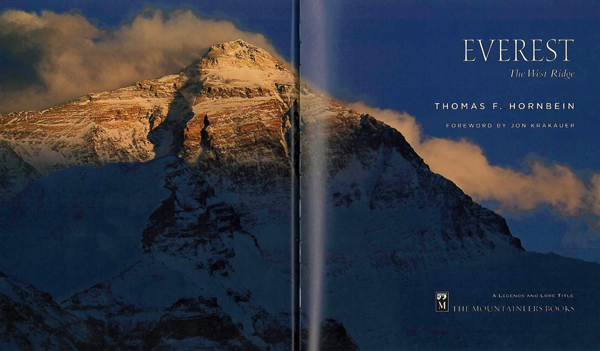
Everest | The West Ridge & the First Traverse May 22nd 1963
Today is the 56th anniversary of the first ascent of the West ridge of Everest and the first traverse of the mountain.
On 21st May 1963 at six o’clock in the evening two climbers reached 27,205 feet (8300 metres) to set up
It had not been easy for these two men. The 1963 American Everest Expedition led by Norman Dyhrenfurth had squarely set its sights on a first American ascent by the South Col route. On May 1st 1963, Jim Whittaker accompanied by Sherpa Nawang Gombu, Tenzing’s nephew, made the first American ascent to become the fifth and six men to stand of the summit after the British in 1953 and Swiss in 1954.
![]() |
| Photo Courtesy - outsideonline.com |
On the day of their summit climb, Barry Bishop, a National Geographic photographer, and Lute Jerstad were also attempting the summit by the South Col route. Bishop and Jerstad reached the summit around 4 pm but did not find any evidence of the west ridge team who were still two hours below the top.
![]() |
| Horbein on the West Ridge- Photo Courtesy Willi Unsoeld |
The West ridge pair reached the summit at 6.15 pm on 22nd May 1963 and became the 11th and 12th men to climb Everest and the fifth and sixth of their expedition. But in the context of the history of Everest it was an enormous “first”: a climb by the West Ridge for the first time and more was to follow. They had been climbing for more than eleven hours since dawn. They saw the boot prints of Whittaker and Gombu and fresh prints which they knew must be of Bishop and Jerstad.
Maynard Miller and Jimmy Roberts at Advance Base (around 23,500 feet) below had scanned the heights throughout the day and kept the radio open. Around 7 pm when it was almost dark and anxiety had risen, Willi Unsoeld’s voice came through the radio. They had just summitted Everest he said and were descending by the south east ridge in the dark on a route known to neither.
“Roger, Roger” Maynad called back through the crackle and wind.
“…. I have promises to keep,
And miles to go before we sleep,
And miles to go before we sleep….”
The “promises” were to Willi’s wife Joelene that Everest would be his last big mountain.
The west ridgers left the summit around two hours behind the south col team. With a flickering flashlight whose batteries were fast waning, the two climbers descended, following the boot prints and ice axe marks of Jerstad and Bishop. But soon the last light faded from the sky and night descended on the slopes of Everest. The climbers reduced the 150 feet rope into half so that they could remain closer to each other.
Jerstad and Bishop’s descent of the south east ridge earlier was also not without drama. The seventy mile gusts were dragging the climbers towards the edge of the ridge and in Bishop’s words “ A section of the cornice at my chest gave way and I had a sudden hair raising view of the Kangshung glacier 10,000 feet below”. Bishop unroped himself and managed to return to the trail.
Suddenly they began to hear voices in the wilderness “Helloo, Helloo” and thought it was a rescue party from Camp VI coming up in searching for them. Then they realized that the voices were from above. The West ridge climbers had descended in record time and caught up with the South Col team!
The four climbers then descended together down the south east ridge . The torch which Unsoeld had finally gave way and in the glimmer of starlight the climbers stumbled down. Finally at 12.30 midnight it was not possible to continue any further and the four Everesters sat down for what would be the highest bivouac at that time.
In 1953 Herman Buhl on his descent from Nanga Parbat and in 1955 Walter Bonatti and his porter had also spent the night at around 26,000 feet on K2 and survived though not without loss.
But the bivouac of the Americans was around 28,000 feet. However, luck was on their side. It was one night in fifty that the jet stream winds were silent on Everest!
In Everest- The West Ridge, Horbein wrote:
"The night was overpoweringly empty. Stars shed cold, unshimmering light. The heat lightning dancing along the plains spoke of a world of warmth and flatness. The black silhouette ofLhotse lurked half-sensed, half-seen, still below. Only the ridge we were on rose higher, disappearing into the night, a last lonely outpost of the world."
"The night was overpoweringly empty. Stars shed cold, unshimmering light. The heat lightning dancing along the plains spoke of a world of warmth and flatness. The black silhouette of
![]() |
| Climbers on the West Ridge of Everest Photo: Barry Bishop from Everest The West Ridge |
But the bivouac took a heavy toll. Unsoeld lost nine toes to frostbite and Bishop six. Jerstad and Horbein were extremely lucky to get away unscathed.
Since the first West Ridge climb in 1963, there have been about sixty attempts on the route with about half a dozen successful climbs including the West Ridge direct. The number of deaths and the number of summiteers on this route have been about the same making it one of the hardest routes on Everest.
In 2012 two teams from the USA including crack climbers like Conrad Anker, Cory Richards, Jake Norton and David Morton attempted the west ridge to commemorate the 1963 expedition. Unfavourable conditions forced both teams to give up the west ridge route.
In 1979 Unsoeld died on an avalanche on Mount Rainier - one of the peaks he used to guide. Horbein recollects that Unsoeld and he spoke each year on May 22nd, the anniversary of their west ridge climb. After Unsoeld’s death Horbein speaks to his widow Jolene on that day.
In the end, expedition leader Norman Dyhrenfurth, though pushing for the South Col ascent gave the west ridge team full credit. Dyhrenfurth said “For years it had been the dream of mountaineers to do a major Himalayan traverse. We were particularly happy and proud that this was not only the first Himalayan traverse but that it was on Everest.”
Sunday, May 5, 2019
Everest Reflections on the Solukhumbu | Book Launch Kathmandu May 28th 2019
EVEREST – Reflections on the Solukhumbu
Photographer Sujoy Das and writer Lisa Choegyal have collaborated in their second volume, this time capturing the essence of the majestic scenery and reality of daily life in the Solukhumbu. They delve beneath the surface of the Everest region of Nepal to reveal its historical influences, hidden seasons and current pressures. A foreword by leading mountaineer Sir Chris Bonington, preface by cultural scholar Dr Lhakpa Norbu Sherpa and drawings by artist Paula Sengupta adds depth to this unusual book about a familiar destination. The book is published on the centenary of the birth of Sir Edmund Hillary.
The book is also now available on line at the following sites:
For more information and details please email lisa@choegyal.com or sujoyrdas@gmail.com
Labels:
books,
Everest,
photo awards,
Photo Workshop,
photography,
Publications
Subscribe to:
Posts (Atom)