Wednesday, May 16, 2012

The Spiti Left Bank Trek: Outlook Traveller May 2012

This is the page wise photo essay on the Spiti Left Bank trek published in Outlook Traveller in May 2012. For the full essay please do visit http://travel.outlookindia.com/article.aspx?280841 or my web site The Spiti Left Bank Trek 


Thursday, May 10, 2012

Tsedam Sherpa: International Mountain Equipment, Namche Bazar, Nepal

Tsedam Sherpa (right) with Sujoy Das at his store in Namche Bazar
Tsedam Sherpa ran  a lodge in Namche Bazar catering to trekkers and climbers before he decided to set up a high end store with the state of the art trekking and mountaineering equipment. The Sherpa capital of Namche Bazar sees as many as forty thousand trekkers and climbers a year from all over the world. International Mountain Equipment gives them the opportunity to buy top of the line international gear.  Tsedam has equipment from La Sportiva, Patagonia, Rab, Smartwool, Osprey, Ice Breaker, Western Mountaineering and other reputed brands.
Osprey packs for sale at International Mountain Equipment
Tsedam can be contacted at tsedam2002@yahoo.com and  +977 9842867506, 0097738540366.

Wednesday, May 2, 2012

Restrictions for Around Manaslu to be lifted


With the restrictions for the around Manaslu trek to the lifted we can look forward to a South Col trek in the Manaslu region!


REPUBLICA
KATHMANDU, April 29: The government is doing the necessary groundwork to lift restrictions for foreigners in Upper Manaslu area in Gorkha district.

Prime Minister Dr Baburam Bhattarai had instructed officials to lift the restriction about a fortnight ago, following repeated requests by locals and tourism entrepreneurs.

Following the PM´s instructions, the Ministry of Home Affairs last week sought opinions from stakeholders, including the Ministry of Tourism and Civil Aviation (MoTCA) and Ministry of Forests and Soil Conservation, on opening Upper Manaslu area for foreign trekkers.

After the restriction is lifted, foreigners can travel in the area by acquiring Trekkers´ Information Management System Card (TIMS) distributed by Trekking Agencies´ Association of Nepal (TAAN) or Nepal Tourism Board. Foreigners traveling in groups can get the card for $10 per person, while those traveling independently will need to pay $20 per person for the card.

As of now, trekkers need to take a special permit by paying $90 per person per week after completing lengthy administrative formalities. They, however, must travel in groups. Due to restrictions, only 600-700 foreign trekkers visit the area annually.

“It´s the lengthy administrative formalities, and not the permit fee, that was creating problem for trekkers,” TAAN President Mahendra Singh Thapa said.

Responding to the home ministry, MoTCA had suggested that restrictions could be lifted by deputing Armed Police Force (APF) personnel at checkpoints.

According to officials, the government had imposed restrictions on the area in line with Nepal´s One China policy as the area borders Tibet. “The restriction can be lifted. But the trekking activities should be limited within a certain distance from Nepal-China border,” an official at MoTCA said. The cabinet will lift the restrictions based on the suggestions of the stakeholders, the official said.

Upper Manaslu region is popular among trekkers for its unique environment and rich bio diversity, featuring Himalayan ranges, glacial lakes, monasteries and fascinating flora and fauna.

According to entrepreneurs, the area can receive 25,000-30,000 trekkers annually once the restriction is lifted.


Monday, April 30, 2012

Sikkim: Day Walks and Short Treks


Short Treks/ Day Walks There are a number of short one day and half day treks in Sikkim which are suitable for visitors who do not have the time to do the longer treks. 

Saturday, April 28, 2012

White Throated Kingfisher

These are some photographs of a white throated kingfisher found in my garden in Calcutta!


Sunday, April 15, 2012

Evening storm over Leh Palace

One evening I was walking on Fort Road in Leh when  suddenly the sky darkened, a fierce wind began to blow and clouds scudded across the sky. The whole scene was ominous and rain seemed imminent. I decided to stop and took shelter in a tea shop on the road below the palace. It started raining but did not last long. The rain  stopped and suddenly the sun came out and lit the palace and the hill below. I was just able to take two photographs as the sun vanished  and did not appear again!

Sunday, April 8, 2012

Monasteries : Ladakh and Zanskar

Some photographs in black and white of the monasteries in Ladakh and Zanskar. For more photos of the Himalayas please do visit www.sujoydas.com

Thikse
Thikse

Thikse

Alchi

Likir

Karsha

Sunday, April 1, 2012

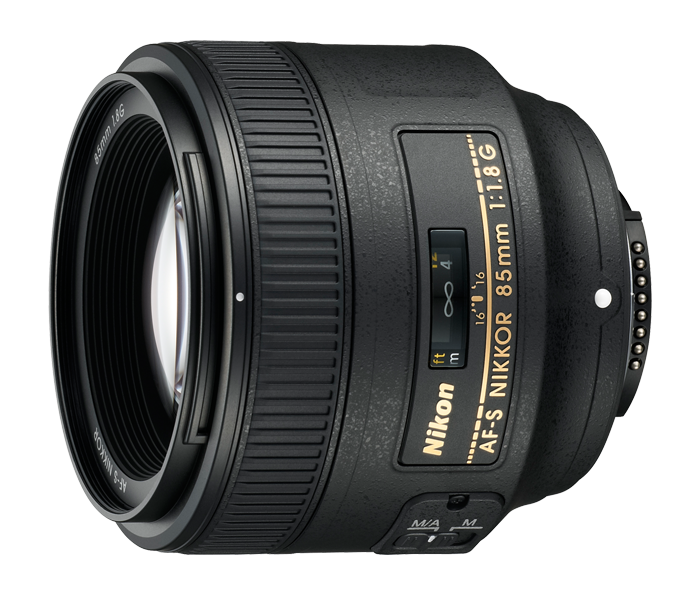
Fast lenses are meant to be shot wide open? ... or?


"The Nikon 85mm Æ’/1.8G AF-S provides excellently sharp images, though to achieve maximal sharpness you must stop down to at least Æ’/5.6."


This comment published in a well known web magazine set me thinking. Stop down a 1.8 lens to 5.6 for more sharpness?  In my book fast glass should be used wide open, otherwise why pay the premium for a fast 1.8 prime lens?

At around F 4.0 /5.6 Nikon has a number of extremely competent lenses at different price points:  18-105 VR,  18-55 VR, 18-200 VR II, 16-85 VR, 20-120 VR, 28-300 VR  to name a few. So if a photographer is happy to shoot at around 5.6 then why would he need a 1.8 lens?

Though it is axiomatically true that lenses improve stopped down, it is also true that fast primes are optimized to be used wide open – think of the legendary Nikon 300 f2.8, the 600 f4, 85 f1.4, the 24 f1.4 etc all of which produce superb results and bokeh wide open.

Fast glass and VR
" I have VR so should I need a fast lens?"  is a question which is put to me often.

VR will not work if the subject is moving and  if you want to freeze motion, you need to crank up the shutter speed and so a faster lens is needed. If you want to use lower ISOs in the same light conditions then you would need a faster lens.

If you look at a 5.6 lens with VR and a 1.8 lens without VR the difference is  around  3 stops. This difference means that you can shoot at ISO 200 with the 1.8 lens and ISO 1600 with the 5.6 VR lens keeping the shutter speed the same. It also means that keeping the ISO the same in both situations the speed would be 1/1000 of a sec with the 1.8 lens and 1/125 of the sec with the 5.6 lens. So can you see the possibilities?

My opinion has always been that if you buy a fast lens use its capabilities to the maximum. Do not hesitate to go wide open because that is what the lens is capable of doing. Many wildlife photographers I know shoot a 2.8 lens always at 2.8 and adjust with the shutter speed and ISO. A high shutter speed for wildlife ensures that camera shake is reduced and also freezes whatever motion there may be with the subject. The massive Nikon 600 F4 is routinely set at aperture priority F4 and the ISO and shutter speed decided on the available light.

Bokeh              
An issue which is not often discussed is the bokeh or the out of focus background with a fast lens. The creamy bokeh of a Nikon 85 1.4 is to be seen to be believed and well worth the investment in the lens if you need photos of this type.

Downside of fast glass?
The lenses are usually heavy and very often to get the best results you  need to monopod or tripod mount the lens especially the big telephotos and zooms. Further, fast glass does not come cheap and sometimes the huge difference in price does not justify the cost of a fast lens.  For example,  consider the Nikon 70-200 f2.8 VR and the 70-300 f4.5/5.6 VR. Both lenses at their middle apertures e.g. 6.3, 8 etc would produce similar photos but the fast zoom would come into it’s own in low light situations when 2.8 becomes mandatory and you would get a photo with this lens only. Wildlife and sports are examples of this type of photography.

Fast glass or a new body?
This is a question which often crops up – should I buy a new fast 2.8 zoom or keep my old lenses and buy that new Nikon 36 mp body?  I am firmly of the view that if your existing body does not allow you to do certain things which the new body will allow you to do and which you need desperately,  e.g. shoot acceptable photos without flash at ISO 12, 800 for example, then you may seriously think of upgrading to a new body. However, if it is just the lure of mega pixels then I say refrain!

Bodies come and Bodies go but fast glass lives on forever! 

LinkWithin

Related Posts Plugin for WordPress, Blogger...