Showing posts with label photography. Show all posts

Thursday, May 15, 2025

Kangchenjunga North and South Base Camps Nepal - Part II by Ashesh Ambasta


9/11/2024: on Selele La (4,480m), the first of the three passes enroute to Tseram. 
From left to right: Back row: Deepak, Ashesh, Pravin, Daniel & Purno;  Front row: Bhuvan & Bhakto


Ashesh Ambasta is a seasoned trekker and photographer who has done a number of treks with South Col Expeditions.  In late October and November 2024, Praveen Gupta, Deepak Chandnani, Daniel Bayer and Ashesh trekked to both the north and south base camps of Kangchenjunga, the third highest peak in the world, from the Nepal side. In this evocative account with wonderful images Ashesh shares  their experience of this outstanding trek still relatively unspoilt. 

The first part of his journey to the north base camp Pangpems  is documented here   https://sujoyrdas.blogspot.com/2025/05/kangchenjunga-north-and-south-base.html

Here is the second and final  part to the south base camp  Kangchenjunga, Oktang. 

For more photos of the trek do visit https://photos.app.goo.gl/QPHbCH7XxFn9Q29d8

The other side of Kanchenjunga from Oktang

8/11/24: Selele (4,250m): The camp site is ideally located in a bowl, surrounded by hills on three sides. A small stream cuts through the campsite. Today, there was bright sun and no wind, both welcome from the coldness of Lhonak and Ghunsa.

Wednesday, August 4, 2021

Ladakh | Markha Valley Route and Timings Update July 2021


Update- Though we did the trek from Skiu, the road now goes as far as Sara and possibly if the river is low as far as Markha. We therefore suggest that to drive from Leh to Sara on the first day (around 3 hours) and then walk after lunch to Markha. This will reduce one day from the trek and it will now become four to five days. Due to the pandemic the home stays were closed but it is possible to do this trek as a full home stay trek without tents and pony support once the covid situation eases up.

View of the peaks from Leh


Saturday, May 29, 2021

Everest | 29th May 1953 - The First Ascent


Today is sixty eight  years since the first ascent of Everest.

On 29th May 1953 at 11.30 am, a Sherpa and a New Zealander became the first men to stand on top of the highest peak on this planet.  However the intervening years has seen a sea change as far as Everest is concerned. The mountain  has now become a playground for guided expeditions, with clients paying between thirty thousand  to  eighty thousand dollars or more to stand on the highest point on earth. The South Col route climbed in 1953 is now disdainfully referred to as the “yak trail”. The dangerous icefall below the Western Cwm is maintained by a team of sherpas right through the season led by a senior “Icefall Doctor.” and ropes are fixed from Base Camp to the summit to allow "clients" to reach the top of the mountain. 

Due to the covid pandemic there were no attempts on the mountain in 2020. 

A record number of 400 plus climbers and 40 plus expeditions were  issued climbing permits in 2021 despite the covid wave. 

The large number of climbers, sherpas and support staff at base camp around 1500 or so resulted in a covid outbreak at Base Camp  and as per information received around 100 to 150 covid cases were detected – a majority were evacuated to Kathmandu hospitals and the rest which  were milder cases remained isolated in tents at base camp. Lukas Furtenbach, an Austrian operator, decided to cancel his expedition midway due this high covid risk which he deemed unacceptable.

In an interesting development, a team from Mountain Professionals set out from the South Col at 5 am on May 23rd 2021 and reached the summit by afternoon - possibly the first time in many, many years that a team has climbed Everest in the day enjoying sunny weather, gazing at the magnificent views, warmer temperatures and above all no long lines, headlamps and struggling along in the cold dark night.  There were advised by a  meteorologist  that there would be a day window on the 23rd May and they gladly seized the opportunity and had the mountain to themselves.

However the effect of the two cyclones over India and Nepal hampered the progress of the teams. As I write this post Cyclone Yaas is over Nepal and depositing heavy snow on the slopes of Everest. 

For the first time the Icefall Doctors team have agreed to keep the Icefall open until 3rd June 2021, to allow the remaining teams on the mountain a chance to summit if they are able to get another weather window on 30/31st May 2021.

 Kami Rita Sherpa created a new record this year by summiting Everest 25  times as a part of the Sherpa team who fixed the ropes to the summit  -  perhaps next year Kami will break his own record.

However, this post recounts through photographs,  the 1953 climb, the historic ascent of the first two men to summit Everest and the team of climbers and sherpas who supported them through this endeavour.

Monday, January 11, 2021

Kanha National Park | Safari Permits and Charges


Kanha National Park Safaris

The updated safari charges and other rules for 2021 as on date (January 11th 2021) are given below:

Safari Permit bookings

All safaris except full day safaris can be booked on the official site  https://forest.mponline.gov.in/     . One has to register on tis site & after going to wild life section you need to fill details like name, age, gender, nationality, photo id proof numbers. For Indian nationals Aadhar card, passport, driving license, voter id etc are valid. For Non-Indians passport details & country is mandatory. Permits to enter the park must be booked on line prior to the date of visit. These permits get exhausted quickly so they should be booked well in advance. We had booked one month ahead. The cost of the permit of the full Gypsy (maximum six persons plus driver plus guide) is Rs 1550/-. 

Zones 

There are four core area zones in Kanha – Kanha, Kisli, Mukki and Sarhi.  There are also four buffer zones Khatia, Khapa, Sijora & Phen. There are two entry gates for all these zones Khatia and Mukki. The core areas are in great demand as sightings are usually better in the core area though tigers have been regularly seen in the buffer areas.  The vehicles permitted in each zone are given in the screenshot below.


Cost of Jeeps
The cost of hiring a jeep (gypsy) and driver at the park gates is Rs 2500/- per safari and usually from the hotels/lodges depending on the distance from the gate is around Rs 3000/- per safari. A maximum of six guests are allowed in each  jeep plus guide and driver.


Guide Fees
The forest department provides a guide with each jeep – cost of the guide is Rs 600 per safari. 

Single seat safari bookings
It is also possible to book single seat safaris on line – the cost for this is Rs 260 per person excluding jeep cost and guide. 

Khatia Night Safari at Kanha
Night Safari is organised at Khatia Zone in the buffer. The ride is in an open jeep from 7 pm to 10pm – only three vehicles are allowed and booking is on first come first serve basis one day before the safari. The cost of the full vehicle, permit, guide is presently around Rs 5000/- per night safari for six guests.

Full Day Safari
There is a provision for booking a full day safari at Kanha covering all the zones without restriction – this is often used by photographers and naturalists – there are six permitted in a jeep along with guide and driver. Charges are not quoted on the MP Tourism web site but can be are very high. Permission needs to be taken from the Field Director for the full day safaris.

For photographs from Kanha please do visit -

Saturday, July 11, 2020

Everest | Reflections on the Solukhumbu


We are happy to share some good news at the time of the global pandemic - our book Everest Reflections on the Solukhumbu published by Bidur Dangol of Vajra Books was shortlisted amongst four books at the New Zealand Mountain Film and Book Festival for the Mountain Heritage Award. . We congratulate the winner The Great Unkown by Geoff Spearpoint and are happy that we were able to take part in the festival. The press release is below:

Mountain Books
Seven books have been shortlisted for the 4th annual Mountain Book Competition. Con-tenders for the Mountain Heritage Award include: Leading the Way, a historical account of 100 years of the Tararua Tramping Club, by Shaun Barnett and Chris Maclean, Exploring the Transantarctic Mountains by dog sledge, 1960-62 by Peter Otway, The Great Un-known, a chronicle of select trans-alpine journeys by Geoff Spearpoint, and Everest – Reflections on the Solkhumbu, with photography by Sujoy Das, and text by New Zealand’s Honorary Consul to Nepal, Lisa Choegyal.

For the Mountain Narratives Award Living the best day ever, celebrates the life of Hendri Coetzee, whose African whitewater adventures ended with a fatal encounter with a Salt-water Crocodile. Bewildered explores Laura Waters’ life changing catharsis of leaving toxic relationships and lifestyles for a long walk on Te Araroa. And In Fearless Chloe Phillips-Harris gives us a glimpse into the Mongol Derby; a 1000-kilometre endurance race across the wild steppes, desert and mountains of Mongolia – a competition with no marked course, no support team, that requires riders to switch horses every 40 km.

Competition is fierce for the NZ Mountain Book of the Year. This $1000 award was found-ed and is supported by Dave Bamford and John Nankervis. The award is only for a book of the very highest quality, and the judges say there are several books at that level.

For more details on our book do visit  https://www.amazon.in/Everest-Reflections-Solukhumbu-Choegyal-Sujoy/dp/9937928893/ref=sr_1_1?dchild=1&keywords=everest+sujoy+das&qid=1594447493&sr=8-1


Monday, November 4, 2019

Everest Reflections on the Solukhumbu | Photos Book Launch Kolkata


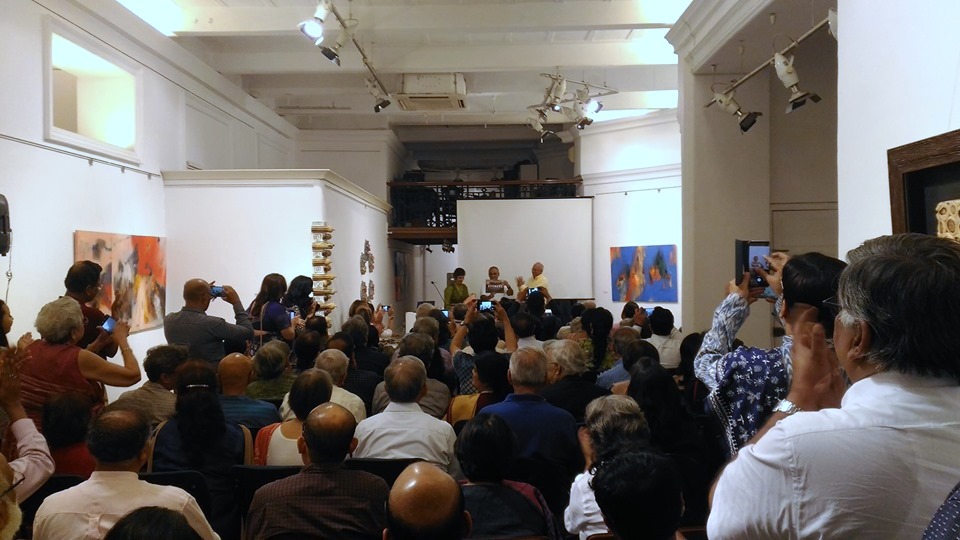
The book launch of Everest Reflections on the Solukhumbu was held at The Harrington Street Arts Centre on October 31st 2019.

Everest Reflections on the Solukhumbu, launched to celebrate the centenary of the birth of Sir Edmund Hillary and dedicated to the sherpas reveals the historical influences, hidden seasons and current pressures in the land of Everest. Photographer Sujoy Das and writer Lisa Choegyal have collaborated in their second volume, this time capturing the essence of the majestic scenery and reality of daily life in the Solukhumbu in the shadow of Mt. Everest. A foreword by leading mountaineer Sir Chris Bonington, preface by cultural scholar Dr Lhakpa Norbu Sherpa and drawings by artist Paula Sengupta adds depth to this unusual book about a familiar destination.
In the words of Sir Chris Bonington in his Foreword “This is not just one more book about Everest, but a special celebration of the haunting beauty of Solukhumbu and its people. Civilisation depends on the health of our high places, and I wish my Sherpa friends all the best with successfully navigating their future course.”
Sujoy Das, founder of South Col Expeditions which runs treks and photo workshops in the Himalaya www.southcol.com has spent more than two decades in the Everest region and is the co-author and photographer of a number of books including Nepal Himalaya A Journey Through Time, Sikkim A Travellers Guide and Lonely Planet Nepal for the Indian Traveller.
British-born Lisa Choegyal has made Kathmandu her home since 1974, deeply involved with Nepal tourism and conservation. Author and editor of Nepal Himalaya A Journey Through Time, Kathmandu Valley Style, The Nepal Scene Chronicles of Elizabeth Hawley and Offerings from Nepal, she produced the South Asian Insight Guides series, and contributes a fortnightly column to the Nepali Times.
The book is available on line at www.amazon.com; www.vajrabookshop.com; www.amazon.in

Some photos and videos from the launch:


Thursday, October 24, 2019

Everest Reflections on the Solukhumbu | Book Launch Kolkata


The third book launch of Everest Reflections on the Solukhumbu will be held in Kolkata on October 31st 2019 - address in the invite. All are welcome.
Everest Reflections on the Solukhumbu, launched to celebrate the centenary of the birth of Sir Edmund Hillary and dedicated to the sherpas reveals the historical influences, hidden seasons and current pressures in the land of Everest. Photographer Sujoy Das and writer Lisa Choegyal have collaborated in their second volume, this time capturing the essence of the majestic scenery and reality of daily life in the Solukhumbu in the shadow of Mt. Everest. A foreword by leading mountaineer Sir Chris Bonington, preface by cultural scholar Dr Lhakpa Norbu Sherpa and drawings by artist Paula Sengupta adds depth to this unusual book about a familiar destination.

In the words of Sir Chris Bonington in his Foreword “This is not just one more book about Everest, but a special celebration of the haunting beauty of Solukhumbu and its people. Civilisation depends on the health of our high places, and I wish my Sherpa friends all the best with successfully navigating their future course.”

Sujoy Das, founder of South Col Expeditions which runs treks and photo workshops in the Himalaya www.southcol.com has spent more than two decades in the Everest region and is the co-author and photographer of a number of books including Nepal Himalaya A Journey Through Time, Sikkim A Travellers Guide and Lonely Planet Nepal for the Indian Traveller. 

British-born Lisa Choegyal has made Kathmandu her home since 1974, deeply involved with Nepal tourism and conservation. Author and editor of Nepal Himalaya A Journey Through Time, Kathmandu Valley Style, The Nepal Scene Chronicles of Elizabeth Hawley and Offerings from Nepal, she produced the South Asian Insight Guides series, and contributes a fortnightly column to the Nepali Times.

Links to some reviews of the book


The book is available on line at www.amazon.com; www.vajrabookshop.com; www.amazon.in


Wednesday, September 11, 2019

Travel and Leisure India | Interview Sujoy Das September 2019 Issue


1. Tell us about your association with Mountain Echoes?

I was invited by Mountain Echoes to speak at the 10th edition of their festival in Bhutan that took place between August 22-25, 2019.  Our new book co-authored with Lisa Choegyal was showcased at the festival.

2. How important do you think platforms like these are for today’s youth?

I think they are very important as they give an opportunity to the youth to interact with different personalities from different professions from all over the world.

3. Photography has taken you around the world. What is your favourite place to shoot?

It would be in the mountains of Nepal, Himalaya. I have spent around two decades shooting in Nepal and the opportunities it has offered me have been incredible. I have done three books on Nepal.

4. Do you remember the first photograph you took? Where was it?

It was on a trek to Sandakphu near Darjeeling, I think in 1976 when I had just finished school from the bungalow of Tonglu looking at the Kanchenjunga range floating above the clouds. This, in fact, fired my interest in photography.

5. Tell us one crazy experience you have had while shooting.

I was trying to reach the Sikkim-Tibet border in North Sikkim at an altitude of 5,000 metres riding a yak; unfortunately, the yak had other ideas and as I was about to shoot some photos it started racing up the valley and threw me off! Luckily, the camera did not suffer any lasting damage!

6. In today’s digital age, everybody owns a high-quality camera. How does one stand out?

You are right. All cameras can take great photos, but it’s the eye behind the lens that’s important; you need to see things in a different way, in a different light, at different times of the day, and to create something different from the run-of-the-mill photo.

7. What kind of traveller are you?

I like to travel light, usually carrying my own backpack.

8. Do you prefer solo or group travel?

I usually travel in small groups, maybe with a few like-minded photographers.

9. What are the three things you must have while travelling?

Well, since most of my work is in the mountains, I would never leave home without a sleeping bag and a warm jacket —  both are essential for survival.

10. What is your most favourite destination in India?

It would be Sikkim, a state where I have spent many months photographing, especially the unspoilt Zemu Valley of North Sikkim in the shadow of Mount Kangchenjunga.

11. What does it take to be a successful travel photographer?

You must be prepared to spend time in the field often in very difficult and arduous conditions. You must also focus on weaving a story around your photos, just isolated images are not good enough and they won’t find a market; most editors will reject them.
During all my time spent in the Himalayas, it’s always been a search for the right light, the right time of the day, the right perspective and the right second, which transforms an ordinary or mundane view. In many of my photographs, there is a story waiting to be told. I hope I have been able to tell it well.

Wednesday, August 28, 2019

Vittorio Sella Remembered


Today 28th August 2019 is the 160th birth anniversary of the great mountain photographer Vittorio Sella. 

Vittorio Sella  was an Italian photographer and mountaineer, who took photographs of mountains which are regarded as some of the finest ever made. 
Sella was born in Biella in the foothills of the Alps and acquired his interest in Alpinism from his uncle, Quintino Sella. He made a number of significant climbs in the Alps, including the first winter ascents of the Matterhorn and Monte Rosa, and the first winter traverse of Mont Blanc. He took part in several expeditions further afield, including three to the Caucasus (where a peak now bears his name), to Mount Saint Elias in Alaska, to the Rwenzori in Africa, and the 1909 expedition to K2 and the Karakoram. The latter three expeditions were in the company of Luigi Amedeo, Duke of the Abruzzi. Sella continued to climb into his old age, and made his last attempt on the Matterhorn at seventy six. The attempt failed when one of his guides was injured in an accident.
The high quality of Sella's photography was in part due to his use of 30×40 cm photographic plates, in spite of the difficulty of carrying bulky and fragile equipment into remote places. He had to invent equipment, including modified pack saddles and rucksacks, to allow these particularly large glass plates to be transported safely. His photographs were widely published and exhibited, and highly praised; Ansel Adams, who saw thirty-one that Sella had presented to the US Sierra Club, said they inspired "a definitely religious awe". Many of the photographs he took were of mountains which had not been previously recorded and so have historical as well as artistic significance; for example by recording the retreat of glaciers in the Rwenzori mountains in Central Africa.
Sella died in Biella in 1943. His collection of photographs is now managed by the Sella Foundation (Fondazione Sella) in Biella. Some pictures of Sella are exhibited in the Museo Nazionale della Montagna "Duca degli Abruzzi"in Turin. [ From Wikipedia }

Some of Sella's photographs are below: 


In the words of Ansel Adams “Knowing the physical pressures of time and energy attendant on ambitious mountain expeditions, we are amazed by the mood of calmness and perfection pervading all of Sella’s photographs. In Sella’s photographs there is no faked grandeur; rather there is understatement, caution, and truthful purpose… Sella has brought to us not only the facts and forms of far-off splendours of the world, but the essence of experience which finds a spiritual response in the inner recesses of our mind and heart.”

Useful Links:

Friday, July 12, 2019

Sir Edmund Hillary | Centenary Celebrations


2019 is the year of the birth centenary of Sir Edmund Hillary the first man to climb Mount Everest along with Tenzing Norgay Sherpa.

To celebrate the centenary a number of events have been planned throughout the world. In Kolkata on July 20th 2019, The Himalayan will present a series of illustrated talks on Sir Ed.

 Bhanu Banerjee will present an illustrated talk on his years with Sir Edmund from 1960 to 1963 in the Solukhumbu district of Nepal. This will be preceded by a presentation of historical photographs on the life and times of Sir Edmund by Sujoy Das. Piyali Basak will share her unique experiences on Manaslu (2018) and Everest (2019). All are welcome  and to attend this talk do send an email to thehimalayan2017@gmail.com

In Kathmandu at the historic office of the Himalayan Trust Nepal there will be a programme on July 20th 2019 from 10 am to 12 noon followed by lunch.


And a number of events have been planned in New Zealand around the same time.

The activity led by the Hillary Centenary Steering Committee begins with an event at Parliament on 23 July, hosted by the Prime Minister, Rt Hon Jacinda Ardern, for Hillary family members and a range of other distinguished guests including politicians, ambassadors, business leaders and members of the creative and academic communities.

At the event, New Zealand Poet Laureate Selina Tusitala Marsh will perform her new poem about Sir Ed called Hillary’s Step that is featured on an installation of the same name that was unveiled at Christchurch Airport last week.

NZ Post is also issuing commemorative stamps for the centenary, available from 23 July, which feature images of Sir Ed on his various expeditions and endeavours. Sir Ed was last featured on a stamp just over a decade ago, shortly after he passed away.

This is followed on 27 July by the world premiere of a full-length symphony composed by Gareth Farr in honour of Sir Ed, titled Roar of a Thousand Tigers, performed by the Christchurch Symphony Orchestra conducted by Benjamin Northey at the Christchurch Town Hall’s Lilburn Auditorium. Commissioned by the Hillary Centenary Steering Committee with the support of Creative New Zealand, the title of Farr’s symphony comes from Tenzing Norgay’s evocative description of the violent winds on Mt Everest.

Thursday, June 6, 2019

Everest Reflections on the Solukhumbu | Book Launch Kathmandu


Everest Reflections on the Solukhumbu was launched in Kathmandu at Dwarikas Hotel on May 28th 2019. The large format book has photographs by Sujoy Das Text by Lisa Cheogyal Drawings by Paula Sengupta Foreword by Sir Chris Bonington and Preface by Dr Lhakpa Norbu Sherpa.
The book is published by Vajra Books Kathmandu Nepal.
The book is available on line as under:

Amazon India

Amazon USA

Vajrabooks Kathmandu


Some photographs of the launch


Sunday, May 5, 2019

Everest Reflections on the Solukhumbu | Book Launch Kathmandu May 28th 2019


EVEREST – Reflections on the Solukhumbu
Published by VAJRA Books Jyatha Kathmandu pages 152 size 11.5 inches x 8.33 inches 


Photographer Sujoy Das and writer Lisa Choegyal have collaborated in their second volume, this time capturing the essence of the majestic scenery and reality of daily life in the Solukhumbu. They delve beneath the surface of the Everest region of Nepal to reveal its historical influences, hidden seasons and current pressures. A foreword by leading mountaineer Sir Chris Bonington, preface by cultural scholar Dr Lhakpa Norbu Sherpa and drawings by artist Paula Sengupta adds depth to this unusual book about a familiar destination.  The book is published on the centenary of the birth of Sir Edmund Hillary.

The book is also now available on line at the following sites:


For more information and details please email lisa@choegyal.com or sujoyrdas@gmail.com


Wednesday, March 20, 2019

Tips and Tricks for Better Photography


After my two posts on tips and tricks for mountain photography in this blog, I am giving below some general tips for everyday photography which I am sure would be useful. 

Tip 1: Add people to a landscape
Add a subject to the foreground of a landscape shot to give depth to the photograph.  An example of this is given below:


Tip 2: Use fill flash in daylight
When shooting people, in strong noon day sun use the pop up flash or even a speedlight to fill dark shadows especially under the eyes and bring out details. This ensures that the background is also exposed correctly and not washed out. An example of this is given below:


Tip 3: Kick the “I’ll fix it in Photoshop habit”!
You need to ensure that the photograph is taken in the camera not fixed in Photoshop – so white balance, exposure, lighting, focus etc all need to be bang-on! If you are not sure of the exposure bracket! Check the histogram on the LCD display to ensure that exposure is correct.

Tip 4: F8 and be there
Basically this famous photography axiom asks you to be ready to shoot. So rather than adjust white balance, aperture,  shutter speed , metering modes, focus modes etc  before taking a photo, you to need to set all this before hand. On a normal sunny day, I will usually set the following before I start out: WB auto, ISO auto set to maximum of 800, aperture priority around f8 or so, and matrix metering, AF-S for single focus. This allows me to shoot in most situations provide the light is reasonable. And, if I have time I would  bracket three to four exposure either by using auto bracketing  or manually -0.3, -0.7, -0.1, +0.3, + 0.7. This usually nails the photograph right in the camera.

Tip 5: To reduce noise at high ISO make sure your exposure is bang on target!  
Modern day cameras allow you to shoot at very high ISO’s like 1600, 3200 and even 6400 on top end models. However, the major drawback at high ISO is noise. So, one way of reducing or minimizing noise is to make sure your exposure in spot on. If you have underexposed even a little bit there will be ample noise in the shadow areas which is always difficult to get rid off. So try to ensure a correct exposure by shooting, maybe, a number of photos at different settings so that at least one is correctly exposed. This is an example of a photo shot an ISO 1600 but due to correct exposure there is hardly any noise:


Tip 6: On a tripod turn VR or IS off
This is a mistake which I have made a number of times. If you have a camera on a tripod you don’t need to switch on VR or IS as the camera is likely to be rock steady and does not need any vibration reduction.  Often in a hurry we forget this and shoot with VR or IS on.

Tip 7: For critical photos use RAW
When you need to use photographs for magazine stories, prints, exhibitions etc raw is the way to go. You can convert raw files using the correct version of Camera Raw with Photoshop and with proprietary converters like Capture NX2, View NX for Nikon.

 Tip 8: If you can, take along a small table top light weight tripod
Ideally most photographers would recommend a full heavy weight tripod but is difficult to carry around and also in some situations difficult to set up. So I have a small Slik table top which can also fit into a jacket pocket which I use when I need support. The Joby Gorilla pod is also an option and has the advantage of flexible legs!

Tip 9: Don’t put the camera away at dusk or at night
On the subject of tripods if you have one with you then photography at night and at dusk becomes a distinct possibility. Long exposures makes the world look a lot different and details in the dark night sky can often produce stunning effects.


Tip 10: Less is often more!
The proliferation of social media and the free photo web sites have made it possible for everyone to post their photos on the net even if they don’t have their own web sites or blogs. However, in their enthusiasm to post photographs of a holiday or journey I often find a facebook album of a hundred photos or more. Similarly, picasa web albums sent to me to review have similar number of photos. Usually with so many images the impact is lost and the good images get masked by the mediocre ones. So it often helps to edit tightly, remove duplicates and similars, weed out all photos that are not in focus, overexposed or underexposed, badly composed and leave the best ones for the viewers! Most of my albums rarely have more than twenty photographs and the majority have between ten and twelve!
Happy shooting!  

For more of my photographs do visit www.sujoydas.com

LinkWithin

Related Posts Plugin for WordPress, Blogger...