Showing posts with label Photo Workshop. Show all posts

Thursday, May 15, 2025

Kangchenjunga North and South Base Camps Nepal - Part II by Ashesh Ambasta


9/11/2024: on Selele La (4,480m), the first of the three passes enroute to Tseram. 
From left to right: Back row: Deepak, Ashesh, Pravin, Daniel & Purno;  Front row: Bhuvan & Bhakto


Ashesh Ambasta is a seasoned trekker and photographer who has done a number of treks with South Col Expeditions.  In late October and November 2024, Praveen Gupta, Deepak Chandnani, Daniel Bayer and Ashesh trekked to both the north and south base camps of Kangchenjunga, the third highest peak in the world, from the Nepal side. In this evocative account with wonderful images Ashesh shares  their experience of this outstanding trek still relatively unspoilt. 

The first part of his journey to the north base camp Pangpems  is documented here   https://sujoyrdas.blogspot.com/2025/05/kangchenjunga-north-and-south-base.html

Here is the second and final  part to the south base camp  Kangchenjunga, Oktang. 

For more photos of the trek do visit https://photos.app.goo.gl/QPHbCH7XxFn9Q29d8

The other side of Kanchenjunga from Oktang

8/11/24: Selele (4,250m): The camp site is ideally located in a bowl, surrounded by hills on three sides. A small stream cuts through the campsite. Today, there was bright sun and no wind, both welcome from the coldness of Lhonak and Ghunsa.

Saturday, July 11, 2020

Everest | Reflections on the Solukhumbu


We are happy to share some good news at the time of the global pandemic - our book Everest Reflections on the Solukhumbu published by Bidur Dangol of Vajra Books was shortlisted amongst four books at the New Zealand Mountain Film and Book Festival for the Mountain Heritage Award. . We congratulate the winner The Great Unkown by Geoff Spearpoint and are happy that we were able to take part in the festival. The press release is below:

Mountain Books
Seven books have been shortlisted for the 4th annual Mountain Book Competition. Con-tenders for the Mountain Heritage Award include: Leading the Way, a historical account of 100 years of the Tararua Tramping Club, by Shaun Barnett and Chris Maclean, Exploring the Transantarctic Mountains by dog sledge, 1960-62 by Peter Otway, The Great Un-known, a chronicle of select trans-alpine journeys by Geoff Spearpoint, and Everest – Reflections on the Solkhumbu, with photography by Sujoy Das, and text by New Zealand’s Honorary Consul to Nepal, Lisa Choegyal.

For the Mountain Narratives Award Living the best day ever, celebrates the life of Hendri Coetzee, whose African whitewater adventures ended with a fatal encounter with a Salt-water Crocodile. Bewildered explores Laura Waters’ life changing catharsis of leaving toxic relationships and lifestyles for a long walk on Te Araroa. And In Fearless Chloe Phillips-Harris gives us a glimpse into the Mongol Derby; a 1000-kilometre endurance race across the wild steppes, desert and mountains of Mongolia – a competition with no marked course, no support team, that requires riders to switch horses every 40 km.

Competition is fierce for the NZ Mountain Book of the Year. This $1000 award was found-ed and is supported by Dave Bamford and John Nankervis. The award is only for a book of the very highest quality, and the judges say there are several books at that level.

For more details on our book do visit  https://www.amazon.in/Everest-Reflections-Solukhumbu-Choegyal-Sujoy/dp/9937928893/ref=sr_1_1?dchild=1&keywords=everest+sujoy+das&qid=1594447493&sr=8-1


Monday, November 4, 2019

Everest Reflections on the Solukhumbu | Photos Book Launch Kolkata


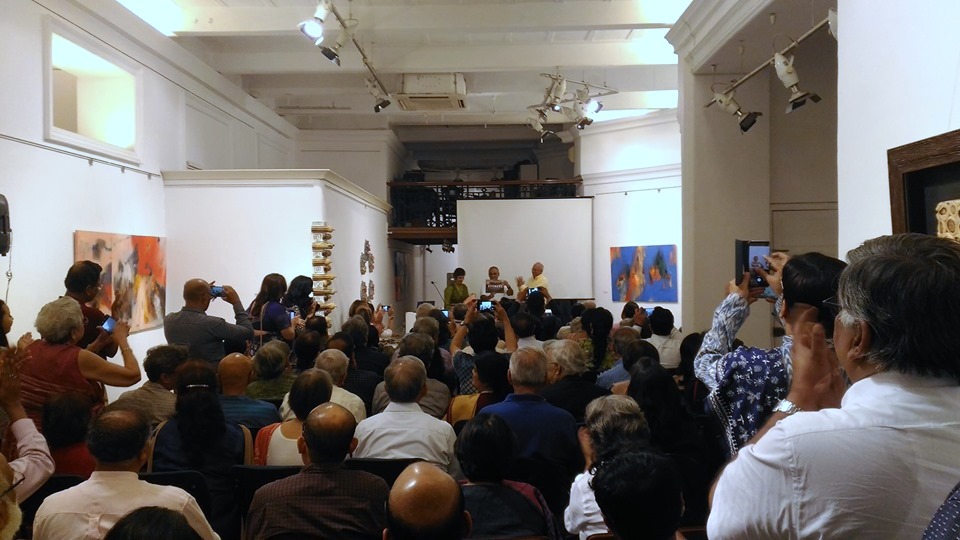
The book launch of Everest Reflections on the Solukhumbu was held at The Harrington Street Arts Centre on October 31st 2019.

Everest Reflections on the Solukhumbu, launched to celebrate the centenary of the birth of Sir Edmund Hillary and dedicated to the sherpas reveals the historical influences, hidden seasons and current pressures in the land of Everest. Photographer Sujoy Das and writer Lisa Choegyal have collaborated in their second volume, this time capturing the essence of the majestic scenery and reality of daily life in the Solukhumbu in the shadow of Mt. Everest. A foreword by leading mountaineer Sir Chris Bonington, preface by cultural scholar Dr Lhakpa Norbu Sherpa and drawings by artist Paula Sengupta adds depth to this unusual book about a familiar destination.
In the words of Sir Chris Bonington in his Foreword “This is not just one more book about Everest, but a special celebration of the haunting beauty of Solukhumbu and its people. Civilisation depends on the health of our high places, and I wish my Sherpa friends all the best with successfully navigating their future course.”
Sujoy Das, founder of South Col Expeditions which runs treks and photo workshops in the Himalaya www.southcol.com has spent more than two decades in the Everest region and is the co-author and photographer of a number of books including Nepal Himalaya A Journey Through Time, Sikkim A Travellers Guide and Lonely Planet Nepal for the Indian Traveller.
British-born Lisa Choegyal has made Kathmandu her home since 1974, deeply involved with Nepal tourism and conservation. Author and editor of Nepal Himalaya A Journey Through Time, Kathmandu Valley Style, The Nepal Scene Chronicles of Elizabeth Hawley and Offerings from Nepal, she produced the South Asian Insight Guides series, and contributes a fortnightly column to the Nepali Times.
The book is available on line at www.amazon.com; www.vajrabookshop.com; www.amazon.in

Some photos and videos from the launch:


Thursday, October 24, 2019

Everest Reflections on the Solukhumbu | Book Launch Kolkata


The third book launch of Everest Reflections on the Solukhumbu will be held in Kolkata on October 31st 2019 - address in the invite. All are welcome.
Everest Reflections on the Solukhumbu, launched to celebrate the centenary of the birth of Sir Edmund Hillary and dedicated to the sherpas reveals the historical influences, hidden seasons and current pressures in the land of Everest. Photographer Sujoy Das and writer Lisa Choegyal have collaborated in their second volume, this time capturing the essence of the majestic scenery and reality of daily life in the Solukhumbu in the shadow of Mt. Everest. A foreword by leading mountaineer Sir Chris Bonington, preface by cultural scholar Dr Lhakpa Norbu Sherpa and drawings by artist Paula Sengupta adds depth to this unusual book about a familiar destination.

In the words of Sir Chris Bonington in his Foreword “This is not just one more book about Everest, but a special celebration of the haunting beauty of Solukhumbu and its people. Civilisation depends on the health of our high places, and I wish my Sherpa friends all the best with successfully navigating their future course.”

Sujoy Das, founder of South Col Expeditions which runs treks and photo workshops in the Himalaya www.southcol.com has spent more than two decades in the Everest region and is the co-author and photographer of a number of books including Nepal Himalaya A Journey Through Time, Sikkim A Travellers Guide and Lonely Planet Nepal for the Indian Traveller. 

British-born Lisa Choegyal has made Kathmandu her home since 1974, deeply involved with Nepal tourism and conservation. Author and editor of Nepal Himalaya A Journey Through Time, Kathmandu Valley Style, The Nepal Scene Chronicles of Elizabeth Hawley and Offerings from Nepal, she produced the South Asian Insight Guides series, and contributes a fortnightly column to the Nepali Times.

Links to some reviews of the book


The book is available on line at www.amazon.com; www.vajrabookshop.com; www.amazon.in


Wednesday, September 11, 2019

Travel and Leisure India | Interview Sujoy Das September 2019 Issue


1. Tell us about your association with Mountain Echoes?

I was invited by Mountain Echoes to speak at the 10th edition of their festival in Bhutan that took place between August 22-25, 2019.  Our new book co-authored with Lisa Choegyal was showcased at the festival.

2. How important do you think platforms like these are for today’s youth?

I think they are very important as they give an opportunity to the youth to interact with different personalities from different professions from all over the world.

3. Photography has taken you around the world. What is your favourite place to shoot?

It would be in the mountains of Nepal, Himalaya. I have spent around two decades shooting in Nepal and the opportunities it has offered me have been incredible. I have done three books on Nepal.

4. Do you remember the first photograph you took? Where was it?

It was on a trek to Sandakphu near Darjeeling, I think in 1976 when I had just finished school from the bungalow of Tonglu looking at the Kanchenjunga range floating above the clouds. This, in fact, fired my interest in photography.

5. Tell us one crazy experience you have had while shooting.

I was trying to reach the Sikkim-Tibet border in North Sikkim at an altitude of 5,000 metres riding a yak; unfortunately, the yak had other ideas and as I was about to shoot some photos it started racing up the valley and threw me off! Luckily, the camera did not suffer any lasting damage!

6. In today’s digital age, everybody owns a high-quality camera. How does one stand out?

You are right. All cameras can take great photos, but it’s the eye behind the lens that’s important; you need to see things in a different way, in a different light, at different times of the day, and to create something different from the run-of-the-mill photo.

7. What kind of traveller are you?

I like to travel light, usually carrying my own backpack.

8. Do you prefer solo or group travel?

I usually travel in small groups, maybe with a few like-minded photographers.

9. What are the three things you must have while travelling?

Well, since most of my work is in the mountains, I would never leave home without a sleeping bag and a warm jacket —  both are essential for survival.

10. What is your most favourite destination in India?

It would be Sikkim, a state where I have spent many months photographing, especially the unspoilt Zemu Valley of North Sikkim in the shadow of Mount Kangchenjunga.

11. What does it take to be a successful travel photographer?

You must be prepared to spend time in the field often in very difficult and arduous conditions. You must also focus on weaving a story around your photos, just isolated images are not good enough and they won’t find a market; most editors will reject them.
During all my time spent in the Himalayas, it’s always been a search for the right light, the right time of the day, the right perspective and the right second, which transforms an ordinary or mundane view. In many of my photographs, there is a story waiting to be told. I hope I have been able to tell it well.

Thursday, June 6, 2019

Everest Reflections on the Solukhumbu | Book Launch Kathmandu


Everest Reflections on the Solukhumbu was launched in Kathmandu at Dwarikas Hotel on May 28th 2019. The large format book has photographs by Sujoy Das Text by Lisa Cheogyal Drawings by Paula Sengupta Foreword by Sir Chris Bonington and Preface by Dr Lhakpa Norbu Sherpa.
The book is published by Vajra Books Kathmandu Nepal.
The book is available on line as under:

Amazon India

Amazon USA

Vajrabooks Kathmandu


Some photographs of the launch


Sunday, May 5, 2019

Everest Reflections on the Solukhumbu | Book Launch Kathmandu May 28th 2019


EVEREST – Reflections on the Solukhumbu
Published by VAJRA Books Jyatha Kathmandu pages 152 size 11.5 inches x 8.33 inches 


Photographer Sujoy Das and writer Lisa Choegyal have collaborated in their second volume, this time capturing the essence of the majestic scenery and reality of daily life in the Solukhumbu. They delve beneath the surface of the Everest region of Nepal to reveal its historical influences, hidden seasons and current pressures. A foreword by leading mountaineer Sir Chris Bonington, preface by cultural scholar Dr Lhakpa Norbu Sherpa and drawings by artist Paula Sengupta adds depth to this unusual book about a familiar destination.  The book is published on the centenary of the birth of Sir Edmund Hillary.

The book is also now available on line at the following sites:


For more information and details please email lisa@choegyal.com or sujoyrdas@gmail.com


Wednesday, March 20, 2019

Tips and Tricks for Better Photography


After my two posts on tips and tricks for mountain photography in this blog, I am giving below some general tips for everyday photography which I am sure would be useful. 

Tip 1: Add people to a landscape
Add a subject to the foreground of a landscape shot to give depth to the photograph.  An example of this is given below:


Tip 2: Use fill flash in daylight
When shooting people, in strong noon day sun use the pop up flash or even a speedlight to fill dark shadows especially under the eyes and bring out details. This ensures that the background is also exposed correctly and not washed out. An example of this is given below:


Tip 3: Kick the “I’ll fix it in Photoshop habit”!
You need to ensure that the photograph is taken in the camera not fixed in Photoshop – so white balance, exposure, lighting, focus etc all need to be bang-on! If you are not sure of the exposure bracket! Check the histogram on the LCD display to ensure that exposure is correct.

Tip 4: F8 and be there
Basically this famous photography axiom asks you to be ready to shoot. So rather than adjust white balance, aperture,  shutter speed , metering modes, focus modes etc  before taking a photo, you to need to set all this before hand. On a normal sunny day, I will usually set the following before I start out: WB auto, ISO auto set to maximum of 800, aperture priority around f8 or so, and matrix metering, AF-S for single focus. This allows me to shoot in most situations provide the light is reasonable. And, if I have time I would  bracket three to four exposure either by using auto bracketing  or manually -0.3, -0.7, -0.1, +0.3, + 0.7. This usually nails the photograph right in the camera.

Tip 5: To reduce noise at high ISO make sure your exposure is bang on target!  
Modern day cameras allow you to shoot at very high ISO’s like 1600, 3200 and even 6400 on top end models. However, the major drawback at high ISO is noise. So, one way of reducing or minimizing noise is to make sure your exposure in spot on. If you have underexposed even a little bit there will be ample noise in the shadow areas which is always difficult to get rid off. So try to ensure a correct exposure by shooting, maybe, a number of photos at different settings so that at least one is correctly exposed. This is an example of a photo shot an ISO 1600 but due to correct exposure there is hardly any noise:


Tip 6: On a tripod turn VR or IS off
This is a mistake which I have made a number of times. If you have a camera on a tripod you don’t need to switch on VR or IS as the camera is likely to be rock steady and does not need any vibration reduction.  Often in a hurry we forget this and shoot with VR or IS on.

Tip 7: For critical photos use RAW
When you need to use photographs for magazine stories, prints, exhibitions etc raw is the way to go. You can convert raw files using the correct version of Camera Raw with Photoshop and with proprietary converters like Capture NX2, View NX for Nikon.

 Tip 8: If you can, take along a small table top light weight tripod
Ideally most photographers would recommend a full heavy weight tripod but is difficult to carry around and also in some situations difficult to set up. So I have a small Slik table top which can also fit into a jacket pocket which I use when I need support. The Joby Gorilla pod is also an option and has the advantage of flexible legs!

Tip 9: Don’t put the camera away at dusk or at night
On the subject of tripods if you have one with you then photography at night and at dusk becomes a distinct possibility. Long exposures makes the world look a lot different and details in the dark night sky can often produce stunning effects.


Tip 10: Less is often more!
The proliferation of social media and the free photo web sites have made it possible for everyone to post their photos on the net even if they don’t have their own web sites or blogs. However, in their enthusiasm to post photographs of a holiday or journey I often find a facebook album of a hundred photos or more. Similarly, picasa web albums sent to me to review have similar number of photos. Usually with so many images the impact is lost and the good images get masked by the mediocre ones. So it often helps to edit tightly, remove duplicates and similars, weed out all photos that are not in focus, overexposed or underexposed, badly composed and leave the best ones for the viewers! Most of my albums rarely have more than twenty photographs and the majority have between ten and twelve!

Happy shooting!  

For more of my photographs do visit www.sujoydas.com

Monday, March 11, 2019

Mountain Photography Workshop | April 6th 2019 Kolkata


On 6th April 2019 in Kolkata, India I will be conducting a short workshop of mountain photography. It will be a hands on session with my photographs explaining the  approach, the technicalities, different subjects and situations and the reason behind the photographs.

I will share with the participants my thirty odd years of experience photographing in the mountains.

The programme is organised by  ‘THE HIMALAYAN ’s a Trust, non-profit in nature that was formed in May 2017. It was conceived to attract like-minded people in the promotion of Himalayan lore and preservation, through Travel, Expeditions, Explorations and Adventure, and support of its Nature, Ecology, Culture, as well as the well-being of its people. The primary inspiration has been the vision of Mr. Meher H. Mehta FRGS and a handful of likeminded mountain lovers - a vision that encompasses the incorporation of a balanced, incisive as well as interactive dissemination platform for the reporting of Himalayan Activity–of Climbing, Science, Literature and the yonder, in a manner befit to stimulate the intellectual yearning of the erudite mountain lover, as well as to kindle the fertile mind of the incorrigibly romantic young mountaineer.

Admission is free to register for the workshop do send an email to thehimalayan2017@gmail.com

I hope to see many of my friends, fellow photographers and mountain lovers at the workshop.


Saturday, March 2, 2019

Mountain Photography at Night

92 sec f 6.3 ISO  800
On  our  South Col treks , I often try to do some night photography when the weather is clear and the stars are out. Recently in Nepal  I was able to  experiment with a lot of mountain photography at dusk and at night.  I am sharing some tips and useful suggestions in this post:

TRIPOD
It goes without saying that the first requirement for night photography of mountains is a strong rock steady tripod. Monopods and table top tripods are not real substitute to a good tripod. I know this means lugging up and down the mountain another 1 to 2 kgs of weight but if you need to shoot long exposures then you need the tripod. This will really help you to get rock steady photos at long exposures. I use an Oban tripod one of the entry level lightweight model weighing around 1.5 kg.

VR/IS
If your camera is on a tripod set VR or IS off - you don't need any vibration reduction as the tripod is supposed to be rock steady!

AUTOFOCUS
Please do set autofocus off and focus your lens manually - my experience is that with autofocus on the camera hunts for a correct focus point at night!

ISO
The newer generation of DSLRs have pushed high ISO performance to 3200 and 6400 with some amazingly good results but I am conservative in this regard – if I can put my camera on a tripod I still prefer the lower ISO settings 200-1000 with longer exposures.

APERTURE
I would usually select a middle of the range aperture like f5.6 , f6.3 or f8 unless I need depth of field from foreground right up to infinity. In that case I may even stop down to f16!

SHUTTER SPEED and METERING
After setting the ISO and aperture the balancing factor would be the shutter speed. It is hard to select the shutter speed in low light and make a perfect exposure. There is a lot of black and deep shadows in the photograph and usually the metering is fooled by this resulting in some over exposure. As a rule of thumb setting the exposure compensation to -0.7 and bracketing two stops around the meter reading usually gives one good shot! Speeds can be as low as 15 sec, 30 sec and sometimes even one minute using this bracketing technique.  Most DSLRs wont go below 30 sec so you would have to switch to bulb mode  fire the shutter with a remote release and then close it again. 
30 sec, f7.1 ISO 200 
WHITE BALANCE
I usually set the white balance to Auto and keep it that way - in case there is any extraordinary colour shift I would correct it in processing. but this is not usual.

RAW
Oh and finally do shoot raw - makes a huge difference to the final image!

For more night photos please do visit  www.sujoydas.com   

Thursday, February 14, 2019

Long Telephoto Lenses on a Budget

Many of us who are wildlife and bird photographers yearn for super fast big glass! Oh, what could we not do if we had a Nikon 600 F4 or a 400 F2.8! Sadly, the cost of these lenses are prohibitively expensive and out of reach for most of us. It is also not so easy to use these big lenses and proper technique and support are essential to get good results.

So what alternatives do we have? How do we capture that Alpine Accentor in the high Himalayas with affordable equipment?


This post discusses some of the so-called "budget" telephoto prime lenses and zoom lenses which are capable of  good photographs with proper technique and reasonable light. The crop factor with DX bodies should also be considered - a  300 f4 Nikon would give 450 F4 with a DX sensor and a 500 would give a reach of 750 which is huge! However, longer the lens the more difficult becomes the photograph and eventually you need a rock steady support for the camera! The zoom lenses would be slower than the primes but would have the advantage of a single lens covering a range of focal lengths.

Sigma 150-500 F5.6-6.3 $899
The Sigma 150-500 f5.6-6.3  is possibly the most popular third party zoom for wildlife. If you visit any of India's national parks a large number of shooters will have this lens.  It is very good value for the price point, if you can manage with a 6.3 aperture at the long end! At the shorter end it becomes a 150mm F5.6 which is about at least a stop slower than the 80-200 or 70-300 range of zooms! For a review visit  http://www.kenrockwell.com/sigma/150-500mm.htm


Tamron 150-600 F5-6.3 $1069
The Tamron 150-600 F5-6.3 is a new lens - it is similar to the Sigma but has an extra 100mm reach on the long end.  It has similar issues as the Sigma regarding speed and possibly greater issues regarding hand holdability due to being 600 mm at the long end! With a good sturdy support this could be a match winner especially for birds!  http://www.drkrishi.com/tamron-150-600-review


Nikon 80-400 F4.5-5.6 VR $1995 street
The Nikon 80-400 f4.5-5.6 VR lens is often used for shooting mammals. A very popular choice in the game parks in Africa for Nikon shooters,  it has a decent zoom range. In good light it can deliver stunning results and a good beanbag  support can allow hand holding at low speeds due to VR! If you are not looking for birds at a distance this might be  a good choice. However it is definitely much more expensive than the third party zooms though is sometimes available refurbished and on sale!
 http://photographylife.com/reviews/nikon-80-400mm-vr


Canon 100-400 f4.5-5.6L $1699
The Canon 100-400 F4.5/5.6 is similar the the Nikon above and used by Canon shooters and has similar features. For a review visit
 http://www.photozone.de/reviews/204-canon-ef-100-400mm-f45-56-usm-l-is-test-report--review


Nikon 300 F4 AFS ED $1369 street
This is a prime Nikon 300 mm f4 lens which is capable of producing excellent quality and sharpness. Mated with a TC 1.4 converter it gives a range of 420 mm and on a DX body that would be more than 600 mm! This would be my first choice if quality was paramount and I could sacrifice the multiple focal lengths of a zoom!
http://www.bythom.com/300AFSlens.htm


Canon 300 F4L $1449
This is an extraordinary good lens from  Canon 300 f4L - it belongs to their L series of glass and produces excellent sharpness and contrast. Highly Recommended by photozone.de who are usually miserly with their praise, it would be the first choice for a Canon shooter on a budget along with a 1.4 converter.
http://www.photozone.de/reviews/172-canon-ef-300mm-f4-usm-l-is-test-report--review

Nikon 200-500 F5.6 E $1397


 The Nikon 200-500 has become the preferred lens for wildlife and bird photography on a budget. If you cant afford the professionsl 200-400 F4  then this is possibly the next best choice. You lose one stop compared to the professional lens but the price performance factor is unbeateable!  For a review of the lens please see  https://photographylife.com/reviews/nikon-200-500mm-f5-6e-vr


 This is the new Nikon 300 F4  ED VR lens $1996 which is superlight lens with amazing performance - you can also mate it to one of the TC teleconverters to good more reach. The lens is on the expensive side but compensated by excellent performance and weight as well. For an excellent review of this lens do visit https://photographylife.com/reviews/nikon-300mm-f4e-pf-ed-vr


  As you can see I personally prefer the primes with a tele converter to the long zooms - this is also because I usually have a lens like 300 F4 Nikon in my bag when shooting wildlife! On the flip side if you have one body only you need to change lenses and dong this you may often miss the shot!

Essentially you need to weight up what your needs are at a  price point which you can afford  and then make the correct decision! Good luck!

Monday, October 15, 2018

Banff Mountain Book Competition Winners 2018


Book covers for all finalists

The Banff Mountain Book competition is one of the most prestigious events for mountain books around the world. The winners of the 2018 competition have just been announced. Here is the winners list courtesy https://www.banffcentre.ca/2018-banff-mountain-book-competition-awards


Adventure Travel
$2000 - Sponsored by Fjällräven

Lands of Lost Borders: Out of Bounds on the Silk Road

Kate Harris, Penguin Random House Canada (Canada, 2018)
"In thoughtful, melodic prose, Kate Harris embraces the spirit of adventure in this story about cycling the Silk Road even as she confronts the entangled nature of science and imperialism in the history of exploration. From permits and packaged noodles to sage-speckled horizons, Lands of Lost Borders relates the ordinary, unglamorous details of life on the road alongside moments of beauty and insight. In her travels with Mel, a childhood friend turned cycling companion, Harris also reveals how the shifting contours of a friendship can form new landscapes worth exploring. All the while, Harris maintains a hope in the power of the exchange of ideas to reimagine borders along territories and, perhaps, within the human heart."

- Paula Wright, 2018 Book Competition Jury


Mountain Fiction & Poetry
$2000 - Sponsored by Grimms Fine Foods

The Eight Mountains

Paolo Cognetti, Penguin Random House - Vintage UK, 2018)
"A coming-of-age tale set in the foothills of Monte Rosa, The Eight Mountains is the story of a friendship that forms in the mountains between Bruno, a young shepherd, and Pietro, a boy from Milan. Bruno teaches Pietro how to interpret signs in his alpine world, sweeping the reader up in an exquisite tour of the forests and glaciers. At the same time, the novel shows the cost that forsaking modernity for the mountains may exert, on individuals and their relationships. Sparse in detail but resonating with poetic energy, Paolo Cognetti’s prose glimmers like the surface of a mountain, where even the smallest ripples and fissures may reveal enormous depths. Cognetti reminds us, 'that in certain lives there are mountains to which we may never return.'"

- Paula Wright, 2018 Book Competition Jury


Mountain Literature (Non Fiction) The Jon Whyte Award
$2000 - Sponsored by The Whyte Museum of the Canadian Rockies

Tides: a climber's voyage

Nick Bullock, Vertebrate Publishing (UK, 2018)
"In Tides Nick Bullock carries us with him on the sought-after dream life of a pro climber, seasonally migrating from Llanberis to Chamonix, and other hotspots along the way. Young want-to-be-sponsored climbing bums beware, all is not glory on this path, for as well as the slippery sea-cliff holds, long runouts and Himalayan storms lie other perils: self-questioning, angst at ageing, failed relationships, and a search for meaning.  Evocative stories which have become campground lore, Nick offers a glimpse into his mind in the life to which he has committed."

- Ian Welsted, 2018 Book Competition Jury


Mountain Environment and Natural History
$2000 - Sponsored by Town of Banff

The Wolf: A True Story of Survival and Obsession in the West

Nate Blakeslee, Penguin Random House Canada (Canada, 2017)
"Cinematic and movingly told, Nate Blakeslee’s The Wolf is the true story of O-Six, an adept hunter and the alpha female of her pack, narrated against the backdrop of the political and environmental history of the American West. Rendered in novelistic detail from the meticulous reports of Yellowstone park employees, O-Six struggles to protect her pack from encroaching wolves as other dangers - in the form of hunters and changing policy - loom. Skillfully crafted in sparse, elegant prose, The Wolf is at its core the bare story wolves and men, a tale older than the mythic American West itself."

- Paula Wright, 2018 Book Competition Jury


Mountain Image
$2000 - Sponsored by Lake O'Hara Lodge

The Canadian Rockies: Rediscovered

Paul Zizka, Rocky Mountain Books (Canada, 2017)
"Paul Zizka has produced an absolutely breathtaking collection of images of the Canadian Rockies.  People from the world over visit the Rockies to take in these views; Zizka captures them at their most magnificent.  Initially recognized for his aurora night photos this collection revisits the area with new themes.  The result is a visual masterpiece."

- Ian Welsted, 2018 Book Competition Jury


Guidebook
$2000 - Sponsored by the Association of Canadian Mountain Guides

Squamish Rockclimbs

Kevin McLane and Andrew Boyd, High Col Press (Canada, 2018)
"As Canada's preeminent world-class climbing locale Squamish deserves the exact, loving treatment that Kevin McLane and Andrew Boyd gives it in their guidebook, Squamish Rockclimbs. Eschewing commercial pressures for brevity and select guidebooks, we are fortunate that McLane and Boyd continue to produce this comprehensive guide to all the known climbs.  Enhanced by essays chronicling the local climbing history and ethic, the volume is the reference of record and an essential tool alike."

- Ian Welsted, 2018 Book Competition Jury


Mountaineering Article
$2000 - Sponsored by the University of Alberta and the Alpine Club of Canada

Contraindications

Alison Criscitiello, Alpinist Magazine (USA, August 2017)

“A heartbreaking story beautifully told. It would be almost impossible to imagine what it must have been like to experience this tragedy except that Alison has opened her heart and shared her experience so deeply. The story honours Anna and their time together and is, I feel, a deeply important read for anyone who travels in the mountains and values love, life and friendship.”
- Larry Stanier, 2018 Book Competition Jury

*Jury member Paula Wright (Associate Editor of Alpinist Magazine) recused herself from adjudication of this category.


Mountaineering History
$2000 - Sponsored by Rab

Honouring High Places: The Mountain Life of Junko Tabei

Junko Tabei and Helen Rolfe, Rocky Mountain Books (Canada, 2017)
“The story of a young woman who begins climbing in Japanese Mountain Club culture in the 1960’s is a tale worth reading in itself. From this complex and often tragic social beginning Junko Tabei goes on to a rich life that manages to include family, teaching and climbing all over the world well into her late 70’s while supporting causes related to the value of a life connected to nature and the mountains. It is a well named and well put together piece of history.”

- Larry Stanier, 2018 Book Competition Jury


Special Jury Mention
Bert Riggall's Greater Waterton: A Conservation Legacy

Beth Russell-Towe, Fifth House Publishers (Canada, 2018)
“Bert Riggall’s photographs from the first half of the 20th Century frame some fabulous writing about the people, terrain and history of the Greater Waterton Region. The images alone tell a fabulous story. Sid Marty’s Mistakis-The Backbone of the Earth and Kevin van Tighem’s God’s Breath should be required reading for anyone who travels to southwest Alberta. This is a story of the origins of a regional conservation legacy that to this day strives to include the landscape, flora, fauna and people who live in this very special part of the world.”

- Larry Stanier, 2018 Book Competition Jury


Special Jury Mention
Atlas of a Lost World

Craig Childs, Pantheon Books (USA, 2018)
"With the aid of archaeological findings and anthropological research, Craig Childs travels from the present to the prehistoric past to meet the inhabitants of the Ice Age. Across the Harding Ice Field, Paleolithic burial sites, and more, Childs illuminates the fragile humanity within the seemingly mythical past. At the same time, Childs issues a warning for a warming planet as he reminds us, 'Going ahead without stories or family is like falling off the edge of the earth.'"

- Paula Wright, 2018 Book Competition Jury

For more information on the event and the Banff Festival November 2018 do visit
https://www.banffcentre.ca/
LinkWithin

Related Posts Plugin for WordPress, Blogger...